
Can Security Screens Protect Homes from Wildfires?
In the American West, wildfires are no longer rare events — they’re annual threats.
High winds and ember storms can destroy homes miles away from the actual fire front.
But here’s a fact that surprises many homeowners: most houses lost to wildfire don’t burn from direct flames.
They ignite because of windborne embers that enter through vents, windows, or small gaps — the same openings security screens are designed to cover.
That raises an important question: can security screens help protect homes from wildfires?
Understanding Ember Intrusion
During a wildfire, intense heat and wind push burning debris — embers — across large distances.
These glowing particles can stay hot for up to 30 minutes and travel over a mile in high winds (National Institute of Standards and Technology, 2024).
Once embers find entry through a window or vent, they can ignite curtains, wood flooring, or attic insulation.
According to Cal Fire data, over 80% of homes that burn in wildfires ignite from embers entering openings rather than from flames.
That means the battle for your home is often won or lost at the mesh — the small openings that decide whether embers get in.
How Security Screens Work as Ember Shields
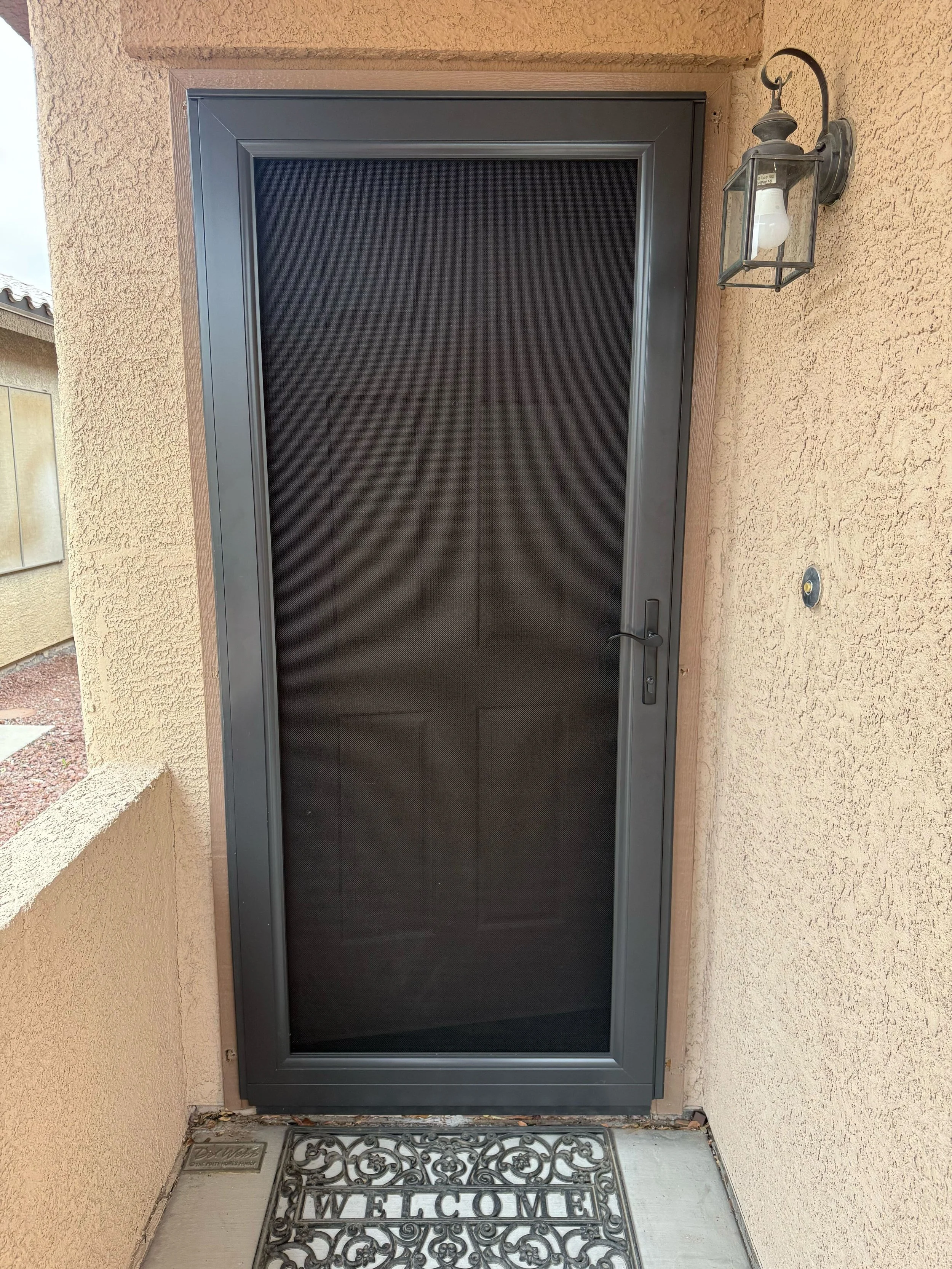
Security screens use high-tensile stainless-steel mesh with microscopic apertures — typically 0.9 mm or smaller.
This construction not only blocks tools and hands but also prevents airborne embers from passing through.
The material’s high melting point (over 2,550°F for 316-grade stainless steel) ensures the mesh doesn’t deform or ignite under radiant heat.
By comparison, traditional insect screens made of fiberglass or nylon can melt at 350–400°F, well below the temperatures produced by nearby fires.
Research and Test Results
Several wildfire research groups have studied how mesh size and material affect ember resistance.
Key Findings:
University of California Fire Research Lab (2022):
Stainless-steel screens with openings ≤ 2 mm completely blocked ember intrusion in simulated wildfire conditions.Australian Bushfire Building Council (2023):
Security screens meeting AS3959:2018 – Bushfire Construction Standard prevented 100% of ember entry in controlled testing.National Fire Protection Association (NFPA) guidelines recommend using noncombustible, corrosion-resistant metal mesh for all vent and window openings in fire-prone zones.
Security screens that meet these mesh and material criteria are functionally equivalent to dedicated ember-resistant barriers.
Thermal Protection: Radiant Heat
Even if flames never touch your home, radiant heat from nearby fires can shatter glass, allowing embers to enter.
Security screens create a micro barrier that reflects and disperses some radiant energy before it hits the glass.
Testing by Intertek Labs (2023) found that windows fitted with stainless-steel security screens maintained surface temperatures 170°F lower than unprotected windows during exposure to simulated wildfire conditions.
That difference can be enough to prevent glass breakage and delay ignition.
Ventilation Without Vulnerability
One of the challenges in wildfire zones is balancing ventilation and defense.
Sealing every vent and window creates a suffocating indoor environment, yet leaving them open invites ember entry.
Security screens provide a compromise:
You can safely ventilate during high-heat days.
The mesh doubles as a barrier if evacuation orders come late.
Airflow continues while physical protection remains intact.
This feature has made them increasingly popular in California’s Wildland-Urban Interface (WUI) areas.
Material Matters: Aluminum vs. Stainless Steel
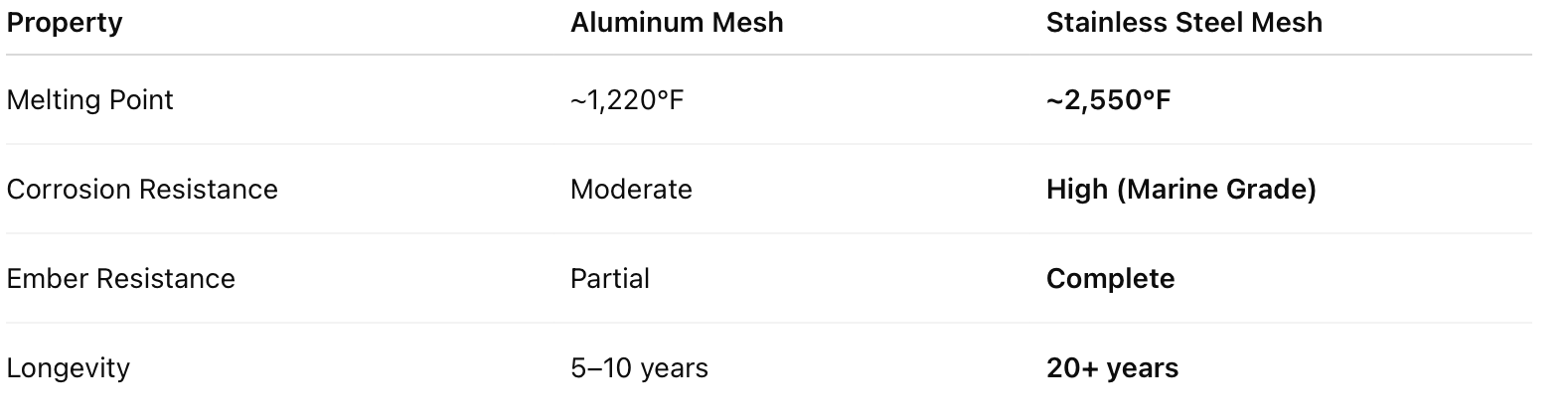
While aluminum screens may pass initial ember tests, they deform under sustained heat.
316 marine-grade stainless steel, used by Boss Security Screens, resists warping and retains tensile strength even after repeated heat cycles.
Real-World Case: Northern California, 2024
In the Glass Fire region near Napa, a homeowner equipped with stainless-steel security screens reported their home survived while two neighboring houses burned.
Post-event analysis by the local fire marshal showed embers had accumulated against the screens but failed to enter or ignite any interior materials.
Minor frame discoloration — but no breach, no fire.
Compliance with Wildfire Building Codes
Security screens can contribute to meeting regional wildfire safety standards such as:
California Building Code Chapter 7A: requires noncombustible mesh ≤ 1/8 inch on exterior openings.
IBHS Wildfire Prepared Home Program: recognizes metal security mesh as an acceptable ember-resistant barrier.
AS3959 (Australia): security mesh approved for use in BAL-40 zones — areas with radiant heat flux up to 40 kW/m².
Homeowners in designated wildfire zones can often use security screens to satisfy ember-resistant opening requirements while maintaining visibility and airflow.
Added Benefits Beyond Fire Protection
In wildfire-prone regions, the value of security screens extends beyond ember defense:
Burglary protection: Meets forced-entry standards (ASTM F1233).
Energy efficiency: Reduces solar heat gain by up to 60%.
UV filtering: Preserves furniture and flooring.
Pest control: Keeps out insects and rodents.
That multi-functionality makes them one of the few upgrades that enhance safety, comfort, and longevity simultaneously.
Expert Insight
According to Boss Security Screens, wildfire safety isn’t just about living near forests — it’s about understanding airflow.
“Wind carries both heat and embers,” their engineering team explains.
“Our 316 stainless mesh is dense enough to stop burning debris but open enough for air exchange. It’s strength without suffocation.”
Cost and Longevity
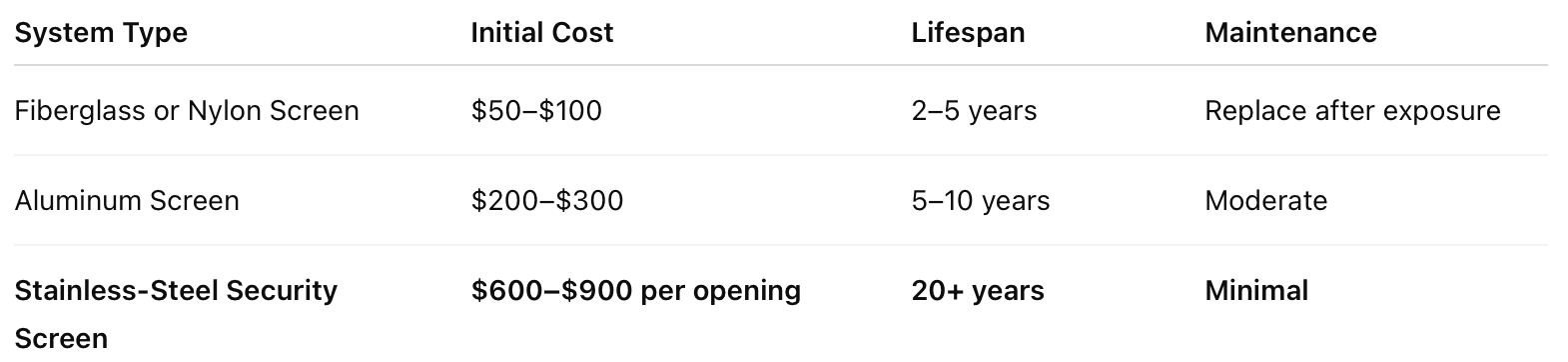
When spread over two decades, the annualized cost of a stainless-steel screen is less than a few dollars a month — a low price for fire resilience and year-round protection.
Conclusion
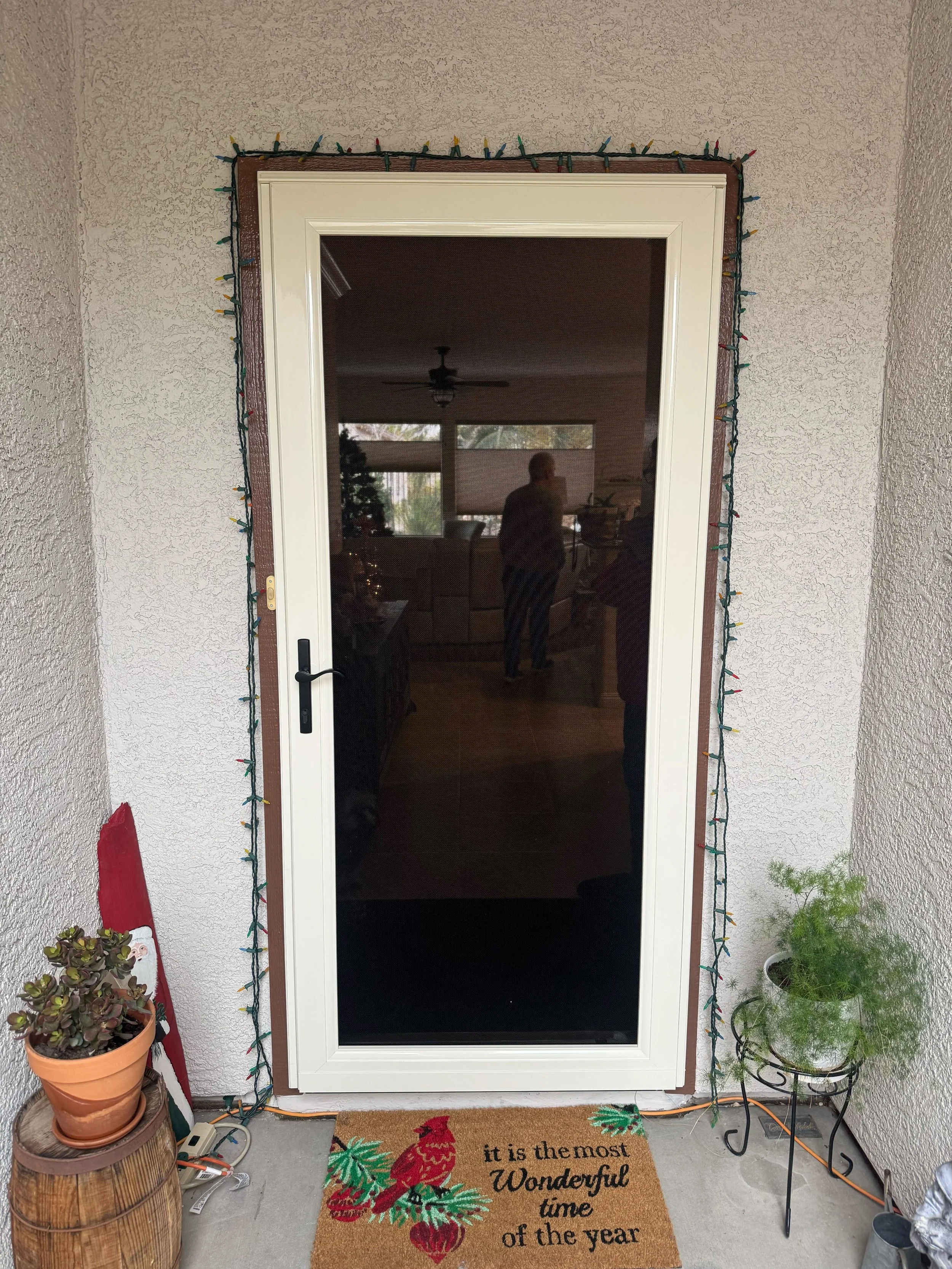
Yes — security screens can help protect homes from wildfires, provided they’re made from noncombustible stainless steel and installed properly.
They act as ember shields, reduce radiant heat, and preserve window integrity during extreme conditions.
And because they double as burglary protection, they serve two critical safety needs with one investment.
In a warming world, where wildfire seasons are longer and more destructive, it’s no longer a question of if embers reach your home — it’s what’s waiting for them when they do