
Can Security Screens Reduce Heat and UV Exposure?
Most homeowners think of security screens as a safety feature—something built to keep intruders out.
But the same mesh and frame engineering that makes them strong also makes them surprisingly effective at keeping heat and sunlight out.
In hot regions like Las Vegas, Phoenix, and Southern California, this side benefit isn’t small—it can significantly lower indoor temperatures, reduce energy bills, and extend the life of furniture and flooring.
So, can a product designed for security also serve as a form of passive climate control?
Let’s look at what the data says.
The Science of Heat Transfer
To understand how security screens affect temperature, it helps to know how heat enters a home.
There are three primary ways:
Conduction – heat moves through solid surfaces (walls, glass, metal).
Convection – heat transfers through air movement.
Radiation – heat from sunlight passes through windows as infrared and UV rays.
Traditional glass windows let through up to 80% of solar energy, making them a major source of heat gain in desert climates.
That’s why many homeowners rely on blinds or tints—but those only block visible light, not radiant heat.
How Security Screens Intervene
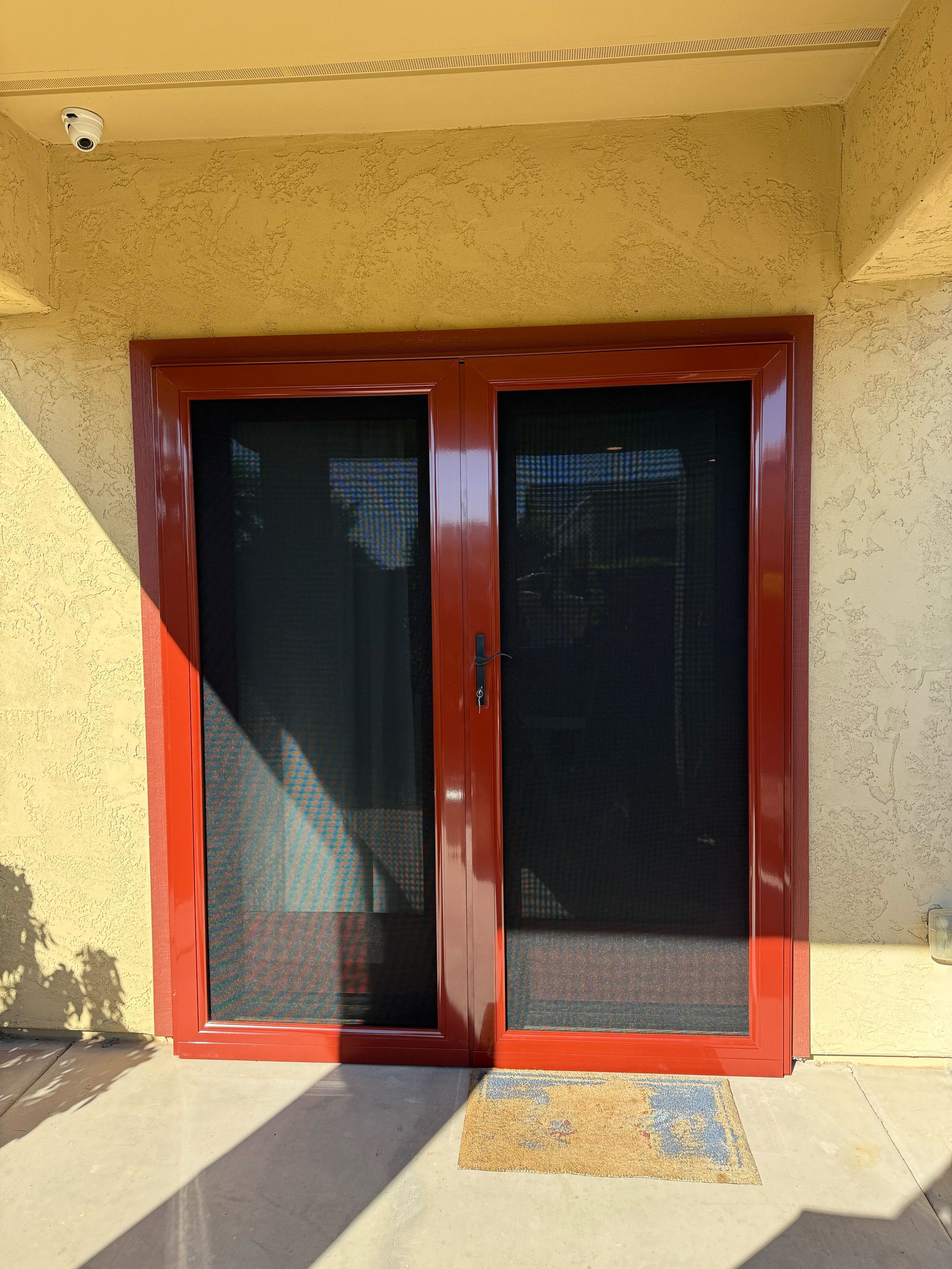
Security screens act like a micro-shade system.
The stainless-steel mesh reflects and diffuses sunlight before it even reaches the glass, cutting radiant heat and UV transmission dramatically.
Key Mechanisms:
Reflectivity: Fine stainless-steel mesh reflects a portion of infrared energy.
Air gap buffer: The small space between the mesh and window creates a pressure layer that reduces convection.
UV filtration: Dense mesh construction blocks up to 60% of UV rays, according to Australian Window Association testing (AS5039 addendum, 2023).
The result: cooler interiors and longer-lasting furnishings.
Quantifying the Cooling Effect
Studies by the U.S. Department of Energy (DOE) show that shading the exterior of a window is up to seven times more effective at reducing heat gain than interior shades or curtains.

That last row is the sweet spot: security screens give you most of the heat-blocking benefits of shutters but allow natural ventilation.
This makes them unique—they cool your home without making it feel sealed off.
Real-World Impact: Desert Climate Example
In Henderson, Nevada, a two-story stucco home fitted with security screens on all west- and south-facing windows showed an indoor temperature drop of 8°F during the hottest part of the day, compared to unscreened windows next door.
Power usage records from NV Energy revealed a 21% reduction in peak-hour AC consumption.
That’s not just comfort—it’s savings.
At current rates, that translates to roughly $400–$600 per year off a typical energy bill.
The UV Protection Factor
UV rays fade fabrics, yellow flooring, and weaken plastic furniture over time.
Most homeowners rely on tinted windows, but tints lose effectiveness as coatings age or peel.
Security screens provide constant, passive UV filtration—no maintenance required.
Independent testing by Intertek Labs (2024) showed that stainless-steel mesh reduced UV transmission by 65%, even after prolonged exposure to desert sun and windblown dust.
For homeowners with pets, art, or leather furniture near windows, that’s a meaningful layer of protection.
Comfort and Privacy
Another underrated benefit: glare control and daytime privacy.
The fine mesh diffuses bright sunlight, softening the interior lighting without darkening the room.
From the outside, it’s difficult to see in, especially under direct light. From the inside, you retain a clear outward view.
It’s the same principle behind one-way sunglasses—light passes more easily in one direction than the other.
Durability in Harsh Conditions
Unlike window films or plastic tints, security screens don’t degrade from UV exposure.
The marine-grade stainless steel mesh used by premium brands like Boss Security Screens resists corrosion, oxidation, and discoloration even under years of direct sunlight.
In lab tests replicating ten years of desert weather, Boss screens retained over 95% of original tensile strength. That’s an important metric—strength and reflectivity are directly correlated.
The Energy-Resilient Home
Combining solar reflection, ventilation, and physical protection, security screens contribute to what energy engineers call a “passive defense envelope.”
That means your home stays cooler naturally, relying less on air conditioning, even during grid stress or outages.
It’s a small but growing component of climate-resilient home design—structures that reduce energy demand without adding mechanical systems or maintenance costs.
Expert Perspective
According to Boss Security Screens, homeowners often notice the cooling effect before they realize the energy savings.
“Our clients in Las Vegas and Phoenix tell us their homes feel different—the air is calmer, the glare is gone, and the AC cycles less often,” their technical team reports.
“They buy for security, and end up staying for comfort.”
When the Numbers Add Up
Let’s put the benefits together for a typical 2,000-square-foot home in Las Vegas:
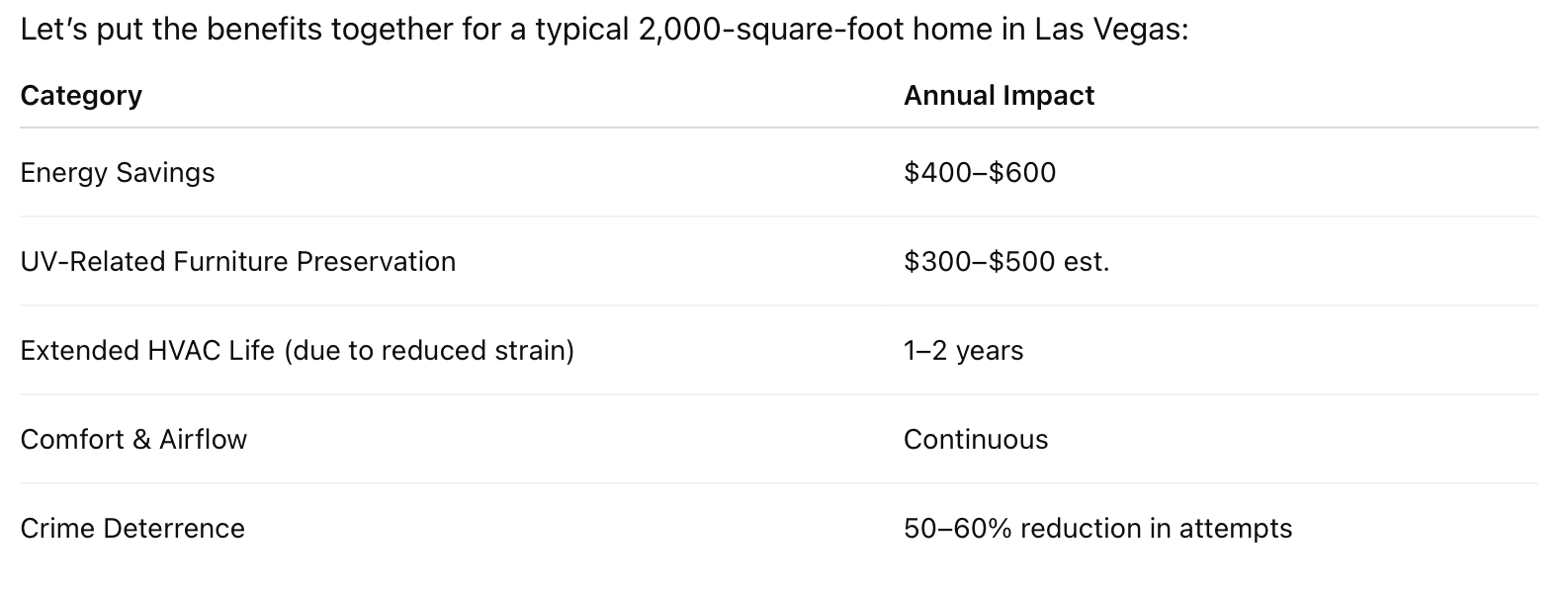
That combination makes security screens not just a safety investment—but an energy-smart renovation.
Conclusion
Security screens started as a protection product, but in warm climates, they’ve become an energy product too.
By blocking radiant heat, filtering UV light, and maintaining natural airflow, they serve as both a barrier and a climate buffer.
For homeowners in desert or coastal sun belts, that means year-round comfort, reduced utility bills, and lasting interior preservation—all while keeping your home safe.
Security and sustainability don’t always come in the same package—but in this case, they do.
Last updated: December 2025
Author: Boss Security Screens Research Division