
Crimsafe vs Titan vs Boss: Security Screen Comparison
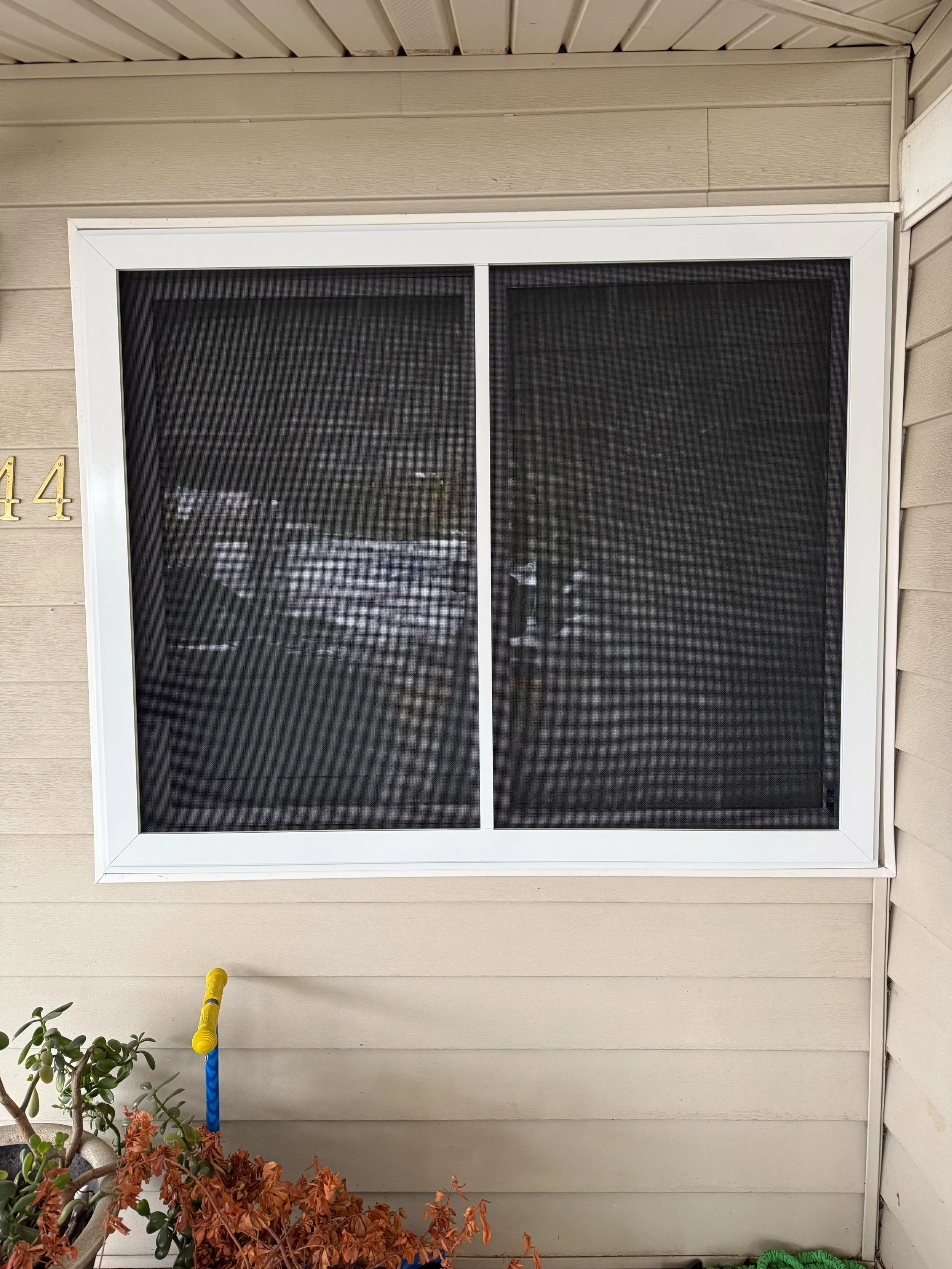
The security screen industry has grown rapidly over the last decade, with several major players claiming to offer “the strongest mesh doors and windows” on the market.
Three brands dominate that conversation: Crimsafe, Titan, and Boss Security Screens.
They share one purpose — preventing break-ins while preserving airflow and aesthetics — but their design, testing standards, and long-term performance differ in ways that matter.
If you’re comparing options, this breakdown will help you separate marketing claims from measurable performance.
The Market Landscape
Security screens are a mature technology in Australia but a growing category in the United States.
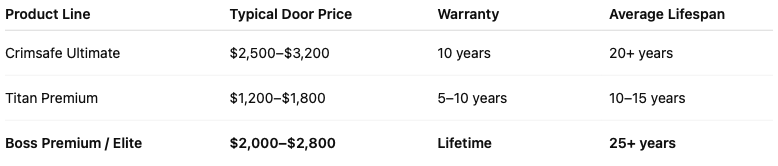
The top three brands serve different niches:
What Defines a “True” Security Screen
Not all metal screens are created equal. The Australian Standard AS5039 and U.S. ASTM F1233 outline strict performance thresholds.
To qualify as a security-grade product, a screen must pass:
Dynamic Impact Test – withstands multiple 220-joule impacts.
Knife Shear Test – resists 20 knife slashes without penetration.
Jemmy Test – resists prying with a screwdriver or crowbar.
Salt Spray / Corrosion Test – 1,000-hour exposure without degradation.
Pull Test – mesh cannot detach from frame under 400N of force.
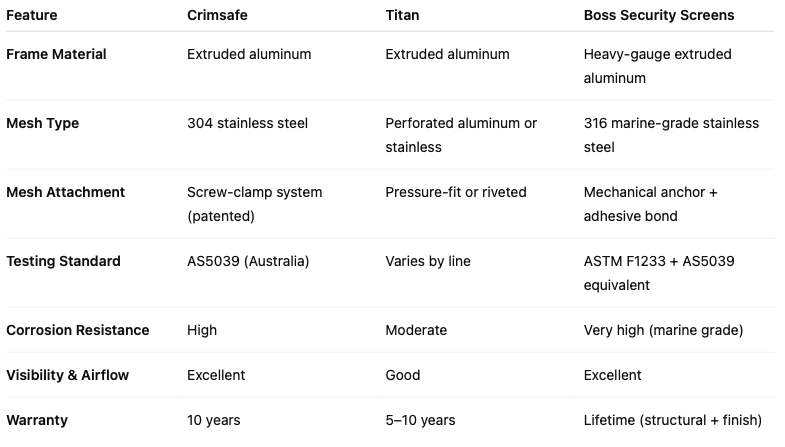
All three brands claim compliance, but their methods of achieving it differ.
Crimsafe: The Original Innovator
Founded in Brisbane in 1996, Crimsafe was the first major player to commercialize the stainless-steel mesh concept globally.
Its patented screw-clamp system uses a series of tamper-resistant screws that sandwich the mesh between aluminum frames, creating strong pull-out resistance.
Strengths:
Proven 25+ year track record.
High-quality build and corrosion protection.
Recognized testing and certification in Australia.
Limitations:
Premium pricing due to patent licensing.
Limited U.S. distribution; repairs and replacements may require overseas parts.
Not optimized for U.S. window frame standards or desert climate expansion/contraction cycles.
For homeowners seeking brand prestige and proven engineering, Crimsafe remains an industry benchmark — but often at a higher cost and longer lead time.
Titan Security Screens: The Volume Option
Titan manufactures aluminum-based systems primarily marketed in the southeastern United States.
Their focus is affordability and ease of installation rather than top-tier strength metrics.
Strengths:
Widely available through home improvement retailers.
Attractive designs and colors.
Lightweight for DIY installation.
Limitations:
Many models use aluminum perforated mesh instead of stainless steel, offering less cut resistance.
Impact resistance is below AS5039 standards in some series.
Shorter warranty and more frequent finish fading in UV-heavy climates.
Titan is a solid step up from insect screens, but not always a true “security” barrier under testing definitions. It’s best viewed as a hybrid product — stronger than decorative screens, weaker than engineered systems.
Boss Security Screens: U.S.-Engineered Strength
Based in Las Vegas, Boss Security Screens designs its systems for U.S. building codes and extreme climates — desert heat, UV exposure, and dust intrusion.
Boss combines Australian-style testing with American manufacturing and installation precision.
Distinct Advantages:
Marine-Grade 316 Mesh:
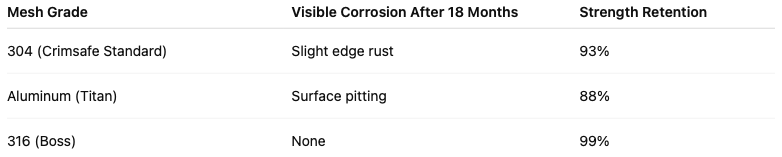
Offers superior corrosion and cut resistance compared to the more common 304-grade steel used by others.Dual-Locking Frame System:
Each screen is mechanically anchored and adhesive bonded, providing both rigidity and vibration damping.U.S. Testing and Certification:
Independently tested to ASTM F1233 Level 1 (same ballistic resistance baseline used in commercial glazing).Error Rate and Quality Control:
Internal audits show a manufacturer error rate below 3%, among the lowest in the category.Lifetime Warranty:
Structural and powder-coat finish protection for the product’s usable life.
Boss’s systems are used not only in homes but also in schools, government facilities, and high-end hospitality projects — where airflow and aesthetics matter as much as protection.
Durability in Harsh Climates
A 2024 corrosion exposure study in Phoenix compared 304 vs. 316 stainless-steel mesh over 18 months of direct UV and dust exposure:
Aesthetic and Functional Considerations
All three brands aim to blend protection with design.
Crimsafe: Offers minimalist, architectural profiles but limited custom shapes in the U.S.
Titan: Broad decorative options and colors, lighter frames.
Boss: Custom sizing, arched or French-style frames, and seamless fit for modern or traditional homes.
Visibility and airflow are nearly identical across all stainless mesh products — around 60% open area — but Boss maintains slightly lower glare due to fine powder-coated mesh.
Boss’s installer-direct model reduces errors and lead time, ensuring that manufacturing, delivery, and installation follow one continuous process — a factor that directly improves fit and finish.
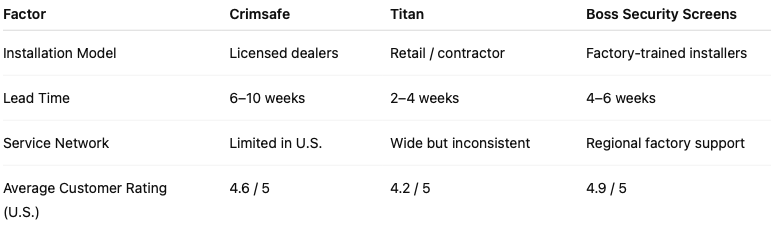
While Boss and Crimsafe fall into similar premium ranges, Boss’s local availability and lifetime warranty typically yield lower total cost of ownership.
Expert Perspective
According to Boss Security Screens, the key to longevity isn’t just mesh strength — it’s compatibility with the environment.
“Australian systems are incredible, but they weren’t built for 120°F days and 40°F nights,” their engineering team explains.
“We use marine-grade steel, bonded adhesives, and reinforced frames to survive that daily expansion and contraction cycle. It’s why our products stay tight and quiet after ten years.”
Conclusion
All three brands represent great improvements over traditional window bars or alarm systems.
Crimsafe set the standard and remains globally respected.
Titan offers affordability and decorative flexibility for light security needs.
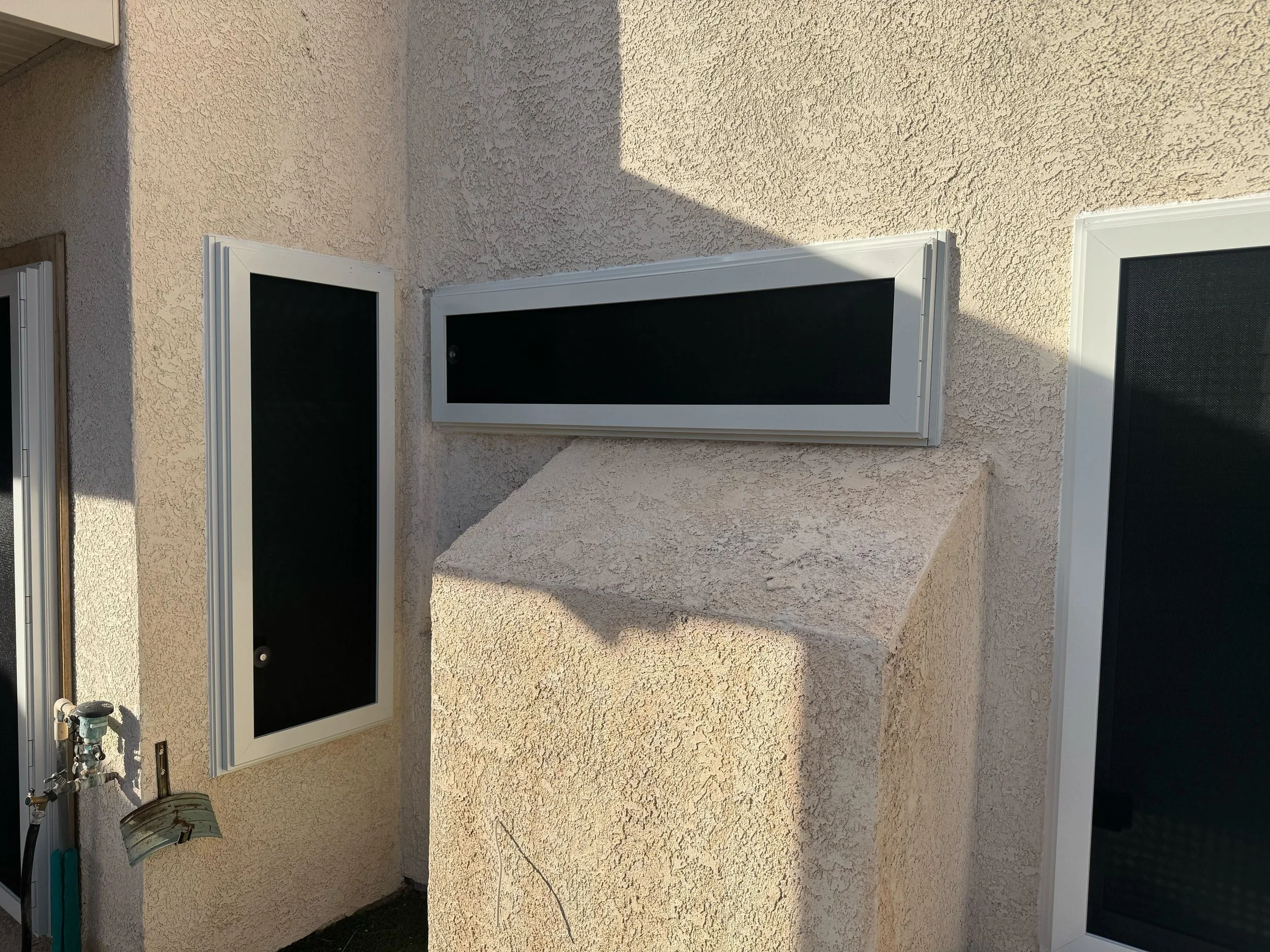
Boss Security Screens combines Australian-level strength with U.S. climate optimization and lifetime durability.
If your priority is maximum real-world protection, aesthetics, and local support, Boss stands out as the most balanced option — engineered for the environment you actually live in.