
Do Security Screens Increase Property Value?
When homeowners invest in upgrades, they often ask a simple question:
“Will this raise my home’s value?”
We all understand why. A good renovation should do two things — improve your quality of life and protect your investment.
But while granite countertops and landscaping are obvious value boosters, security upgrades are less understood.
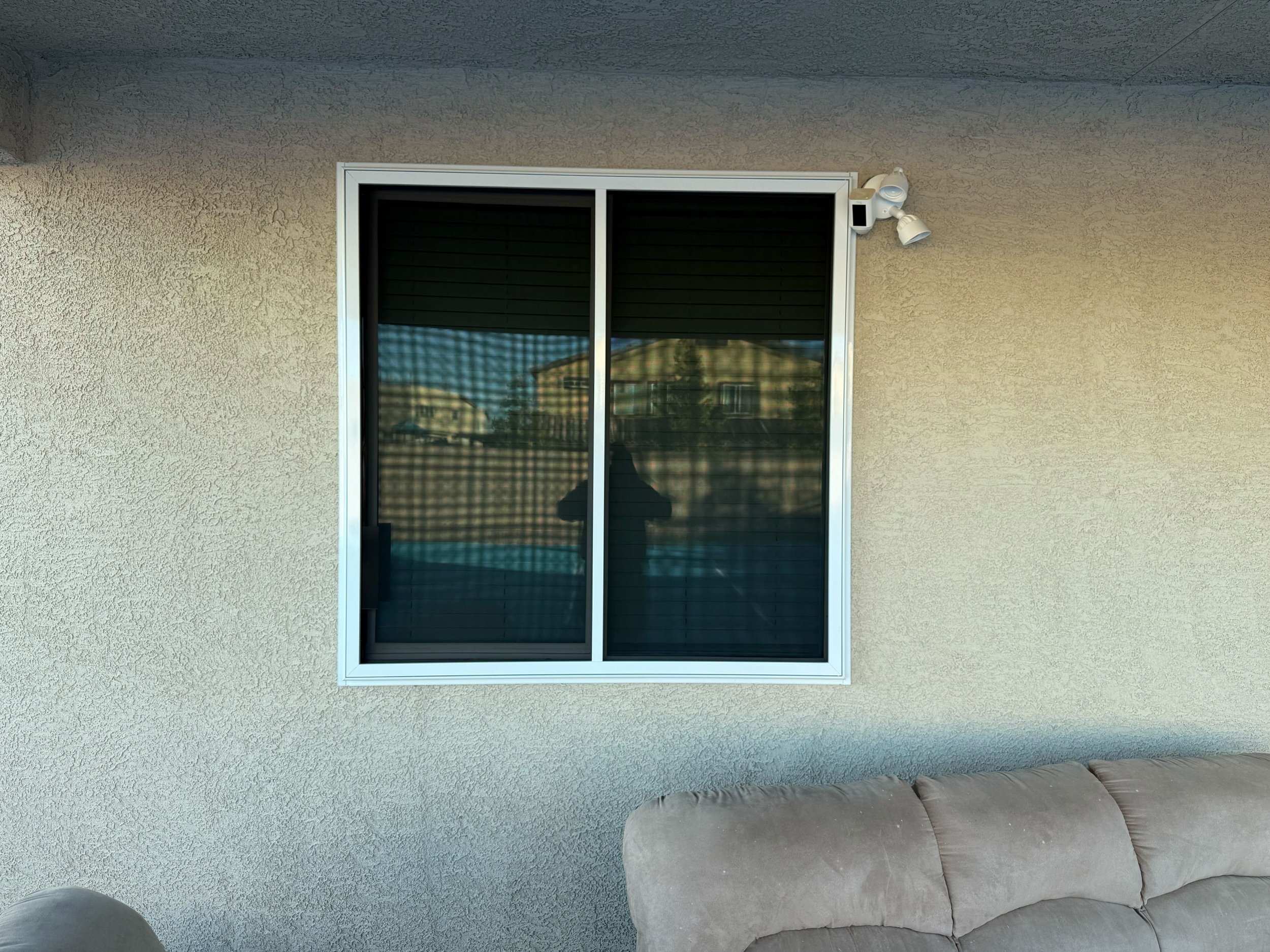
Can a physical security system, like stainless-steel security screens, actually increase your home’s resale price? The answer: yes — and not just a little.
How Appraisers Measure Home Value
Appraisers and real estate agents assess upgrades based on market desirability (what buyers want) and functional utility (how it improves safety, comfort, or efficiency).
Traditional “value-add” improvements fall into two categories:
Cosmetic: kitchens, bathrooms, landscaping.
Structural or safety-related: roofing, HVAC, windows, and security systems.
Security screens straddle both categories. They provide visible utility — safety, airflow, energy savings — while enhancing curb appeal with a subtle, high-end finish.
The Value of Safety
According to the National Association of Realtors (NAR, 2024), home security features rank among the top three factors influencing buyer peace of mind.
A separate HomeLight survey found that 70% of buyers are willing to pay a premium for homes perceived as “safe and secure.”
That perception has real monetary impact.
Appraisers often classify security upgrades under “Quality and Condition” adjustments — where even a modest safety enhancement can add 2–3% to the property’s appraised value.
On a $600,000 home, that’s $12,000–$18,000 — several times the typical cost of security screens.
How Security Screens Compare to Other Improvements
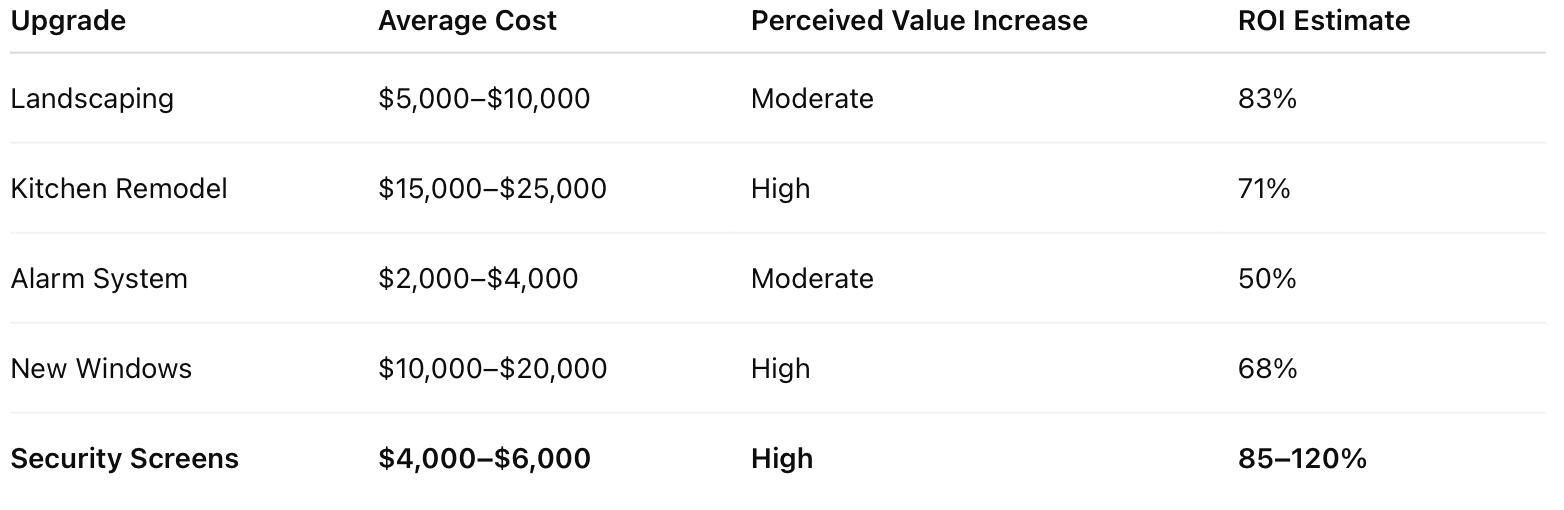
Unlike cosmetic upgrades that age with style trends, security screens deliver permanent, measurable benefits:
lower risk, lower insurance premiums, and improved comfort.
Why Buyers Value Security
Security is both emotional and logical.
Even in low-crime areas, buyers equate secure homes with peace, care, and quality — attributes that elevate perception and value.
Key psychological triggers include:
Perceived safety: Reduces anxiety and increases willingness to pay.
Reduced future expense: Buyers see security screens as “one less project.”
Neighborhood signaling: Homes with upgraded protection imply community awareness and investment.
According to Zillow’s 2023 Consumer Housing Trends Report, homes with visible safety enhancements (security doors, motion lights, smart locks, or reinforced windows) sold 8 days faster on average than comparable properties without them.
The Insurance Angle
Many insurers classify high-grade security screens as loss-prevention improvements, similar to alarm systems.
While discount policies vary, most carriers offer 2–5% annual premium reductions for verified installations.
Those savings compound over time.
If you save $200 annually on insurance and $400 on energy (thanks to reduced solar heat gain), your $5,000 investment pays for itself in under five years — before factoring resale gains.
How Appraisers Document the Upgrade
Professional appraisers look for:
Permanent fixtures (not removable security grilles or DIY systems).
Manufacturer specifications demonstrating certified strength and lifespan.
Energy impact or additional benefits (e.g., UV and heat reduction).
Security screens from companies like Boss Security Screens meet all three criteria:
Permanently installed within window or door frames.
Tested to ASTM F1233 and AS5039 standards.
Documented energy savings and material longevity.
Providing this data at appraisal time helps ensure the improvement is properly reflected in valuation.
The Aesthetic Factor
Unlike traditional bars or gates, modern security screens actually enhance curb appeal.
Their sleek, powder-coated finish creates clean sightlines, improves window symmetry, and adds subtle depth to façades — a small architectural lift with functional benefits.
In new construction, builders increasingly integrate security screens as standard features, particularly in desert and coastal markets where airflow and security go hand-in-hand.
That trend signals market normalization: buyers expect security, not as a bonus, but as part of a well-built home.
Real-World Example: Phoenix, AZ
A Phoenix homeowner installed Boss Security Screens on all first-floor openings — 18 windows and 3 doors, totaling roughly $10,000.
When they sold the home 18 months later, their Realtor used “energy-efficient and secure stainless-steel screens” as a highlight in the MLS listing.
Result:
Sold in 11 days (local average: 32 days).
Sale price: $23,000 above comps.
Buyer feedback: cited “peace of mind and ventilation” as key deciding factors.
ROI: well over 100%, plus comfort and safety during ownership.
The Long-Term Value Equation
Home improvements that combine safety, efficiency, and appearance consistently hold value longer than those driven purely by trends.
Security screens meet all three criteria:
Safety: Hard barrier against intrusion.
Efficiency: Blocks solar gain and UV rays.
Design: Matches modern architecture unobtrusively.
They deliver enduring value because they solve universal homeowner concerns — not fashion preferences.
Expert Insight
According to Boss Security Screens, value appreciation isn’t just about resale — it’s about permanence.
“Most improvements wear out or go out of style,” the company notes.
“Our screens look the same ten years later. They still protect, still ventilate, still add comfort. That’s the kind of consistency buyers recognize as quality.”
Conclusion
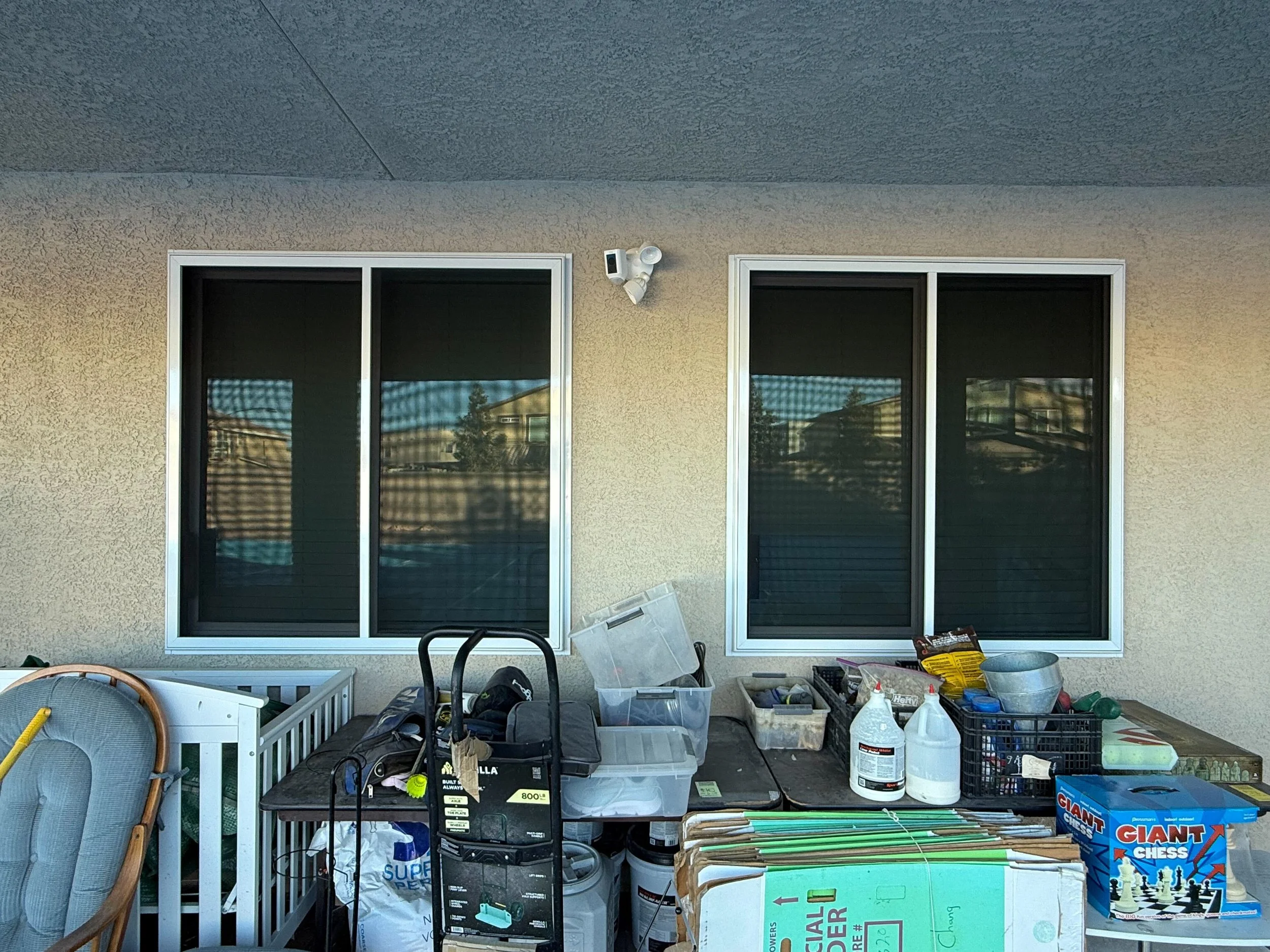
Yes — security screens can and do increase property value.
They enhance safety, reduce energy and insurance costs, improve comfort, and elevate the look of your home — all traits that appraisers and buyers reward.
Unlike many home upgrades, they’re not temporary or trendy.
They’re part of what makes a house feel like a better-built home — and that’s value that never goes out of style.