
Protecting Your Inland Empire Home: Top 5 Security Screen Installation Mistakes
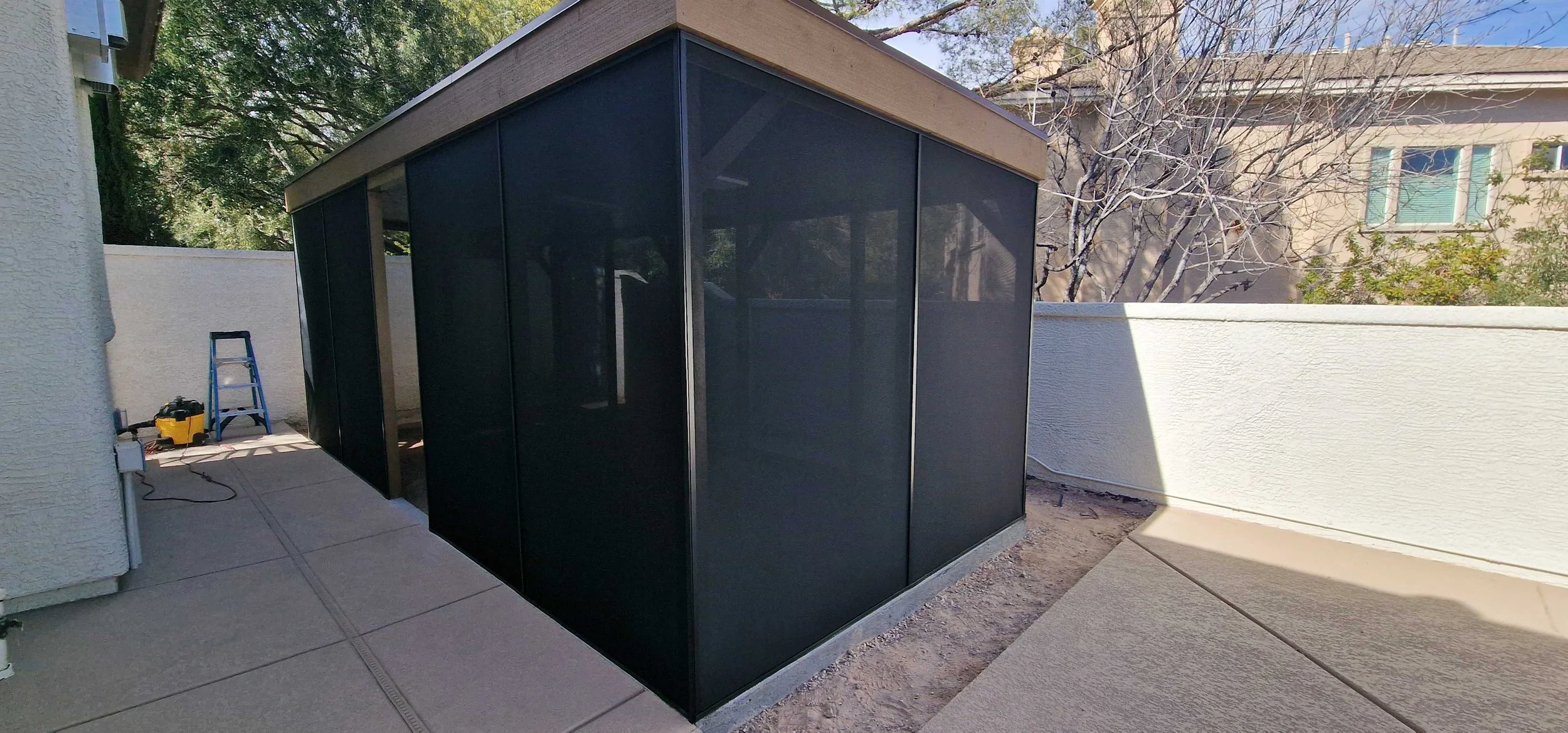
For homeowners in Rancho Cucamonga, Riverside, and the wider Inland Empire, security screens are more than just a safety measure they are a lifestyle upgrade. In a region known for hot summers and the famous Santa Ana winds, the ability to leave windows open for evening airflow without compromising safety is a game-changer.
However, like any investment in your property, the effectiveness of these screens depends entirely on the installation. Even the highest-grade stainless steel mesh won’t stop an intruder if it is poorly fitted to the stucco or mismatched to your frame.
Here are the top five mistakes local homeowners make when installing security screens—and how to ensure your home remains safe and HOA-compliant.
1. Choosing the Wrong Type of Screen
Not all "security screens" are capable of handling the threats faced by suburban homes. Many products sold at big-box hardware stores are simply reinforced insect screens. They might keep the flies out during a summer BBQ, but they fail basic security standards.
What goes wrong:
Thin mesh that can be easily cut with a utility knife.
Frames made from soft aluminum or plastic that warp in the intense Inland Empire heat.
Attachments using surface clips that can be pried off.
What to do instead: Look for screens tested under recognized global standards:
AS5039 (Australia): Passes dynamic impact, knife shear, and jemmy tests.
ASTM F1233 (U.S.): Rated for security glazing performance.
Pro Tip: Always ask for the manufacturer’s test reports. Whether you live in a gated community in Alta Loma or a historic home in downtown Riverside, real security products will always have documentation.
2. DIY or Unqualified Installation
A professional-grade product will fail if it is installed like a standard window screen. DIY attempts often involve screwing into the decorative trim or wood siding rather than the structural frame.
Common issues:
Frames not anchored into the structural opening (studs or masonry).
Uneven mesh tension causing "flex points" that weaken the screen.
Misaligned locks that jam when the house settles or expands in the heat.
The Local Reality: According to Boss Security Screens, over 30% of their service calls involve replacing incorrectly installed "security" products fitted by handymen. In our area, where stucco exteriors are common, improper drilling can also lead to moisture leaks and cracking.
Solution: Hire a certified, licensed contractor who installs screens mechanically anchored to the building envelope—not just the window trim.
3. Ignoring Frame and Hardware Quality
In the Inland Empire, the sun is unforgiving. The frame and fasteners are the unsung heroes of your security screen; they bear the brunt of impact force and environmental stress.
Mistakes to avoid:
Using thin, roll-formed aluminum frames that bend easily.
Non-stainless screws that corrode or shear off.
Cheap locks that degrade after a few seasons of dusty wind.
Better choice:
Extruded aluminum or stainless-steel frames that resist warping.
Tamper-resistant screws with deep anchoring.
Locks rated for ANSI Grade 2 or higher.
Boss Security Screens utilizes marine-grade 316 mesh with mechanical and adhesive bonding. This ensures the frame and mesh function as one solid barrier, capable of withstanding both intruders and the scorching July sun.
4. Skipping Custom Fitting (The Santa Ana Factor)
Every window and door opening is slightly different, even in the newer developments of Eastvale or Fontana. Installing stock-size screens leaves small gaps or overhangs.
What happens:
The Rattle: This is specific to our region. When the Santa Ana winds kick up, a misfit frame will vibrate and rattle loudly, keeping you awake at night.
Gaps around corners invite pry attempts.
HOA violations due to uneven aesthetics.
Fix: Choose custom-measured, precision-fit screens. Professional installers use digital laser measuring tools to ensure perfect alignment with your home’s architecture. The result is a screen that is silent in the wind and blends seamlessly with your home.
5. Forgetting Maintenance and Aftercare
While security screens are low maintenance, the dusty environment of the Inland Empire requires specific care. Neglect can shorten the life of the screen and dull its curb appeal.
Typical neglect issues:
Dust and sand buildup in the mesh blocking that crucial airflow.
Corrosion around unsealed screw heads (often caused by sprinklers hitting the windows).
Fading powder coat from harsh chemical cleaners.
Maintenance tips for the IE:
Hose down screens quarterly (more often during fire/wind season to remove ash and dust).
Use mild soap and water only.
Avoid bleach or high-pressure power washing.
Wipe frame edges with a soft cloth to protect the powder-coat finish from UV degradation.
Bonus: Overlooking HOA Guidelines
Many homeowners in Rancho Cucamonga and master-planned communities focus on strength but overlook appearance—until they receive a letter from their HOA.
Fortunately, modern security screens come in color-matched frames and slimline designs. When done right, your screens should disappear into the design—not stand out like "bars on the windows."
Expert Insight
According to Boss Security Screens, true protection is 50% engineering and 50% installation quality.
"We see it all the time—strong materials installed weakly," says their engineering team. "Our goal is to integrate the product into the structure. When it’s bonded correctly, it becomes part of the house, not just something attached to it."
The 5 Mistakes to Avoid
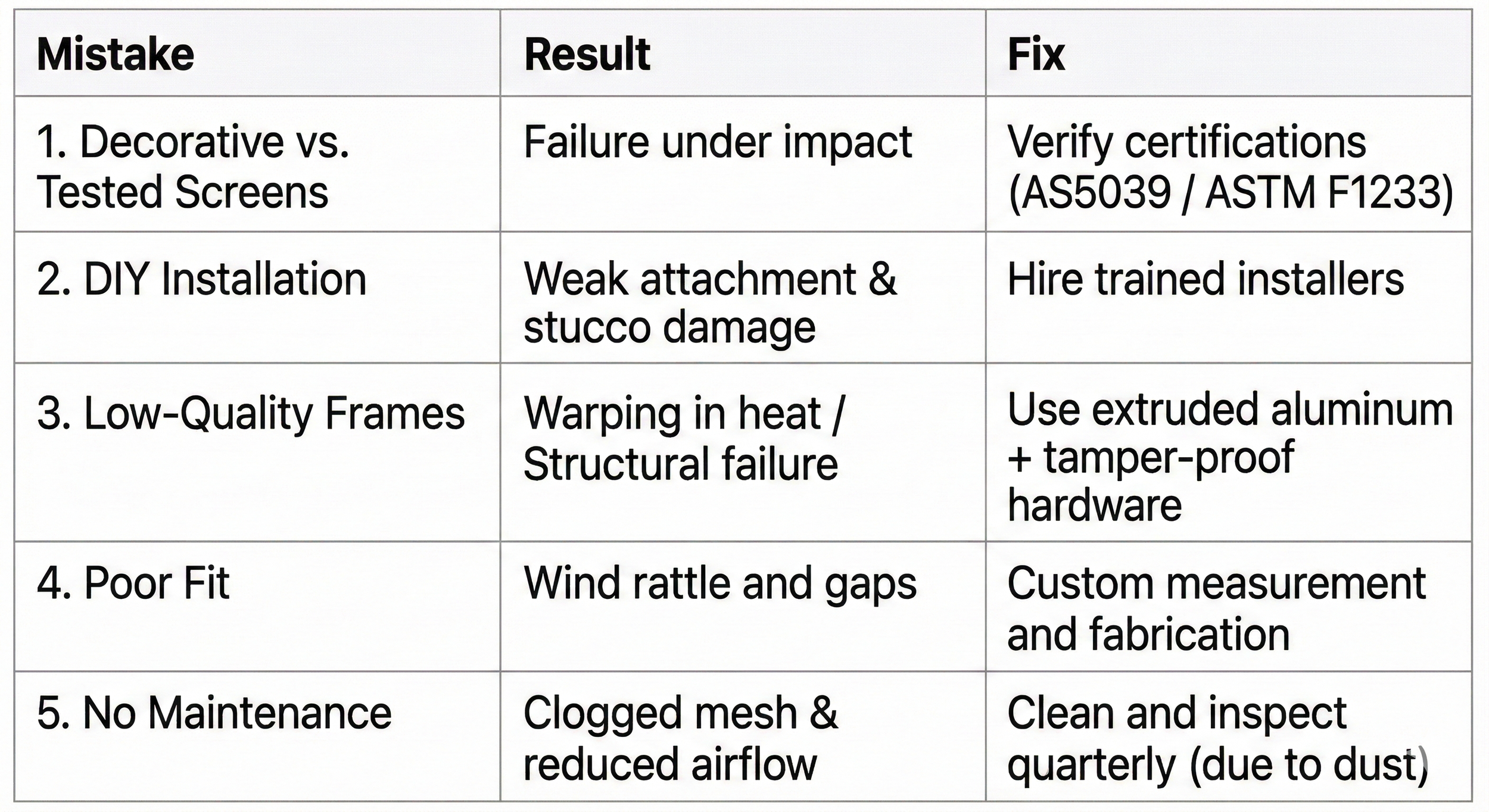
The 5 Mistakes to Avoid
Conclusion
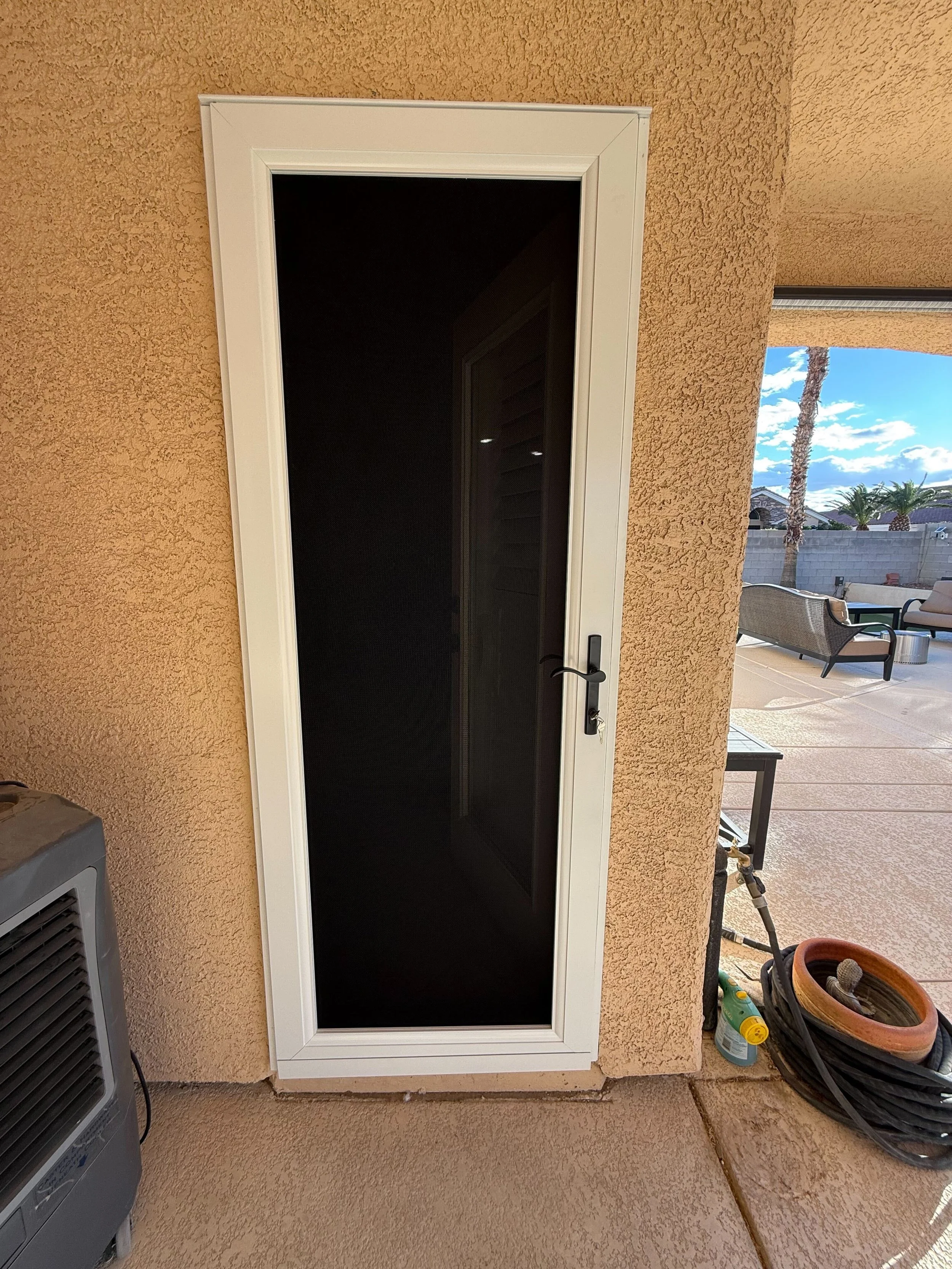
For residents of Rancho Cucamonga, Riverside, and nearby areas, security screens are one of the smartest upgrades you can make. They allow you to enjoy the cooling evening breeze safely.
Avoid the shortcuts, choose quality materials that can handle the local climate, and work with certified professionals. A well-built, well-fitted screen doesn’t just resist impact—it becomes part of your home’s armor for decades to come.