
Security Screen Door Installation: What Phoenix and Las Vegas Homeowners Should Expect
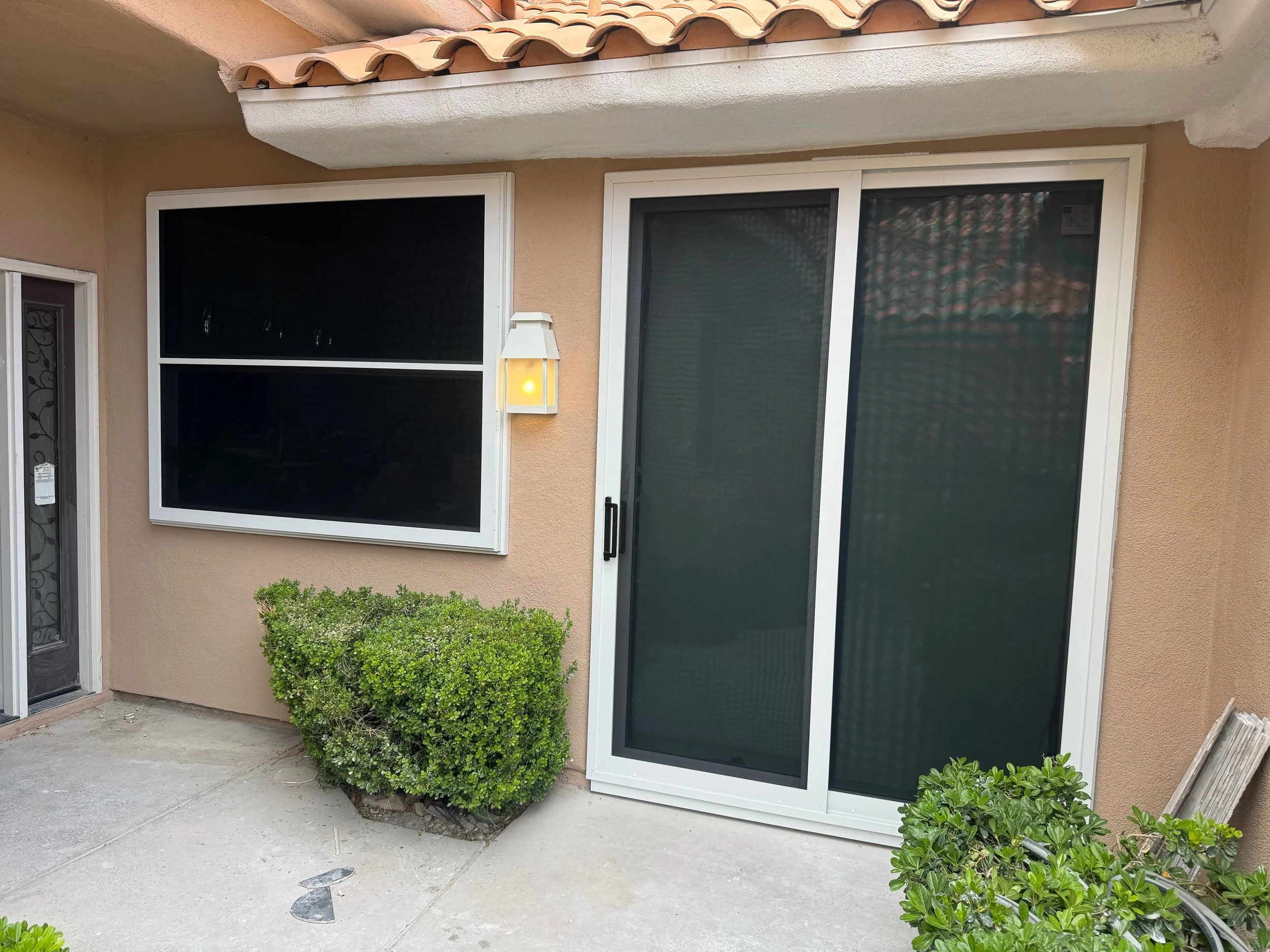
A security screen door is one of the highest-leverage upgrades a desert homeowner can make. It hardens the most-used entry point in the house, lets the breeze through without letting anything else in, and quietly does its job for decades. But a real security screen door is not a hardware-store storm door — it is a structural component built and installed to a different standard. This guide walks through what happens during a professional security screen door installation, what separates a real product from a decorative one, and what homeowners in Phoenix, Scottsdale, and Las Vegas should expect from the process.
Why Security Screen Doors Outperform Standard Screen Doors
A standard insect screen door is built to keep flies out. A security screen door is built to keep people out. The difference shows up in every component. The frame on a quality security screen door is roll-formed aluminum or marine-grade steel, anchored to the door jamb with through-bolts rather than wood screws. The mesh is woven stainless steel, typically tested to AS5039 — the Australian standard that subjects screens to knife-shear, jimmy, dynamic-impact, and pull tests — or to the U.S. ASTM F1233 forced-entry standard. The lock is a multi-point system with a keyed deadbolt, not a thumb-latch. Together, these specs turn an ordinary opening into a fortified one without changing how the door looks or operates day to day.
Homeowners often ask whether a security screen door really replaces the need for security bars. In practice, it does — and it does so without the prison-bar aesthetic. A fine-mesh stainless screen is nearly invisible from a few feet away, preserves the architecture of the home, and meets HOA guidelines that bars typically violate.
The Site Visit and Custom Measurement Process
Every legitimate security screen door is built to the exact dimensions of the opening it will protect. That means the process starts with an in-person measure, not an online order form. A Boss Security Screens technician visits the property, inspects the existing door frame and jamb, checks the swing clearance, confirms the threshold condition, and discusses lock orientation, color, and mesh type with the homeowner. For sliding patio installations, the technician also checks the track condition, the head clearance, and whether the existing slider is single-track or double-track — all of which affect how the security screen will be configured.
This step is where corner-cutting shows up later. A door measured roughly will not seat properly into the jamb, which means the lock points will not engage cleanly, and the whole assembly loses its security rating. Anyone quoting a price without a site visit is selling a generic door, not a security one.
What Happens on Installation Day
A typical front-door security screen installation takes between two and four hours. The crew arrives with the custom-built door, removes any existing screen door, prepares the jamb (filling old screw holes, leveling the frame surface, and verifying square), and dry-fits the new door. Once alignment is confirmed, the frame is anchored with hardened steel through-bolts at multiple points along the hinge side and lock side. The lock keeper is then mortised into the strike side of the jamb so the deadbolt seats into solid steel rather than wood. Hinges on a quality install are non-removable pin or welded knuckle hinges that cannot be defeated from the outside.
Sliding security screen door installations follow a similar process but include track work. The crew often replaces or supplements the original sliding track with a heavier-gauge guide and installs commercial-grade ball-bearing rollers so the screen glides smoothly even with daily use. A proper slider install includes a top-mounted anti-lift block — a small but critical detail that prevents the most common forced-entry attack on patio doors, which is simply lifting the panel out of the track.
Front Door, Sliding Door, and Window Screen: Different Installs, Same Standards
Most homeowners start with one opening — usually the front door — and expand from there. A common sequence is front entry first, then the back patio slider, then the high-traffic windows. Each install is mechanically different but built to the same security standard. A front door security screen carries a multi-point lock and keyed deadbolt because it is a swing-operated entry. A sliding security screen runs on bearings and locks at multiple points along the leading edge. A security window screen is fixed in place and built to defeat a sustained pry attack against the sash. The mesh, the frame, and the testing criteria are the same across all three; only the operating mechanism changes.
This matters in practice because real homes rarely have just one weak point. A homeowner in Scottsdale recently asked for a single front-door upgrade and ended up adding sliding patio coverage and rear window screens within the same calendar year, after realizing the front door was no longer the soft target on the property. A whole-home approach gets there faster and usually at a lower per-opening cost.
Maintenance and Long-Term Performance
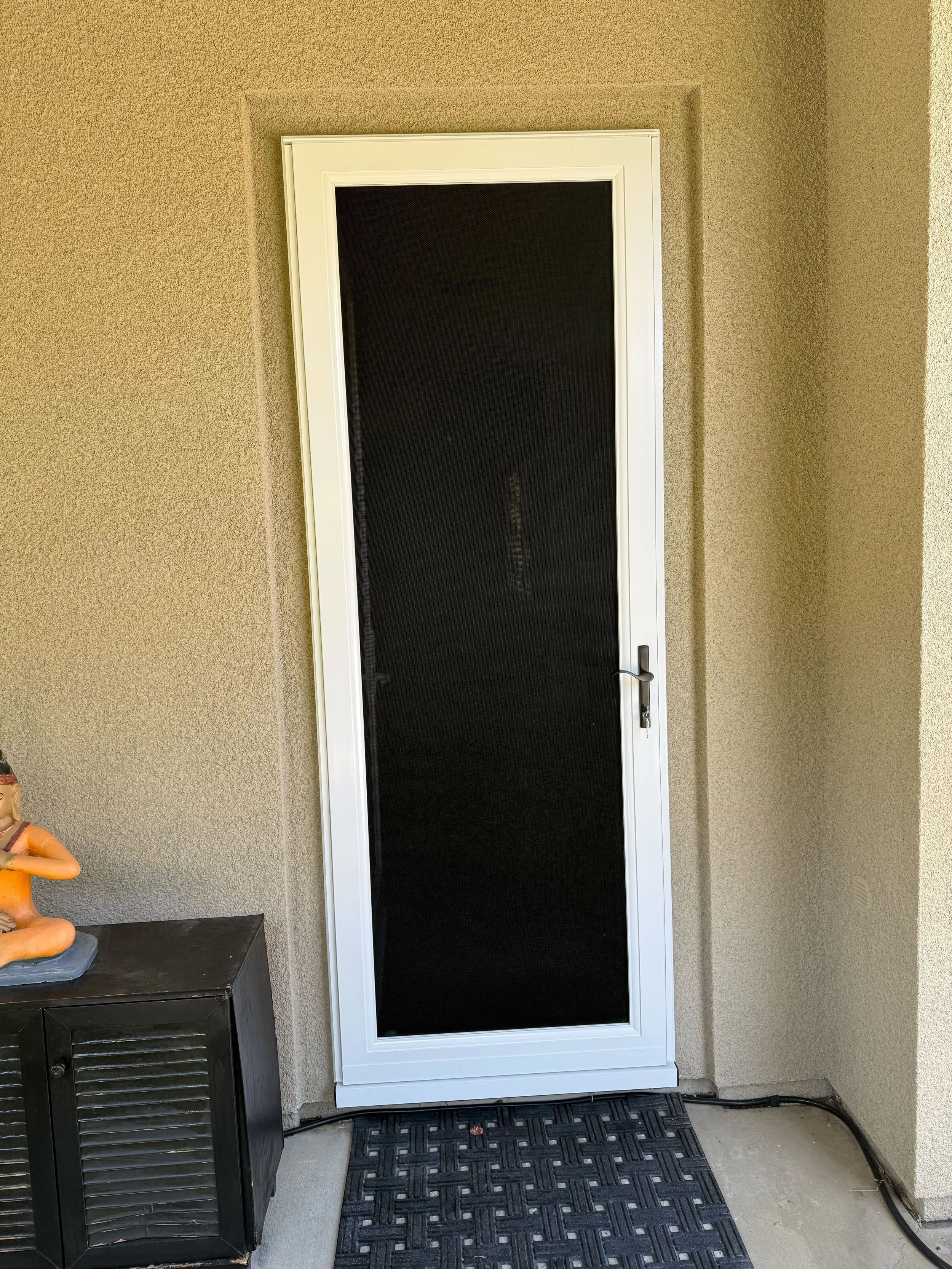
One of the underrated advantages of a stainless-mesh security screen door is how little it asks of the homeowner. The mesh does not corrode, the powder-coated frame does not fade in desert sun, and the lock cylinders are weatherproof. Routine care is limited to a hose-down every few months and a drop of dry lubricant on the rollers and lock points once a year. There are no annual contracts, no batteries, and no monitoring fees. A correctly installed security screen door from Boss Security Screens is engineered to outlast the door it protects.
For homeowners across Phoenix, Scottsdale, Mesa, Henderson, Summerlin, and Las Vegas, a security screen door installation is one of the few home upgrades that returns value every single day — through airflow, security, energy savings, and curb appeal at once. To schedule a no-cost site visit and custom measure, visit https://bosssecurityscreens.com/ and request your free estimate.