How Do Burglars Break In? A 2026 Homeowner’s Security Checklist
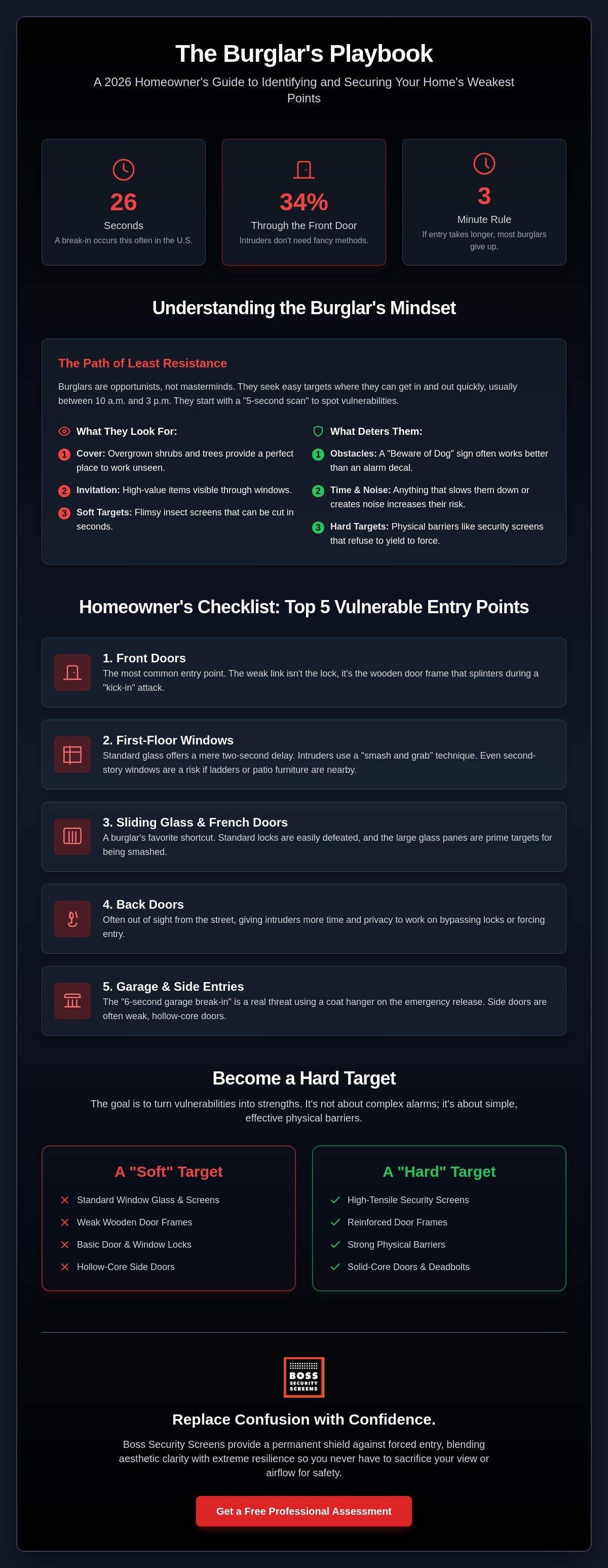
A break-in occurs every 26 seconds in the U.S. Surprisingly, 34% of these intruders simply walk through the front door. While we often imagine elaborate heists, the reality of how do burglars break in is far more blunt. They exploit "soft" openings like standard glass and basic insect mesh. These materials offer zero resistance to force. Understanding these vulnerabilities is the first step toward reclaiming your peace of mind.
You likely feel a familiar sting of anxiety when locking up for the night. You wonder if a sliding door or a first-floor window is truly secure. It's frustrating to navigate the sea of security gadgets, unsure which ones actually provide a permanent solution for your family. We're here to replace that confusion with total confidence. Our goal is to act as your knowledgeable guide, providing professional-grade information that keeps your household safe.
In this 2026 homeowner’s checklist, you'll discover the most common entry methods used today. You'll learn how to secure your property's weakest points effectively. We'll preview the essential physical barriers, such as high-tensile security screens, that offer a unique blend of aesthetic clarity and extreme structural resilience. This guide provides a clear, actionable plan to transform your home into a hard target and protect what matters most.
Key Takeaways
- Master the "Path of Least Resistance" concept to understand exactly how do burglars break in and why they prioritize speed over stealth.
- Audit your property using our checklist of the five most vulnerable entry points, including standard door frames and garage entries.
- Uncover the specific weaknesses of sliding glass doors and learn why standard locks often fail against simple lifting techniques.
- Explore the "Hard Target" philosophy to stop forced entry with security screens that provide a permanent shield without sacrificing your view or airflow.
Understanding the Burglar’s Playbook: How Entry Points Are Chosen
Burglars are essentially professional opportunists. They don't look for a challenge; they look for the "Path of Least Resistance." Most residential Burglary cases aren't the result of sophisticated planning or high-tech tools. Instead, they happen because a home looks easy to penetrate. If you've ever wondered how do burglars break in, the answer is usually through the most obvious opening available. They want maximum reward for minimum effort.
Believe it or not, 34% of burglars enter through the front door. They aren't picking locks like characters in a spy movie. They're using simple, blunt force to kick the door or frame until the wood splinters and gives way. This typically happens in broad daylight. Most break-ins occur between 10 a.m. and 3 p.m. while you're at work and the neighborhood is quiet. Efficiency is their priority, which leads to the "3-Minute Rule." If an intruder can't gain entry in under three minutes, they'll likely abandon the attempt. They know that every extra second spent at a door increases the risk of being spotted.
The Scouting Phase: What Burglars Look for First
Before the first strike, there's a "5-second scan." Burglars look for visual cues that suggest a home is vulnerable. Overgrown shrubbery and trees provide the perfect cover to work unseen. High-value electronics or jewelry visible through a window act as a direct invitation. They specifically look for "soft targets" like homes protected only by standard insect screens. These flimsy mesh barriers offer zero resistance; a simple pocket knife can clear a path in seconds. Interestingly, a "Beware of Dog" sign is often a more powerful deterrent than a generic alarm decal. It represents an unpredictable, physical obstacle that complicates their exit strategy. Hardening your home starts with removing these invitations and replacing them with security window screens that refuse to yield.
The Most Vulnerable Entry Points: A Homeowner’s Checklist
To secure your property, you first need to think like an intruder. Identifying exactly how do burglars break in starts with a clear-eyed assessment of your home's perimeter. Statistics show that most criminals don't look for a challenge; they look for the path of least resistance. Here are the top five entry points you should audit today:
- Front doors
- First-floor windows
- Sliding glass doors
- Back doors
- Garage and side entries
Forced entry is the use of physical power or tools to bypass structural barriers. Many homeowners rely on high-end deadbolts, but a lock is only as strong as the frame holding it. In a typical "kick-in" attack, the standard wooden door frame fails long before the lock does. Similarly, standard double-pane glass is often a "smash and grab" invitation. It provides about a two-second delay for a motivated intruder. Research on the Burglary of Single-Family Houses highlights that physical barriers are the most effective way to disrupt these quick strikes. Speed and noise are a burglar's enemies; your goal is to maximize both.
Windows: The Invisible Opening
We often neglect second-story windows, leaving them unlocked under the assumption they're out of reach. However, burglars frequently use ladders found in yards or even patio furniture to gain access. Louvered or jalousie windows, common in older Southwestern homes, are particularly risky because the glass slats can be removed silently from the outside. If you're relying on standard insect screens, remember they're designed for bugs, not burglars. They offer no structural integrity and can be bypassed with a simple utility knife.
Garage and Side Entrances
The "6-second garage break-in" is a real threat. An intruder can use a simple coat hanger to reach the emergency release cord and manually open the door from the outside. Additionally, the side "man-door" of a garage is often the most neglected security point in a house, frequently left with a weak lock or a hollow-core door that can't withstand a shoulder barge. If you aren't sure where your home stands, it might be time for a professional security assessment to identify these hidden gaps.
Sliding Glass and French Doors: The Burglar’s Favorite Shortcuts
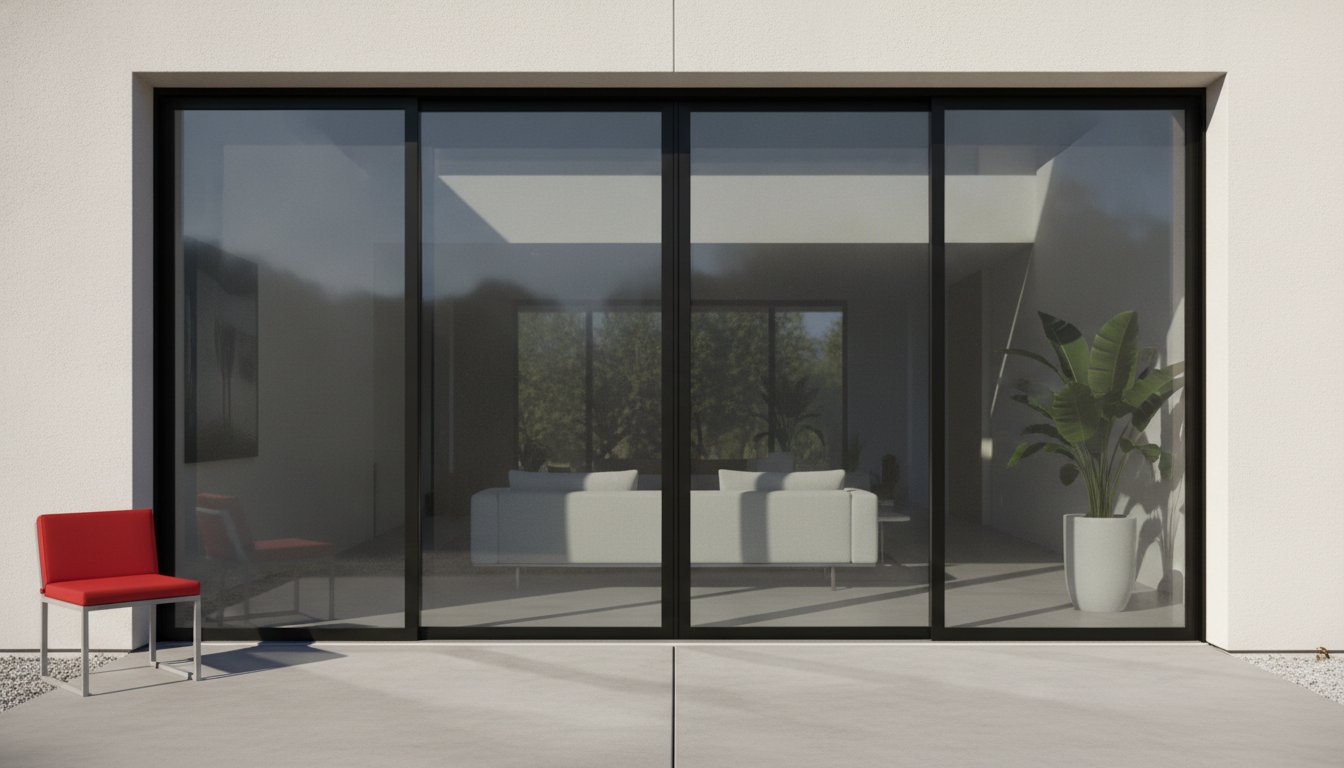
Sliding glass doors, often called Arcadia doors, are the top vulnerability for homes in Phoenix and Las Vegas. These large glass spans are beautiful, but they serve as a visual invitation for criminals. They allow an intruder to scan your floor plan and spot valuables before they even touch the handle. When considering how do burglars break in, many people overlook the "lifting" technique. Most standard sliding doors aren't secured against vertical movement. A burglar can often use a simple pry bar to lift the entire door off its tracks, bypassing the lock completely. Installing security for patio sliding glass doors provides a permanent physical barrier that stops this exploit cold.
The Myth of the 'Standard' Insect Screen
Many homeowners suffer from the "Screen Illusion." They feel a false sense of security because a screen is closed. In reality, standard mesh is designed to keep bugs out, not people. It can be sliced silently in seconds with a pocket knife. Even worse, a standard screen actually helps a burglar. It acts as a visual shield, hiding their hands and tools from the street while they work on the window or door lock. It’s a "soft" opening that practically invites a closer look.
French Doors: The Double-Door Dilemma
French doors are a classic aesthetic choice, but they present a unique double-door dilemma. The center point where the two doors meet is a massive structural weakness. Without a solid center post, a well-placed kick can easily overcome the latch. Custom security for French doors reinforces this entire opening. It provides the heavy-duty protection of high-tensile stainless steel without ruining the visual appeal of your entryway. You get the strength of a vault with the clarity of glass. If you’re ready to close these shortcuts for good, schedule your free security consultation today.
Turning Your Home into a Hard Target with Boss Security Screens
Understanding exactly how do burglars break in is half the battle. The other half is making sure they never choose your home in the first place. This is the "Hard Target" philosophy. When a criminal scans your property and sees a high-tensile security screen, they don't see an opportunity; they see a dead end. Most burglars will simply move on to an easier target rather than risk the noise and time required to bypass a true physical barrier. They want a quick win, and a security screen tells them they won't find one here.
Boss Security Screens act as an "Invisible Shield" for your home. You maintain your beautiful views and natural airflow while gaining a permanent solution to forced entry. However, the screen is only as strong as its attachment point. Professional installation is non-negotiable for real protection. We anchor our frames directly into the home’s structural framing, not just the decorative trim. This ensures the entire opening is reinforced against blunt force. Beyond immediate safety, these are home security upgrades that add value to your property and your quality of life.
Why High-Tensile Steel Mesh Stops Forced Entry
The secret to our resilience is 304 stainless steel mesh. This isn't your standard hardware store wire. It’s a high-impact material that cannot be cut with knives or kicked through by an intruder. Even with heavy tools, the mesh absorbs and distributes the force, keeping the threat outside. For your peace of mind, our security window screens include a "Quick-Release" mechanism. This allows for an easy exit during a fire or emergency, ensuring your family is safe from both outside threats and internal hazards.
Next Steps: Professional Assessment
A DIY approach to security often leaves subtle gaps that a professional would never miss. A burglar only needs a small weakness in a frame or a missed anchoring point to gain leverage. Our experts treat security as a non-negotiable priority, identifying the specific vulnerabilities unique to your floor plan. We invite you to schedule a free consultation to walk through your property with a pro. If you're planning your security budget, check out our custom security doors price guide to see how affordable permanent protection can be.
Secure Your Peace of Mind for the Long Term
You now have a clear understanding of the vulnerabilities that intruders look for when scanning a neighborhood. From the "lifting" technique on sliding doors to the structural fragility of standard door frames, the myth of the "soft target" is easy to expose. Realizing exactly how do burglars break in is the first step toward reclaiming your sense of safety. You don't have to wait for a crisis to realize your home needs a permanent structural upgrade.
Boss Security Screens has been family-owned and operated since 2019. We provide custom-built solutions for every window and door, serving homeowners in Las Vegas, Phoenix, and across California. Our high-tensile barriers offer the perfect blend of aesthetic clarity and extreme physical hardiness. It's time to replace anxiety with confidence by choosing a partner who treats your family's safety as a non-negotiable priority.
Secure your home today with a free Boss Security Screens consultation. You deserve to feel completely protected in your own space. Let's work together to make your property a hard target that keeps threats exactly where they belong: outside.
Frequently Asked Questions
What is the most common way burglars enter a house?
The front door is the most frequent entry point for intruders, accounting for 34% of all residential break-ins. Most criminals aren't looking for a complex challenge; they prefer easy access points that allow for a quick strike. They typically look for unlocked doors or use blunt force to kick through standard wooden frames, often gaining entry in under a minute.
Do burglars break in through the front door or the back door more often?
Burglars target the front door significantly more often than the back door. While 34% of intruders use the main entrance, approximately 22% enter through the back door. Understanding how do burglars break in helps you prioritize your security upgrades. Both areas are high-risk zones that require reinforced physical barriers, such as security doors, to prevent forced entry effectively.
How do burglars choose which house to target?
Criminals look for "soft targets" that offer a low risk of detection and a fast exit. They perform a rapid visual scan to spot overgrown landscaping, visible valuables, or a build-up of parcels on the porch. If a home looks occupied and features visible physical security measures, most burglars will skip it. They want the path of least resistance, not a difficult struggle.
Can a burglar cut through a security screen?
A standard insect screen can be sliced in seconds with a common pocket knife, but a professional security screen is nearly impossible to cut. These are engineered with 304 stainless steel mesh that resists knives, hammers, and even heavy kicks. It's a permanent structural barrier that turns a window or door into a "hard target," physically stopping the threat before it enters your home.
Do security cameras actually stop burglars from breaking in?
Cameras are effective deterrents, as 83% of burglars check for an alarm or camera system before attempting a break-in, but they don't physically stop entry. A camera records the event while it's happening, but it won't prevent a door from being kicked in. For total confidence, you should pair digital monitoring with physical security window screens that actually deny an intruder access to your living space.