
What Are the Testing Standards for Security Screens?
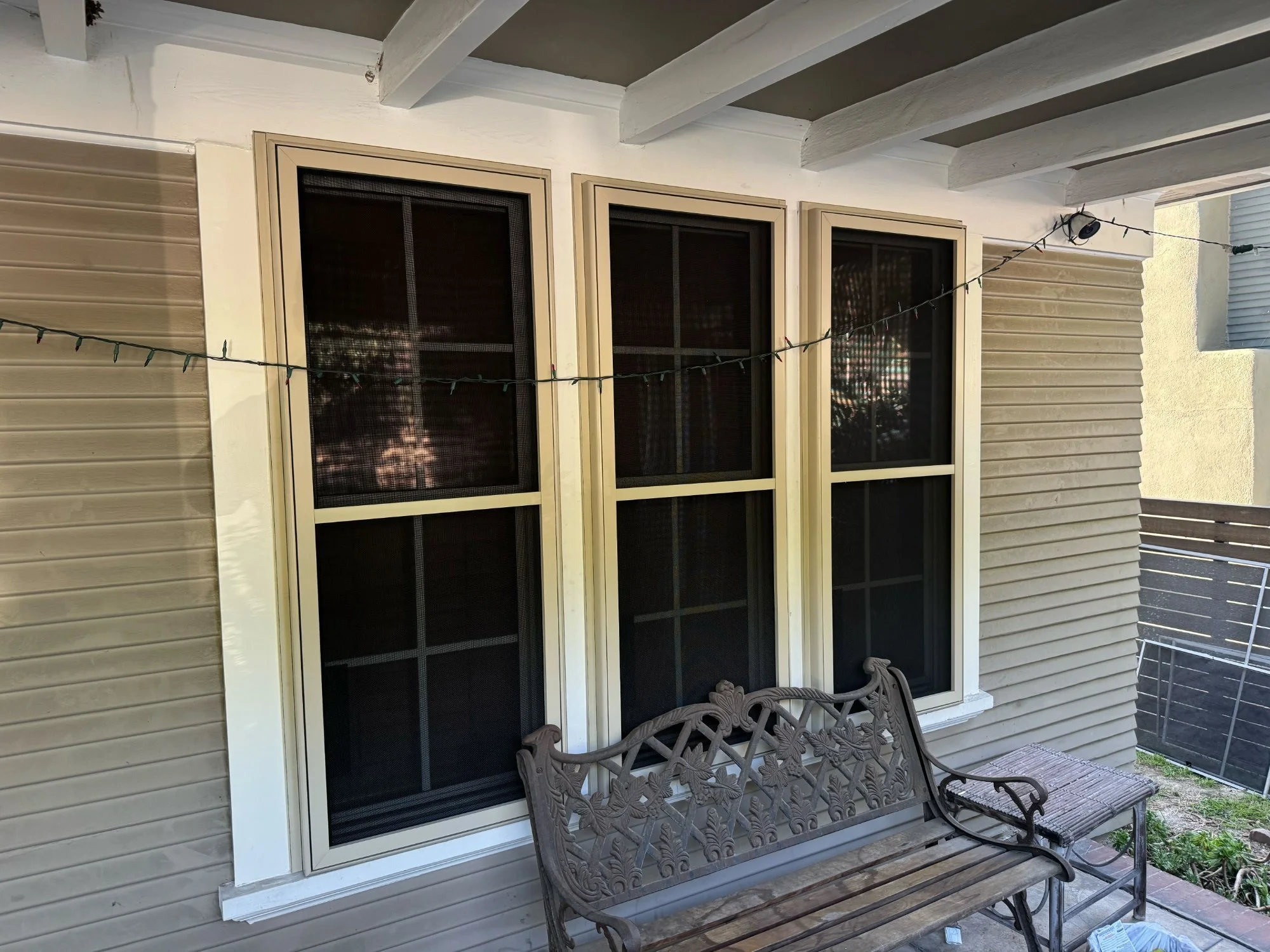
Not all products labeled “security screens” are truly secure. Many look identical from a distance — metal mesh, strong frames, heavy locks — but only a fraction meet the formal testing standards that prove real-world performance.
If you’re investing in security doors or window screens, understanding these standards can help you separate marketing from engineering — and ensure the system you buy actually works when it counts.
Why Standards Matter
A “security screen” is only as good as the testing behind it.
Without standardized testing, manufacturers can claim strength or safety without evidence.
The right certification tells you:
What type of force the product can withstand.
How long it resists attacks like cutting or prying.
Whether it’s been independently verified.
Reputable manufacturers — like Boss Security Screens — test to multiple international standards to ensure safety, durability, and performance across all environments.
The Two Main Global Benchmarks
Security screens are primarily tested under two international standards:
AS5039 / AS5041 (Australia)
ASTM F1233 (United States)
Each covers different aspects of performance, but both focus on one thing:
Can the screen stop a forced-entry attempt long enough to prevent a break-in?
1. AS5039: The Australian Standard
Australia pioneered security screen testing because of its high demand for ventilated yet secure housing.
This standard, AS5039: Security Screen Doors and Security Window Grilles, evaluates the structural integrity of doors and windows under simulated attack.
Key Tests:
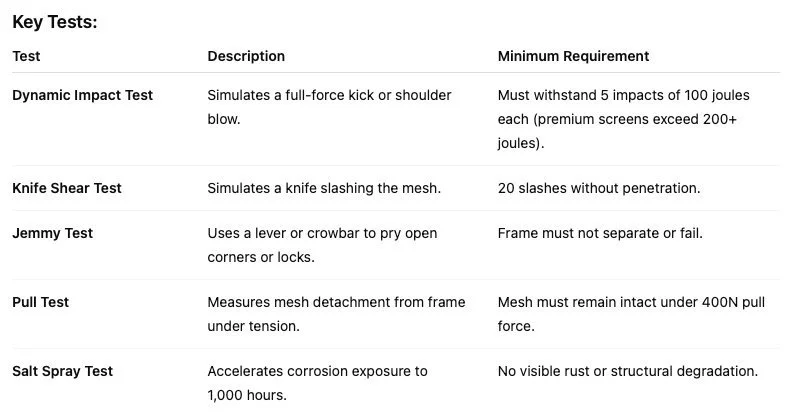
When a product passes AS5039 and its companion installation standard, AS5041, it qualifies as a true security screen system.
2. ASTM F1233: The U.S. Standard
ASTM F1233: Standard Test Method for Security Glazing Materials
is a comprehensive test originally designed for security glass and physical barriers — now applied to premium screen systems.
It measures resistance to manual attack, impact, and cutting with standardized tools.
Typical Evaluations:
Impact resistance using 2x4 and metal weights to simulate blunt force.
Knife and saw tests using controlled cutting tools.
Duration to failure — time it takes for an intruder to breach the barrier.
Security screens that pass ASTM F1233 are recognized as equivalent in strength to some commercial-grade storefront systems — a serious level of protection for residential homes.
3. Additional Relevant Standards
Beyond AS5039 and ASTM F1233, true high-performance systems may also be tested under:
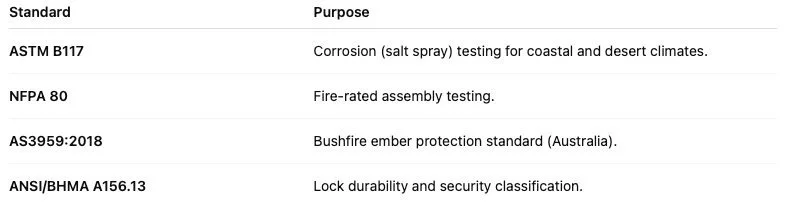
Boss Security Screens incorporates all these benchmarks into its design and manufacturing process — ensuring durability across both desert heat and coastal humidity.
What Each Test Simulates

These tests simulate years of abuse in minutes — a stress gauntlet that separates decorative screens from genuine security barriers.
The Problem With “Untested” Products
Many imported or budget screens skip independent testing altogether.
They may advertise terms like “high tensile,” “cut-resistant,” or “impact-proof,” but without certification, those claims are meaningless.
In field incidents, untested screens often fail after just one or two kicks — far below the threshold required to stop a real break-in.
For buyers, unverified performance means assuming risk with no guarantee.
How to Verify Compliance
Here’s how you can ensure your screen meets true security standards:
Ask for test reports from a certified lab (Intertek, SGS, or NATA-accredited).
Look for etched or labeled certification marks on product frames.
Request documentation showing both product and installation compliance (AS5039 + AS5041).
Check material specs: marine-grade 316 stainless steel mesh, extruded aluminum frame, tamper-proof fasteners.
If a company can’t or won’t provide documentation, it’s a red flag.
Boss Security Screens’ Testing Profile
Boss Security Screens designs every system to exceed AS5039 and ASTM F1233 impact thresholds, including:
Impact Resistance: >220 joules per strike.
Knife Shear: No penetration after 20 high-force cuts.
Corrosion: 1,000-hour ASTM B117 exposure, zero failure.
Frame Anchoring: Exceeds AS5041 installation pull standards.
The company’s testing is independently verified by U.S. laboratories — and continuously audited for consistency and compliance.
Why It Matters to Homeowners
These certifications aren’t marketing — they’re measurable safety.
A screen that’s tested and certified provides assurance that your investment will:
Stop real attacks, not just look strong.
Withstand years of weather exposure.
Remain compliant with insurance and building codes.
When lives and property are at stake, paper claims aren’t enough.
Only testing proves performance.
Conclusion
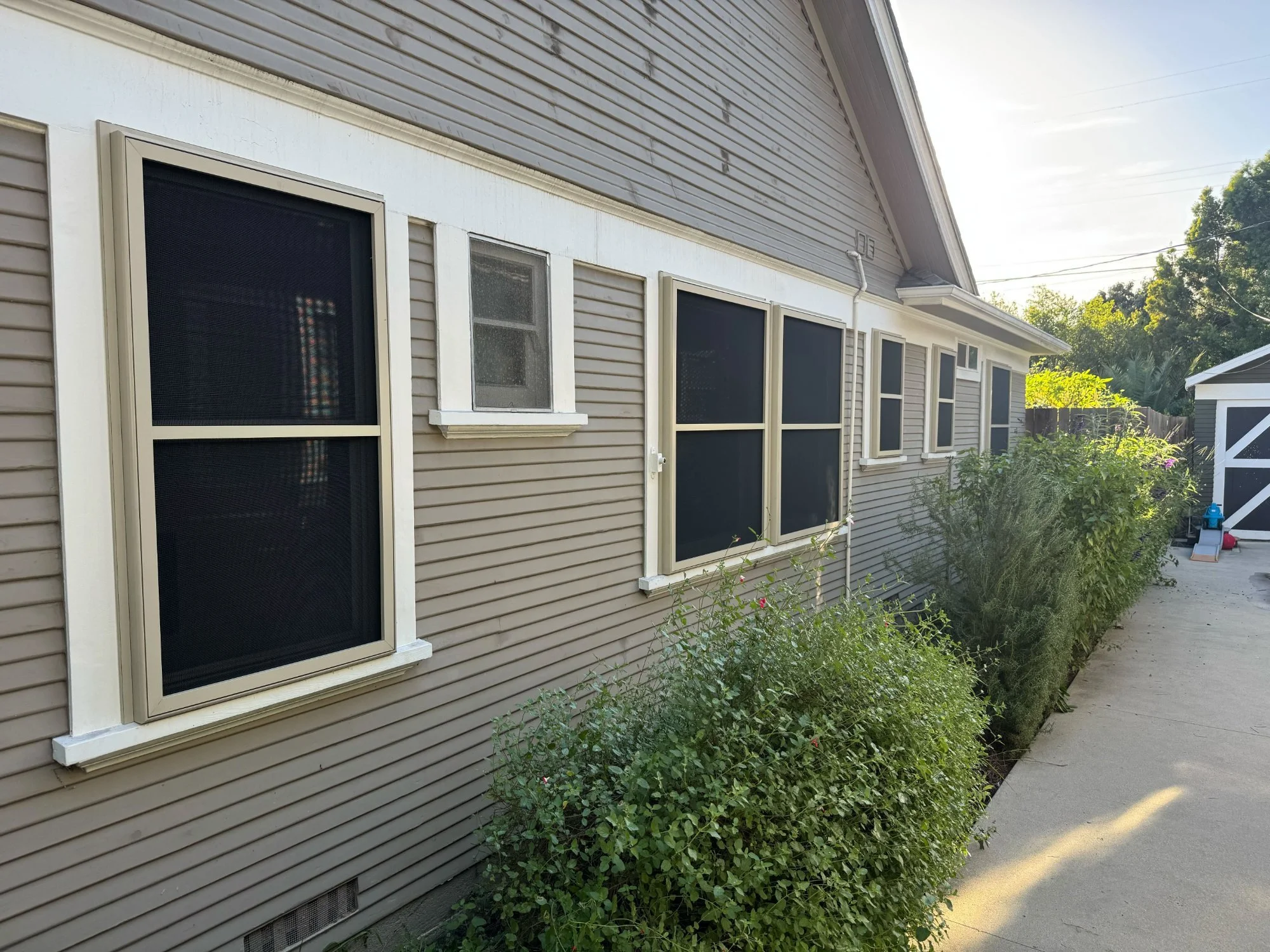
Security screens are more than mesh and metal — they’re engineered systems built to meet or exceed global performance standards.
When choosing yours, look for AS5039 / AS5041 or ASTM F1233 certification, and insist on installation by trained professionals.
That’s how you know your protection is more than a promise — it’s proven.