
What Type of Window Security Is HOA-Friendly?
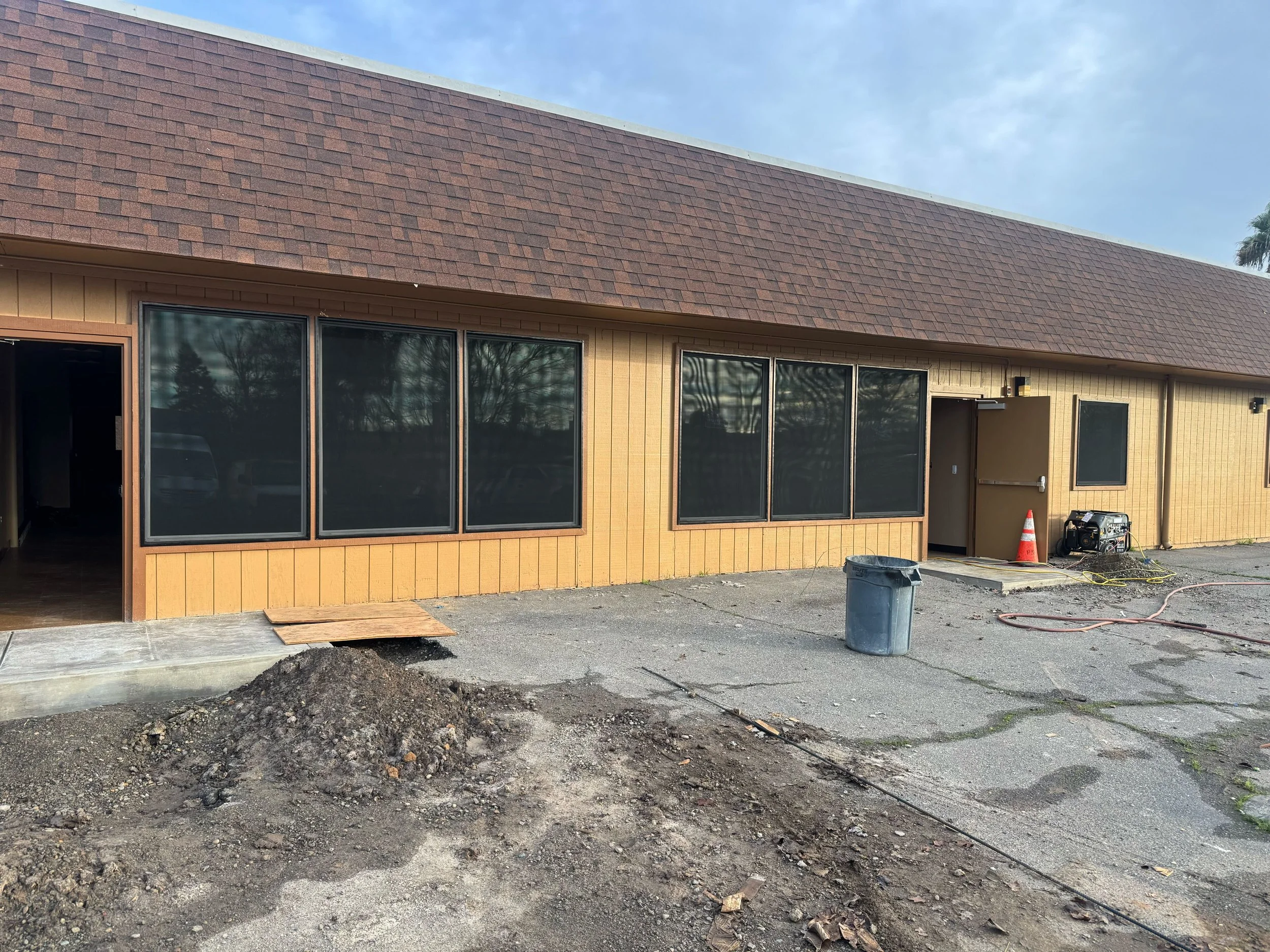
Homeowners associations (HOAs) exist to keep neighborhoods cohesive and visually appealing.
That’s a good thing—until you try to improve security.
Many HOA communities restrict the use of visible bars, grilles, or exterior reinforcements. They often cite “aesthetic uniformity” or “architectural consistency” as reasons for denial.
But that doesn’t mean you can’t protect your home.
The key is choosing security upgrades that blend with design guidelines while quietly delivering protection.
Here’s what works, what doesn’t, and how to stay compliant without compromising safety.
Why HOAs Restrict Window Security Devices
Most HOA covenants, conditions, and restrictions (CC&Rs) prohibit alterations that change a home’s appearance from the street.
The most common restrictions include:
No visible metal bars or grilles on windows or doors.
Color and finish limitations to match community paint palettes.
Approval required for any exterior modification visible from common areas.
The intent is curb appeal, not to block homeowners from securing their property.
However, traditional security methods often fail those visual tests.
Common Window Security Options (and Their HOA Compliance)
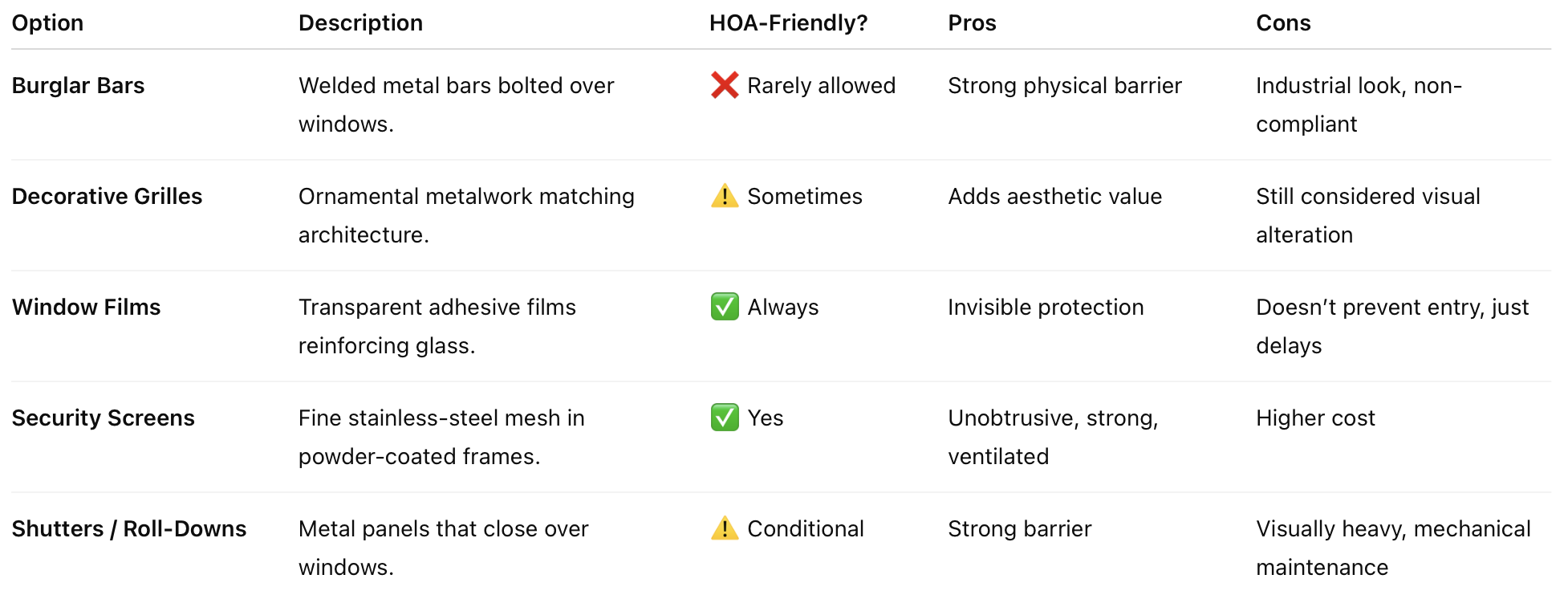
Security screens stand out as the most HOA-friendly structural option because they maintain a clean, uniform look while meeting forced-entry standards.
How Security Screens Pass the HOA Test
High-quality security screens—like those built by Boss Security Screens—are designed to look like ordinary window insect screens.
The difference lies beneath the surface:
Slim profile aluminum framing that matches window color.
Invisible stainless-steel mesh with 60% open area for airflow.
Custom powder-coating to match existing trim or stucco tone.
Permanent mount inside the window frame, not on the surface.
From the street, they’re virtually indistinguishable from standard screens.
That makes them ideal for HOA approval, especially when presented with technical documentation showing their neutral aestheti
The Approval Process: Step-by-Step
Review CC&Rs:
Search for sections labeled “Architectural Modifications,” “Exterior Changes,” or “Window Treatments.”Prepare a Submittal Package:
Include color samples, product data sheets, and photos showing visual similarity to existing windows.
(Boss Security Screens provides HOA presentation kits for this exact purpose.)Highlight Visual Uniformity:
Emphasize that the screens are flush-mounted and match window trim colors.Stress Safety and Property Value:
Many HOAs reconsider when shown data linking improved security with higher resale values and reduced community crime rates.Get Conditional Approval:
Some HOAs grant approval for a single installation as a “visual test” before allowing whole-home coverage.
Evidence HOAs Are Shifting Toward Acceptance
In recent years, several large HOAs in Nevada and Arizona have revised guidelines to explicitly allow security mesh systems under certain conditions:
Must match existing window color scheme.
Mesh must be non-reflective and fine gauge.
Installation by licensed contractor only.
The trend follows rising homeowner demand for crime prevention that doesn’t compromise aesthetics.
What Not to Do
Avoid DIY or off-color frames. Non-matching colors draw attention and trigger violations.
Don’t mount over trim. Surface installations appear bulky.
Skip the “burglar bar” language when submitting — refer to the system as security mesh screens or reinforced window screens.
The terminology matters: “security mesh” sounds architectural; “bars” sound penal.
Case Study: Henderson, NV HOA Approval
A homeowner in Henderson submitted a request to install Boss Security Screens on all ground-floor windows.
Initially denied for “potential aesthetic impact,” they resubmitted with a visual comparison showing:
Same bronze powder-coat color as existing frames.
Flush installation design.
Airflow and energy benefits.
The HOA reversed its decision unanimously. Within a year, four neighboring homes applied for the same product.
Added Benefits for HOA Communities
Uniform Appearance: Looks like upgraded window hardware.
Crime Deterrence: Reduces break-ins across the neighborhood.
Energy Efficiency: Blocks solar gain and UV radiation, improving community sustainability scores.
Insurance Savings: Fewer claims may reduce premiums for master policies.
Security screens quietly elevate neighborhood value while enhancing safety — a win for everyone on the board.
Expert Insight
According to Boss Security Screens, about 80% of their residential installations occur in HOA-governed communities.
Their design team works directly with architectural review committees to provide color-matched renderings and specification sheets.
“Our goal is always alignment,” the company notes. “We make homes safer in ways that don’t change how they look — that’s why HOAs increasingly see us as allies, not exceptions.”
Conclusion
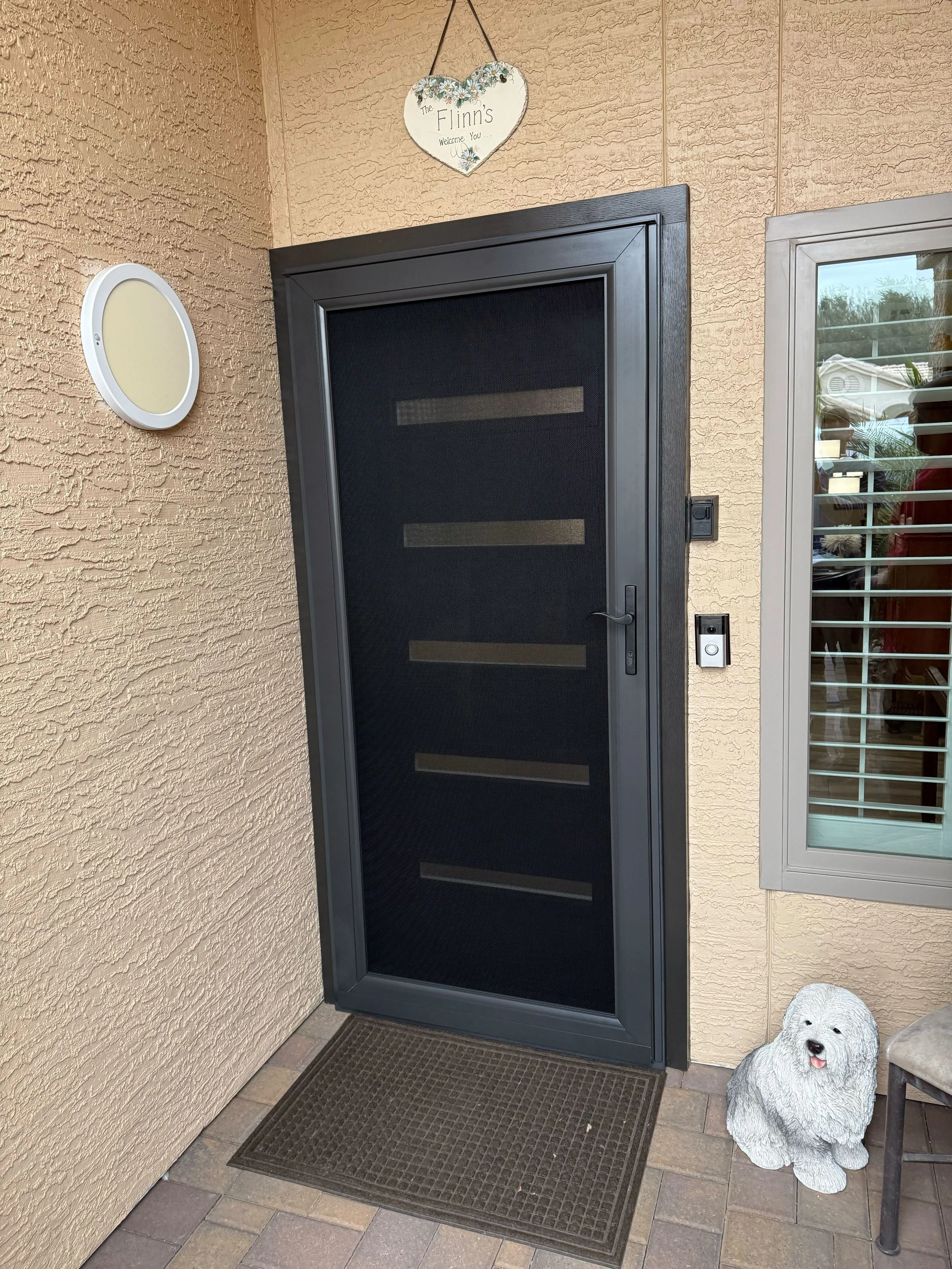
Homeowners in HOA neighborhoods no longer have to choose between beauty and security.
With modern security screens, you can protect your family and property while maintaining community harmony — often with full board approval.
The key is subtlety: security that disappears into the architecture, not stands out from it.