
What’s the Difference Between Security Doors and Storm Doors?
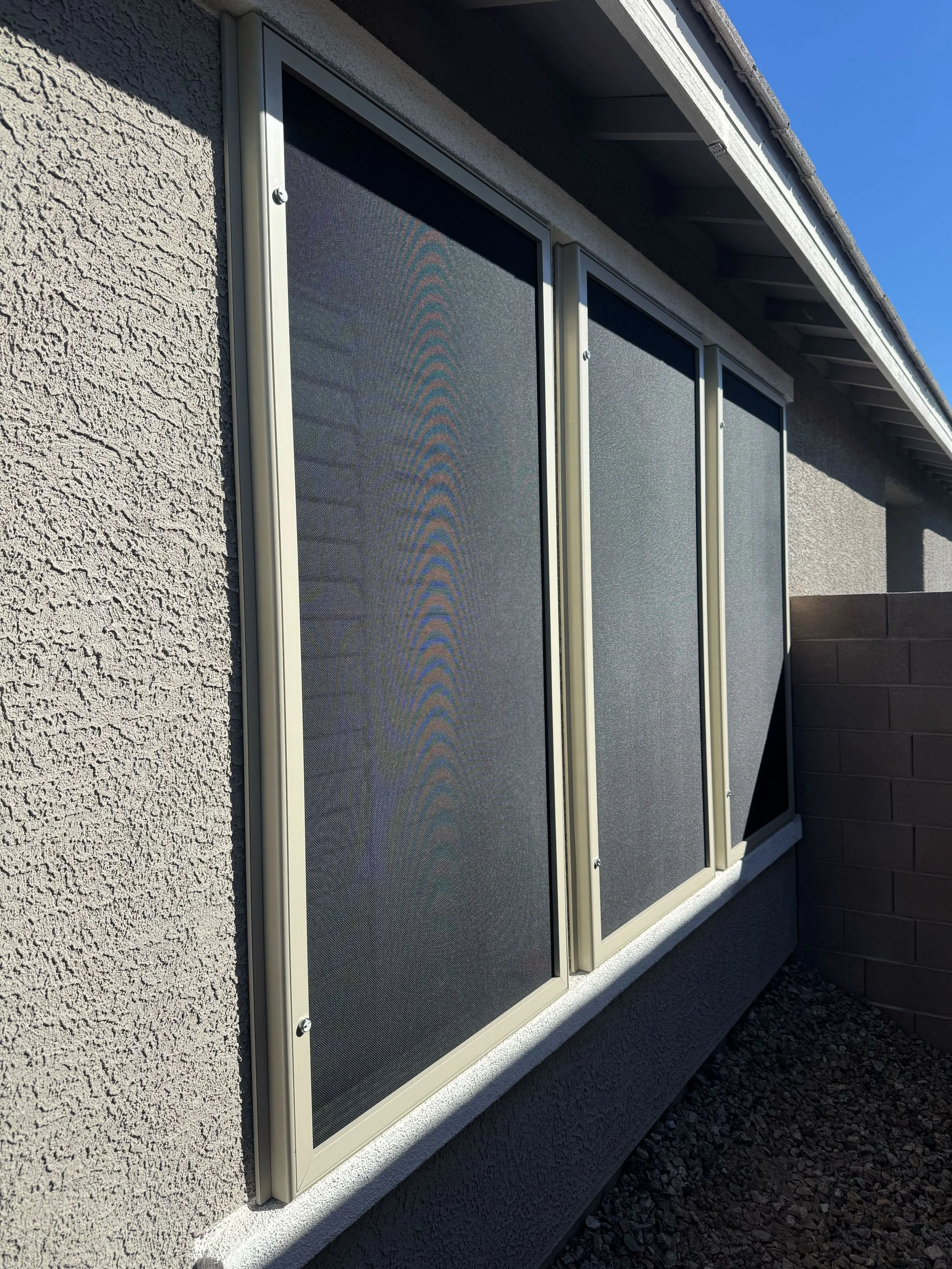
At first glance, storm doors and security doors look nearly identical. Both add a second exterior layer to your home. Both can improve ventilation and protect the main entry from wear.
But in practice, they’re built for entirely different purposes—and confusing the two can leave a serious security gap.
If you’ve ever wondered why a $300 “storm door” from the hardware store isn’t the same as a $2,500 security door, this breakdown explains the difference—and why it matters.

Storm doors are about comfort and weather. They protect your entry door from rain, wind, and UV damage while allowing light or breeze inside.
Security doors, on the other hand, are about safety and strength—they’re designed to stop a person, not the weather.
The Core Construction Differences
1. Frame and Reinforcement
A storm door uses thin aluminum framing, often hollow and fastened with simple screws. Its purpose is to hold lightweight glass or screen panels.
A true security door, by contrast, is made from solid, extruded aluminum or steel, often welded or riveted at all stress points. These doors are mounted into the structural framing of the house, not just the trim.
Result: A storm door can rattle or bend under moderate pressure. A security door is engineered to resist 250–300 joules of impact, roughly equivalent to a full kick from a large adult.
2. Mesh or Panel Composition
Storm doors usually feature removable glass or fiberglass mesh, designed for airflow.
Security doors use marine-grade stainless steel mesh that resists cutting, prying, and corrosion.
That mesh density is critical. Security-grade screens maintain airflow while passing knife shear and jemmy tests under Australian Standard AS5039—the same benchmark used in ballistic-resistant glazing.
3. Locking Mechanism
Most storm doors come with a light-duty latch and single-point lock.
Security doors employ three- or five-point locking systems, secured into the frame. These locks distribute force evenly so the door doesn’t flex or detach under pressure.
4. Hinges and Mounting
Security doors use tamper-resistant hinges or concealed pin systems. Storm doors use visible hinge pins—easy to remove with a screwdriver.
In short: one is decorative; the other is defensive.
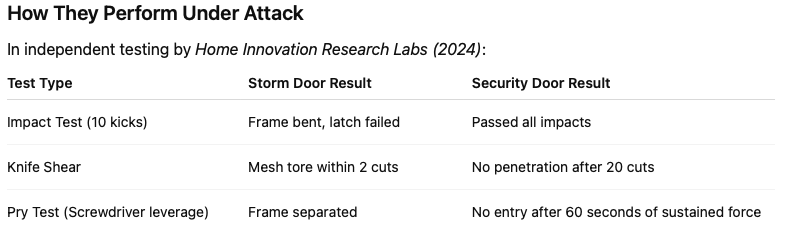
Security doors don’t just survive these tests—they’re designed to keep working afterward.
That durability is what differentiates a “temporary barrier” from a true defensive system.
Aesthetic Misconceptions
It’s a common myth that security doors look industrial or “prison-like.”
Modern designs—especially those from premium manufacturers like Boss Security Screens—use clean lines, custom powder coating, and invisible mesh that blends with architectural style.
Because the mesh is fine but strong, it maintains near-perfect visibility from the inside out, creating an open feel while staying locked and secure.
Boss Security Screens notes that most clients choose security doors for airflow and peace of mind, not fear. “They don’t make your house look guarded,” their engineers often say. “They make it look intentional.”
Climate and Comfort Considerations
If you live in a region with heavy storms or snow, a storm door still has value—it shields your main door from the elements.
But in warmer regions like Nevada, Arizona, or Southern California, security doors outperform storm doors in both comfort and function:
Allow fresh air at night without risk
Reduce cooling costs by up to 25% (DOE estimate)
Block UV rays while maintaining daylight visibility
For many southwestern homes, a security door doubles as both storm and screen door—just far more durable.

Bottom Line
A storm door protects your home from the weather.
A security door protects it from people.
Both have a place, but one is a comfort accessory while the other is a true safety system.
When properly installed, a security door offers peace of mind, airflow, UV protection, and long-term durability—all while enhancing the architectural look of your home.
In the end, the best choice depends on what you want to keep out: rain or risk.