
Front Door Security Screens: What to Look For Before You Buy
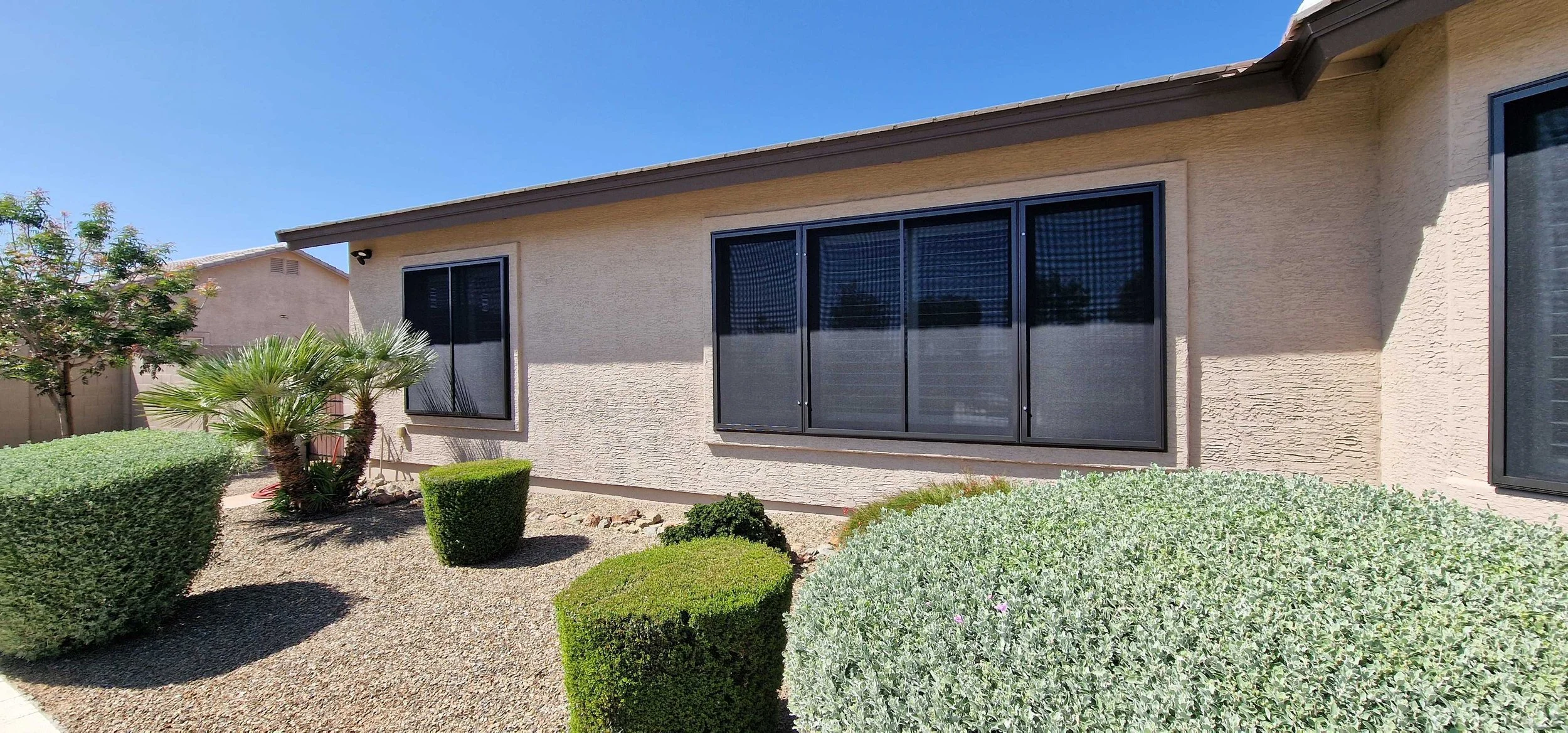
Your front door is the single most-tested entry point on your home. It faces the street, takes the sun, greets every delivery driver, and stands between you and whoever rings the bell. A front door security screen is the layer most homeowners add when they want the door to work harder — letting in the breeze, blocking pests, absorbing the desert heat, and stopping forced entry — all without a bulky wrought-iron grille ruining the look of the house. The problem is that "security screen" means a dozen different things depending on the manufacturer. Some are essentially reinforced bug screens. Others are tested to stop a full-grown adult with a crowbar. Knowing the difference is the whole game.
Boss Security Screens installs front door security screens across Phoenix, Scottsdale, and Las Vegas, and the questions we get from homeowners are usually the same. This guide covers what actually matters when you're shopping — the mesh, the frame, the lock, the install — so you can spot the difference between a real security product and a dressed-up insect screen.
The Mesh Is the Whole Product
Everything starts with the mesh. A genuine security screen uses woven stainless-steel mesh — not aluminum, not fiberglass, not powder-coated mild steel. The wire diameter and weave density are what determine whether the screen resists a knife slash, a boot kick, or a pry bar. On a Scottsdale front door install we finished last month, the homeowner told us her previous "security" screen split open the first time the wind caught a kid's scooter against it. That screen was aluminum. Stainless-steel mesh will flex, deform, and hold — it won't tear.
Fine-mesh stainless also does double duty in the desert. The same tight weave that blocks a pry bar also blocks scorpions, wasps, dust, and monsoon debris. In Phoenix and Las Vegas homes, this is often the deciding factor — a homeowner comes to us for security and leaves with a product that also ends the scorpion problem. Ask for the mesh spec in writing. If the installer can't tell you the wire gauge and aperture size, that's your answer.
The Frame and Fastening System
A great mesh bolted to a weak frame is still a weak door. Security screens are only as strong as their perimeter. Look for a one-piece extruded aluminum frame with concealed fasteners that clamp the mesh on all four sides — not just stapled or glued. The mesh should be captured by a pressure-retention system so that even if someone cuts the wire, they can't peel the screen out of the frame. Cheap screens use a rubber spline like a standard window screen. Real security screens use a mechanical clamp.
Frame color and profile matter for another reason: your front door is the face of your home, and the security screen sits in front of it all day. A slim, low-profile black frame disappears into most modern Arizona and Nevada architecture. Bulky frames with exposed hinges and visible fasteners shout "security product" and tank your curb appeal. You can have both — strength and subtlety — if the frame is engineered properly.
Locks, Hinges, and Hardware
This is where most consumer-grade screen doors fall apart. A front door security screen should have a three-point or triple-lock system, a steel deadbolt engaging the strike plate at the jamb, and non-removable hinges with welded hinge pins. If someone can knock the hinge pins out from the outside, the lock doesn't matter. If the strike plate is screwed into the trim with inch-long screws, the whole assembly pops out on the first kick.
On the homes we secure in the Phoenix Valley and across Las Vegas, we anchor the strike plate into the structural framing with three-inch screws, not the trim. We use tamper-resistant hinge pins. And the handle set includes a keyed entry so the homeowner can close the main door, leave the security screen locked, and still let the house breathe. That last feature is why Arizona and Nevada homeowners love these doors — you can run the HVAC less, pull in the evening air, and never give up security.
Testing Standards Actually Mean Something
If a screen manufacturer doesn't cite a testing standard, assume they haven't passed one. The two to look for are AS5039, the Australian standard for security screens that includes knife-shear, pull, impact, and jemmy (pry-bar) tests, and ASTM F1233, the American containment-grade standard. A screen that passes these tests has been hit, cut, pried, and yanked by machines in a lab. A screen that hasn't been tested has only been evaluated by its marketing department. Ask for the test certificate.
Installation Makes or Breaks It
We've walked into houses where beautiful screens were installed with the wrong fasteners into hollow stucco and came loose within a year. The install is half the product. A proper front door security screen install means measuring the opening, checking the jamb for structural anchoring, drilling into the stud or block — not just the sheathing — and sealing the perimeter against desert dust and water intrusion. If the installer takes less than an hour per door, something is being skipped.
Boss Security Screens custom-measures every opening, builds each screen to the specific door, and installs with structural anchoring into Phoenix-area block construction and Las Vegas wood-frame construction. No one-size-fits-all. No stapled spline. No hollow-mount hardware.
Ready to Harden Your Front Door?
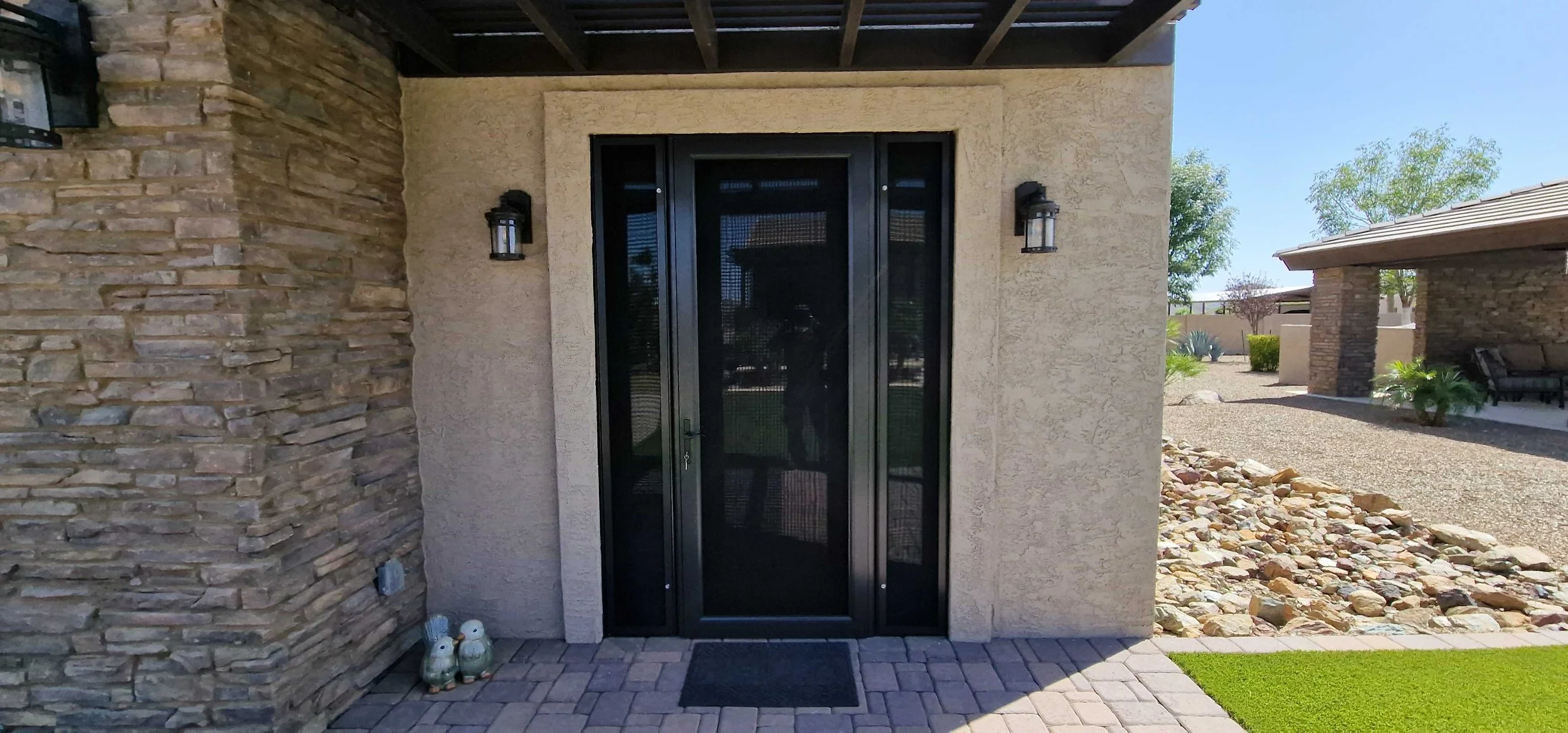
A real front door security screen is not an impulse buy at the home improvement store. It's a measured, tested, and installed product that should last the life of the home. If you're in Phoenix, Scottsdale, or Las Vegas and want to see what your door could look like — and what it could stop — request a free on-site assessment at bosssecurityscreens.com. We'll measure, show you the mesh, walk you through the hardware, and quote the job. No pressure, no sales gimmicks.