
Front Door Security Screens: What Every Homeowner Should Know Before Buying
Your front door is the most visible entry point on your home — and statistically, the most targeted. According to residential security data, the majority of forced entries occur through doors rather than windows, and a significant portion happen at the front of the property. A front door security screen is the first physical barrier an intruder encounters before reaching your main door, and the difference between a standard screen door and a purpose-built security screen door is the difference between a deterrent and a formality. This guide breaks down what to look for, what separates quality from marketing noise, and why homeowners across Phoenix, Scottsdale, and Las Vegas are making front door security screens a standard upgrade rather than an afterthought.
What Makes a Security Screen Door Different From a Standard Screen Door
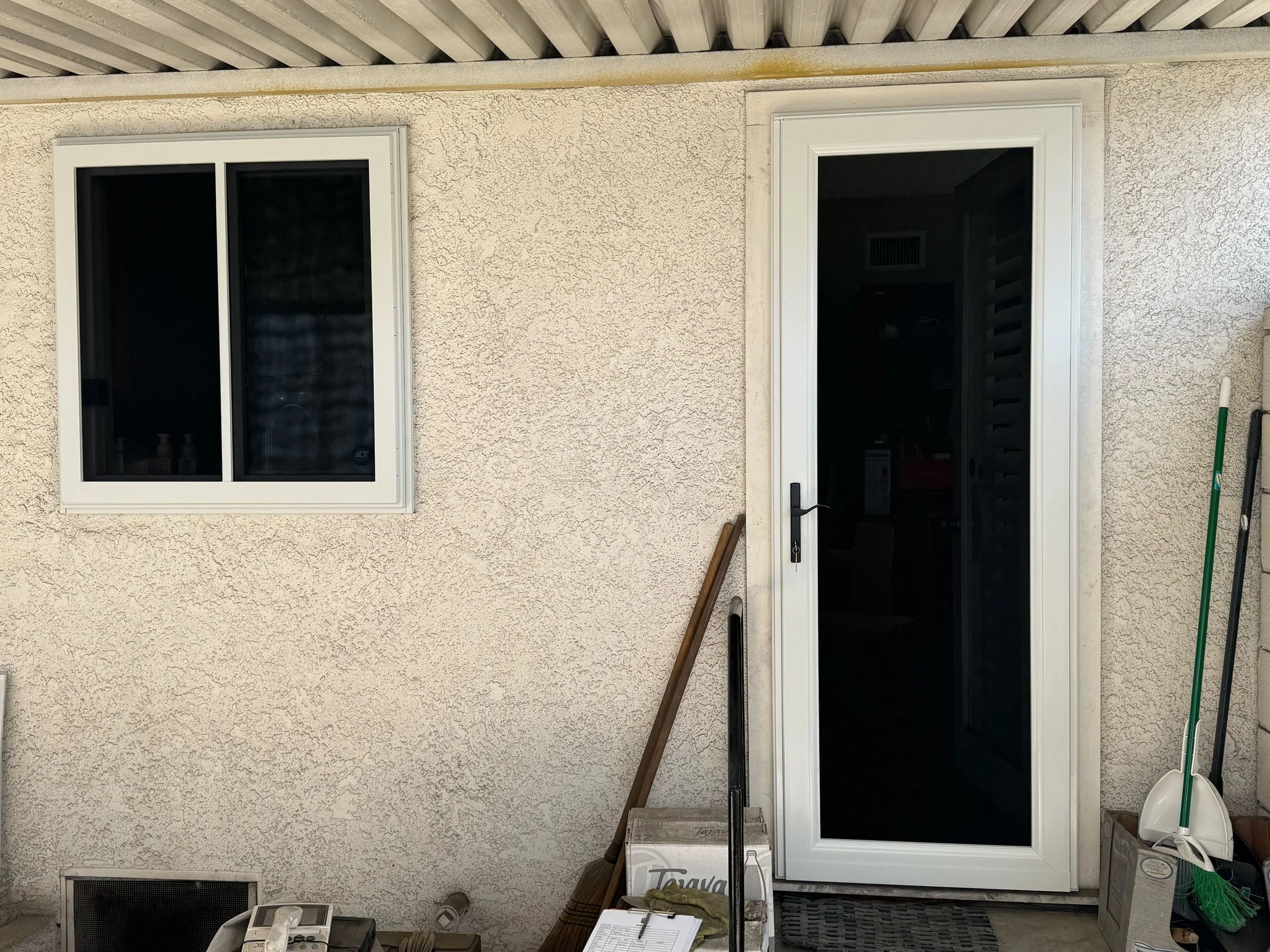
Most screen doors are designed with one job: keeping insects out. They're built from lightweight aluminum frames, thin fiberglass mesh, and basic latch hardware. They flex under pressure, the mesh tears with moderate force, and the frames separate from the door jamb with a firm kick. A true front door security screen is engineered to resist all of those attack methods simultaneously. The frame is typically constructed from heavy-gauge steel or commercial-grade aluminum, the mesh is woven from stainless steel rather than fiberglass, and the locking hardware is rated for forced entry resistance. When properly installed and anchored into the structural framing of the doorway — not just the trim — a security screen door can withstand impact forces that would shred a standard screen in seconds.
The mesh itself is where many buyers get confused. Stainless steel mesh used in security screens is graded by wire diameter and weave density. Finer mesh — with tighter weave counts — provides better pest exclusion while still maintaining airflow and outward visibility. Coarser mesh trades some pest control for a cleaner aesthetic with more light transmission. Both are legitimate choices depending on the homeowner's priorities, but neither should be confused with the fiberglass or aluminum insect screen found at a hardware store.
Frame Construction and Hardware: The Details That Matter
The frame of a front door security screen determines how the door performs under stress. Look for continuous welded corners rather than mechanically fastened joints — a door that is screwed or clipped together at the corners will separate under impact before the mesh fails. The hardware should include a deadbolt-style locking mechanism, not a spring latch. A steel deadbolt that throws into a reinforced strike plate in the frame provides genuine forced-entry resistance. Triple-lock configurations — where the door latches at three points along the frame simultaneously — distribute impact force across the entire door rather than concentrating it at a single latch point.
Handle sets and lock cylinders should be tamper-resistant. Some lower-tier security screen doors use standard residential cylinder locks that can be defeated with common bypass techniques. Higher-grade options use anti-pick, anti-drill cylinders that meet commercial locksmith standards. When evaluating a front door security screen, ask the manufacturer what testing standard the lock hardware meets — and expect a specific answer, not a vague claim about being "heavy duty."
Testing Standards: How to Know If a Security Screen Is Legitimate
The two most referenced testing standards for security screens are AS/NZS 5039 and ASTM F1233. AS5039 is an Australian and New Zealand standard that evaluates screens against dynamic impact, jemmy (prying), knife shear, and pull tests. ASTM F1233 is the American equivalent, testing products against forced entry scenarios including tool attacks and sustained pressure. A security screen that has been independently certified to either of these standards has been subjected to real-world attack simulation under controlled lab conditions — not just internal testing by the manufacturer.
Boss Security Screens products are tested to both AS5039 and ASTM F1233, which matters when homeowners in Scottsdale or Summerlin, Nevada are comparing products across brands. Certification documentation should be available on request. If a company can't produce third-party test results, the "security" designation is marketing language, not a performance specification.
Matching the Door to the Architecture: Why Aesthetics Are a Real Consideration
A front door security screen that looks like a jail cell grate undermines curb appeal and property value. The best installations are ones where neighbors walk by and don't immediately realize the home is fortified. Modern security screen doors come in a wide range of powder-coat finishes — from classic white and sandstone for stucco homes in Chandler or Peoria, Arizona, to charcoal and matte black for the contemporary desert-modern architecture common in Henderson, NV and Summerlin. A custom color match to the existing door frame or exterior trim makes the security screen disappear into the home's design language rather than announce itself as a security measure.
A homeowner in Scottsdale recently upgraded a Spanish revival property with a front door security screen in a hand-rubbed bronze finish. The result looked intentional — like an architectural element that had always been part of the home. Visibility sightlines through the stainless steel mesh allowed the homeowner to see approaching visitors clearly while maintaining full security at the entry. The main door stayed open all day, the home stayed cool, and nothing about the exterior telegraphed a fortified entry to anyone passing by.
Installation: What Proper Anchoring Looks Like
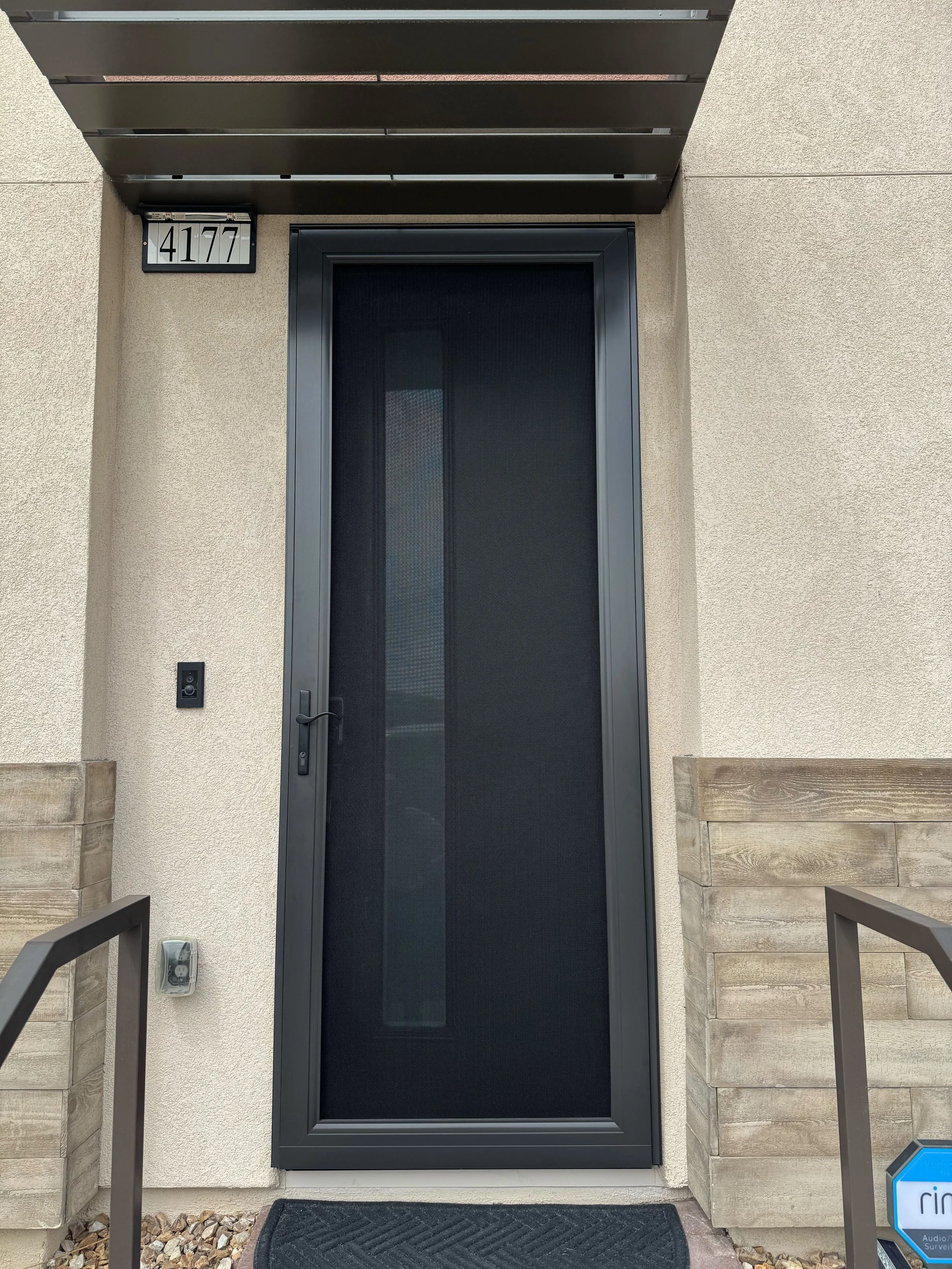
The strongest security screen door on the market is only as strong as its installation. A door anchored into door trim — the decorative wood surround — rather than into structural framing will pull free under sustained force regardless of how well the door itself is built. Professional installation means locating the structural king studs and header framing on either side of the door opening and fastoring the security screen frame directly into those members with appropriately rated fasteners. On masonry and stucco exteriors common in Phoenix, Scottsdale, and Las Vegas, that means anchoring into the concrete block, CMU, or brick substrate with expansion anchors, not into the stucco finish coat.
A proper installation also includes checking the door swing clearance, verifying the deadbolt engagement depth, and confirming the frame is plumb and square before final fastening. A misaligned frame creates binding that wears out the lock and hardware over time — and creates stress points in the frame that reduce impact resistance. Get your free estimate and evaluation at bosssecurityscreens.com.