Upgrading Security in Older Houston Homes: A Guide
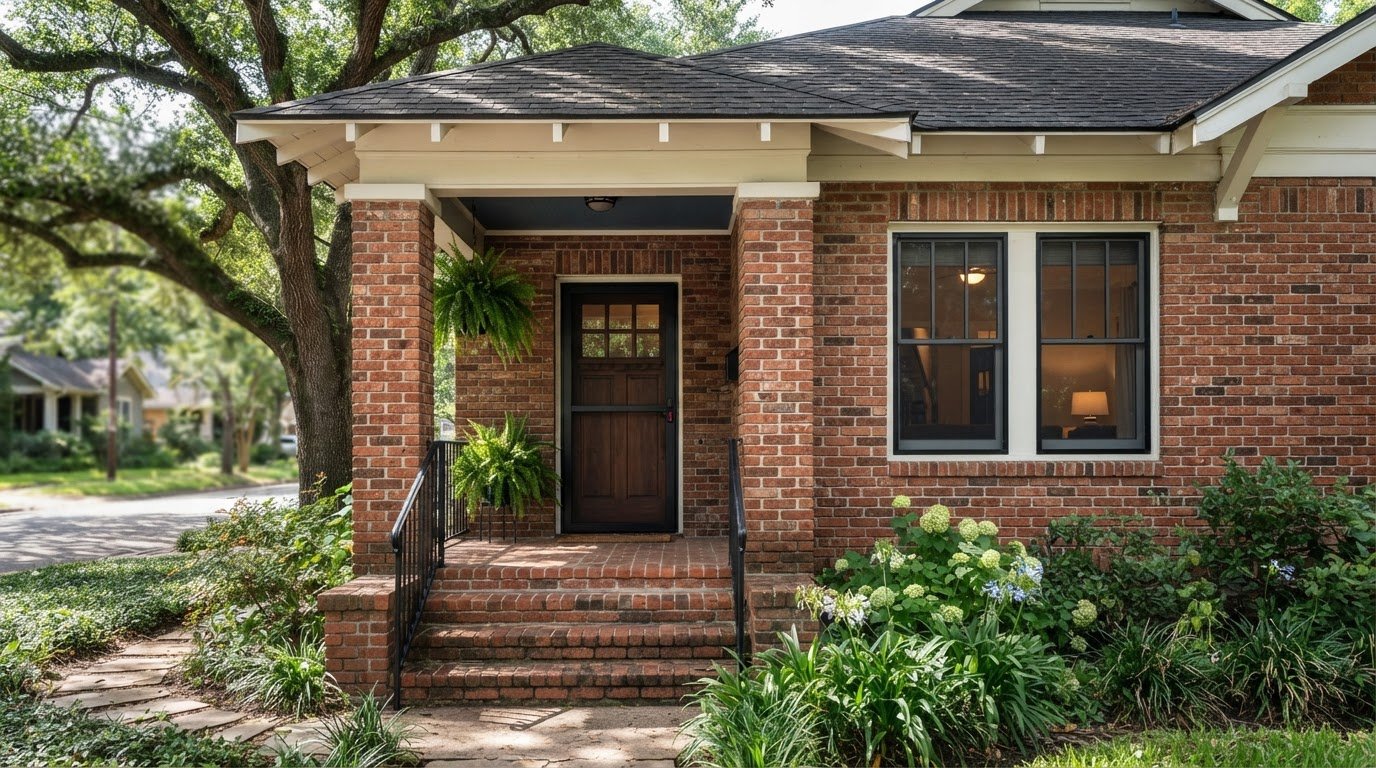
An older Houston home doesn’t need a major renovation to become more secure. If aging doors and windows feel like weak points, it’s natural to wonder which ones to address first, especially when you want to protect your home without changing its character. Upgrading security in an older home in Houston can start with the openings you already have.
Start by identifying the openings you use most and those that are easiest to overlook. Custom-measured security screens add a physical barrier to existing doors and windows without structural modifications, while preserving natural light, airflow, and visibility. They can complement alarms and cameras, adding physical protection rather than replacing electronic security. This guide explains how to assess your openings, prioritize upgrades, and compare options for security, appearance, and everyday use.
Key Takeaways
- When upgrading security in an older home in Houston, assess existing doors and windows before considering a larger renovation.
- Prioritize openings by accessibility, frequency of use, visibility, and household needs. Custom measurement accommodates individually configured openings.
- Security screens physically reinforce openings, while alarms detect breaches and cameras provide visibility or recordings. Each serves a different purpose.
- Stainless-steel mesh can provide a physical barrier while preserving natural light, airflow, and visibility. Boss Security Screens have a 4-point locking system and no exposed hinges.
- Boss Security Screens provides custom-built, professionally installed options backed by a 15-year No Worry Warranty on parts and labor. The company is Licensed, Bonded & Insured, has an A+ BBB Rating, and is 110% Made in USA. Visit bosssecurityscreens.com, email info@bosssecurityscreens.com, or call 1-800-203-5644 or (702) 637-0255.
Where Should You Start When Upgrading Security in an Older Houston Home?
Older homes have character worth keeping, and their doors and windows may have been configured long before today’s security options were available. You don’t need to replace everything. First identify the openings that matter most to your household, then choose focused improvements that protect them without disrupting how the home looks or works. An opening-by-opening review gives you a practical starting point for upgrading security in an older home in Houston.
Begin with an inventory, not a renovation plan. Walk through the home and list each exterior door, French door, sliding patio door, and accessible window. Note its condition, existing lock, screen, frequency of use, and visibility from inside. Include household needs, too: which doors family members use regularly, and which openings need to remain easy to operate?
Which entry points should an older-home security assessment cover?
Look beyond the front door. A frequently used patio slider is part of daily life, while a less visible window can be easy to overlook. Record visible wear on screens, locks, and frames, but don’t try to diagnose structural problems from a visual check. Your notes will help you distinguish a worn component from an opening that may benefit from a stronger layer of protection.
- Opening condition: Note visible wear, looseness, or damage on doors, windows, screens, and frames.
- Locks and visibility: Record the existing locking method and whether you can see the opening from inside.
- Daily use and access: Identify high-traffic entrances and who in the household uses them.
Keep the roles of security measures clear. Alarms can detect a breach and alert people; cameras can provide visibility and recordings. A physical barrier reinforces the opening itself. These measures can complement one another. For a broad introduction to home security components, see this Home Security Overview.
How can you plan upgrades without a full renovation?
Separate security improvements from larger remodeling decisions. An opening-by-opening list helps you prioritize doors and windows without assuming every one needs replacement. Boss Security Screens are mounted on the exterior without structural modifications, and each system is custom-measured and built around its opening. That matters in an older home, where openings may have different dimensions or configurations. The aim is not to force a one-size-fits-all retrofit, but to choose a screen suited to the opening and its intended operation.
For Houston homes, this targeted approach can strengthen selected entry points while keeping the existing layout intact. Boss Security Screens feature stainless-steel mesh, a 4-point locking system, and no exposed hinges. Each system comes with a 15-year No Worry Warranty on parts and labor. Boss Security Screens is Licensed, Bonded & Insured, has an A+ BBB Rating, and is 110% Made in USA.
Explore custom-fit door and window screens at bosssecurityscreens.com, email info@bosssecurityscreens.com, or call 1-800-203-5644 or (702) 637-0255.
How to Retrofit Older Doors and Windows Without Starting Over
A focused retrofit strengthens selected openings while keeping the home’s existing layout. Work through the openings you inventoried and decide where a physical security layer would help. This sequence keeps upgrading security in an older home in Houston manageable, with each decision tied to a specific opening and the way your household uses it.
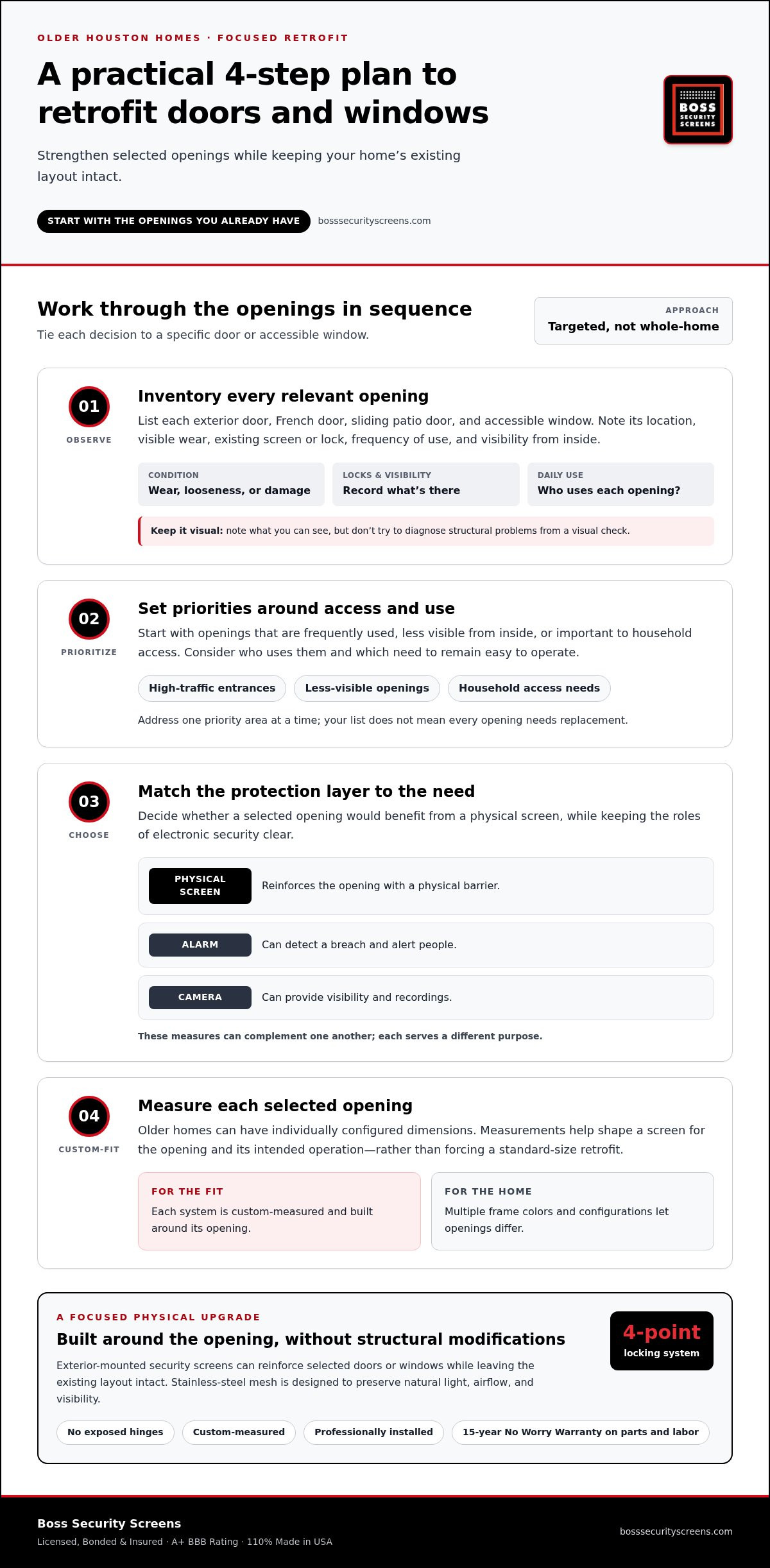
- Inventory the openings. List each door and accessible window, noting its location, existing screen or lock, visible wear, and everyday use.
- Set priorities. Start with openings that are frequently used, less visible from inside, or important to household access. You can address one priority area at a time.
- Choose a protection layer. Decide whether the opening would benefit from a physical screen, while considering the separate roles of existing electronic security measures.
- Plan a custom fit. Have each selected opening measured so the screen can be built for its dimensions and intended operation.
For a window, custom security window screens provide a targeted option designed for the existing opening. Exterior-mounted security screens reinforce a selected door or window without structural modifications, so adding a physical barrier doesn’t require a broader remodel. The plan can focus on priority openings while leaving the rest of the home untouched.
How do custom measurements help with older openings?
Older homes may have openings with individually configured dimensions, so measuring each one is central to achieving a tailored fit. Measurements guide how the screen sits against the opening and help it suit the home’s appearance. Multiple frame colors and configurations give homeowners options without requiring every door or window to look alike.
A custom-fit approach also accounts for how the opening is used. A frequently used entry needs to work for everyday movement, while a window screen should suit that particular window. Rather than forcing a standard-size retrofit into an older opening, each system is built around the measured space.
What should homeowners expect from a professionally installed screen?
The process includes measuring each opening, custom-building the screen, fitting it in place, and checking its operation. Operable screens use ADA-compliant egress latches, and doors, windows, and sliders are designed to operate as intended after installation. In an older home, a secure addition should feel like a considered upgrade, not an obstacle to daily use.
Before planning the work, keep your opening list handy and note which entries need to remain especially convenient. This gives the installation plan a clear purpose and helps match each screen to how the household moves through the home. Read more about a custom security screen consultation with Boss Security Screens.
Security Screens vs. Alarms, Cameras, and Smart Locks: What Does Each Add?
Security upgrades work best when each measure has a clear job. A screen reinforces a door or window, an alarm can detect a breach and alert people, a camera can provide visibility or recordings, and a smart lock manages access. Comparing these roles can help you decide what to add to the openings you’ve prioritized.
Layered security means combining measures that serve different functions, rather than relying on one measure to do everything. Use this comparison to see where each option fits:
| Security measure | Physical resistance | Detection or monitoring | Alerts or access control |
|---|---|---|---|
| Security screen | Provides a physical barrier fitted to a specific opening | Does not serve as a monitoring system | Does not replace an alarm or access-management tool |
| Alarm | Does not physically reinforce the opening | Can detect a breach | Can create an audible alarm or notify people, depending on the system |
| Camera | Does not physically reinforce the opening | Can provide visibility and record events | May support monitoring, depending on the system |
| Smart lock | Manages access at a door, rather than adding a screen barrier | Does not function as a camera | Provides an electronic access-control option |
What do physical screens do that alarms and cameras do not?
A security screen is fitted to a particular door or window, adding a physical layer at that opening. An alarm or camera has a different role: it can detect, notify, monitor, or record, but it does not itself reinforce the opening. For homeowners upgrading security in an older home in Houston, this distinction helps clarify whether the priority is a stronger physical barrier, better visibility, alerts, or a combination.
Consider a side window and a frequently used patio door. A camera might help you monitor activity around those areas, while an alarm can alert you to a detected breach. A screen addresses the opening directly. The measures can work alongside one another without being treated as interchangeable.
Can older homes combine screens with existing security technology?
Yes. Start with the openings identified in your assessment and consider what your existing equipment already does. If you have an alarm or cameras, a screen can add physical reinforcement to selected doors or windows. If access control is a priority, a smart lock may serve that separate purpose. The right combination depends on the household, and a screen does not need to replace every electronic measure.
Keep the plan practical: match each measure to a specific need, such as reinforcing a patio entrance, monitoring an area, or managing access. That way, technology and physical protection complement each other while preserving the home’s layout and daily routines.
How to Prioritize Houston Home Security Upgrades for Comfort and Appearance
A good security plan should protect the openings that matter most without making daily life harder or changing the home’s character. When upgrading security in an older home in Houston, prioritize each door or window by its accessibility, how often the household uses it, how visible it is from inside, and what the household needs from it.
How do you choose which opening to upgrade first?
Use your opening inventory to rank priorities, not to create a list of everything that must be replaced. Start with accessible openings you use often or have already identified as needing attention. Then consider how each fits your household’s routine. A phased plan lets you address one priority area at a time instead of assuming every opening needs the same solution.
- Access: Note which doors and windows are readily accessible from outside.
- Frequency: Give practical weight to entrances and windows used throughout the day.
- Visibility: Consider whether you can see the opening from inside the home.
- Household needs: Account for who uses the opening and how it needs to operate.
For example, a frequently used patio entrance may deserve attention before a rarely used window. An accessible window that’s difficult to see from inside may also rank highly. The best first step depends on your home and household, not a one-size-fits-all checklist. Choose a priority, match it with a suitable protection layer, and plan the next improvement when it makes sense.
Will security screens change how an older home looks or feels?
Security doesn’t have to mean giving up light, airflow, or the view outdoors. Stainless-steel mesh is designed to preserve all three while providing a physical barrier. Custom-built screens are measured for each opening, with configurations and frame colors that can suit the home. This tailored approach helps protect an older home’s familiar look while keeping rooms bright and connected to the outdoors.
Door configuration matters, too. The fit should suit both the opening and the way your household uses it. For an entry or patio door, a security screen door is custom-built around the opening rather than treated as a generic add-on. A measured fit supports the home’s appearance and the door’s intended operation.
Keep your priorities practical: decide which opening to address first, what it needs to do each day, and how you want the upgrade to look and feel. Then build a measured plan that can progress in phases. Details about a custom security screen consultation with Boss Security Screens are available online.
A Custom Security Screen Upgrade for Older Houston Homes
Once you’ve identified which openings need attention, a custom-built security screen can add a physical layer without turning the project into a full renovation. Boss Security Screens professionally installs screens for doors and windows, measured and built around each opening. This approach suits older homes where a tailored fit matters and homeowners want to preserve the way the house looks and functions.
Each system is mounted on the exterior without structural modifications. It’s designed around the opening and the way the door or window is intended to operate. That makes the upgrade a focused option for a selected entry point, rather than a requirement to replace every door, window, or security measure in the home.
What makes a custom-built screen suited to a retrofit?
Older homes can have individually configured openings, so each screen is measured and custom-built for its specific location. The fit can be planned with the home’s appearance and everyday use in mind. Stainless-steel mesh is engineered to resist forced entry and heavy impact while preserving natural light, airflow, and visibility. The result is a physical barrier that supports comfort and a clear view outdoors.
Every screen has a 4-point locking system and no exposed hinges. Custom measurement helps the screen suit the opening, while professional installation accounts for its intended operation. In a retrofit, protection should feel integrated into the home, not like a reason to change its layout or character.
What should Houston homeowners do next?
Start with the openings you’ve identified as priorities. A discussion about those doors and windows can help shape a custom-fit plan for your home. Boss Security Screens has completed 17,000+ installations with zero successful break-ins. Every screen is backed by a 15-year No Worry Warranty on parts and labor, including corrosion coverage. The company is Licensed, Bonded & Insured, has an A+ BBB Rating, and is 110% Made in USA.
Boss Security Screens serves Houston as well as Las Vegas, Phoenix, Los Angeles, Riverside, Scottsdale, San Jose, Oakland, San Francisco, Irvine, San Diego, Orlando, Detroit, Chicago, Minneapolis, Albuquerque, Dallas, and Sacramento. Visit bosssecurityscreens.com, email info@bosssecurityscreens.com, or call 1-800-203-5644 or (702) 637-0255 to request a free consultation about custom-built security screens for your home.
Turn Your First Priority Into a Practical Next Step
Security improvements don’t have to happen all at once. Choose the opening that matters most to your household, then use that decision to shape a manageable plan that fits the way you live. That’s a steady way to approach upgrading security in an older home in Houston: make a considered improvement, keep the home’s character in view, and build from there as your needs evolve.
A custom-fit plan starts with the doors or windows you want to protect. Boss Security Screens can help you consider the right screen for those openings while keeping everyday operation and appearance in mind.
Frequently Asked Questions
Can I upgrade security in an older Houston home without a major renovation?
Yes. Upgrading security in an older home in Houston can begin with selected doors or windows rather than a whole-home remodel. Exterior-mounted security screens are designed to fit existing openings without structural modifications, so you can focus on a priority entrance while keeping the home’s layout. For example, a household might start with the patio door used every day, then consider other openings as needs change.
Are security screens effective on older windows and doors?
They can add a physical barrier to older windows and doors when each screen is measured and built for its specific opening. Boss Security Screens uses stainless-steel mesh engineered to resist forced entry and heavy impact. Custom fitting accounts for the opening’s dimensions and intended use.
Can security screens work alongside an alarm system or cameras?
Yes. Security screens can complement an existing alarm or camera system because each addresses a different part of home security. A screen reinforces a selected opening, while an alarm can detect a breach and cameras can provide visibility or recordings. For example, a homeowner might add a screen to a frequently used door while continuing to use cameras to monitor the surrounding area.
Will security screens make an older home darker or reduce airflow?
No. Boss Security Screens’ stainless-steel mesh preserves natural light, airflow, and visibility. A screened window can bring daylight into a room and maintain a view outdoors while allowing airflow through the mesh. These qualities can be helpful when you want an added physical barrier without giving up the feel of an open window.
Can I still use my doors and windows normally after security screen installation?
Yes. Screens are custom-built so doors, windows, and sliders can operate as intended after installation. Operable screens use ADA-compliant egress latches. A frequently used exterior door can be fitted with a screen designed for everyday operation.
Are security screens custom-built for older or unusual openings?
Yes. Each system is measured and custom-built around its opening, which helps accommodate older homes where doors or windows may have individually configured dimensions. Boss Security Screens offers multiple frame colors and configurations, so the screen can be tailored to the opening and the home’s appearance. Custom measurement is part of the process.
What warranty does Boss Security Screens provide?
Boss Security Screens provides a 15-year No Worry Warranty covering parts and labor, including corrosion. Homeowners receive the warranty terms with the project.