Best Security Screen Door Locking Mechanisms: A Buying Guide for 2026
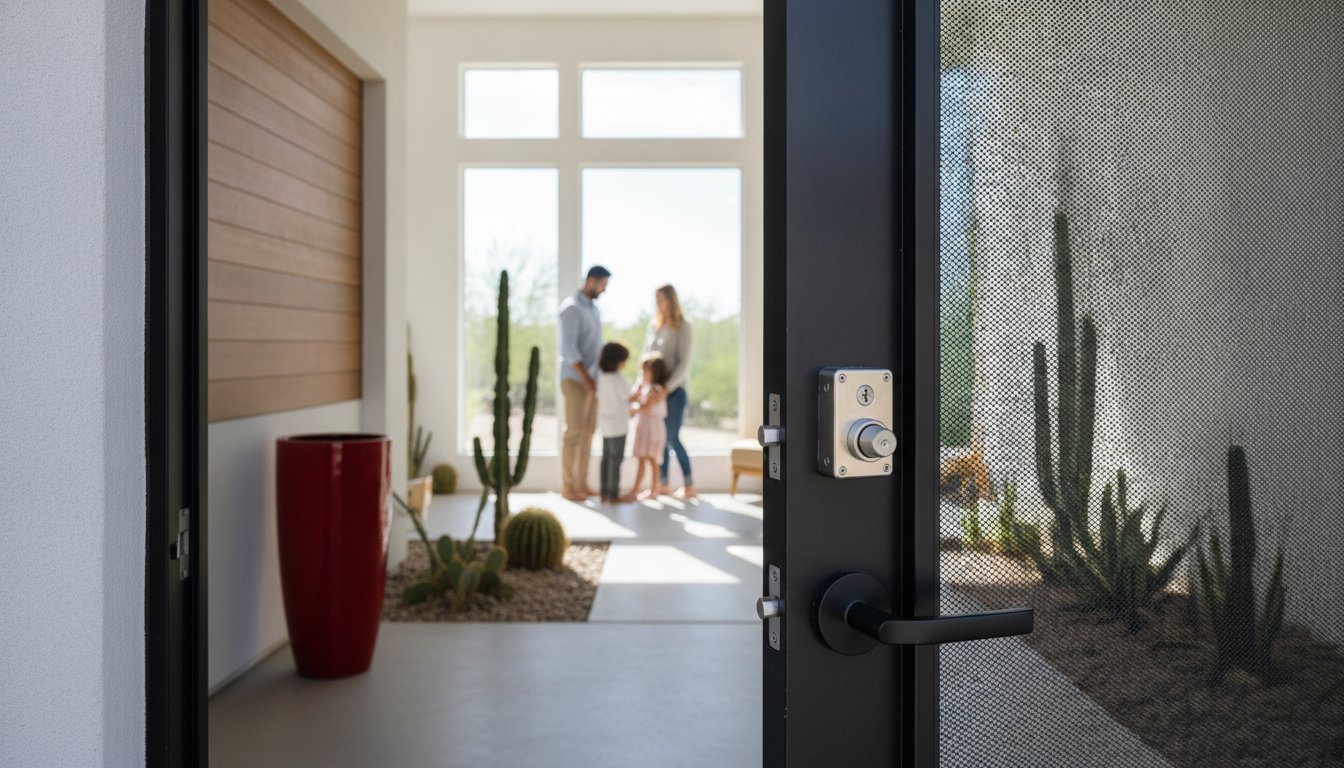
Your premium security screen is only as strong as the bolt that anchors it to the frame. While high-tensile steel mesh provides a formidable physical deterrent, the real strength lies in the security screen door locking mechanisms you choose. Many homeowners mistakenly rely on standard latches that fail under moderate pressure; this creates a dangerous gap between the promise of safety and the reality of a vulnerable entryway.
You deserve the peace of mind that comes with a door that's truly deadbolted, not just closed. It's common to feel overwhelmed by technical grades or worried about balancing home defense with fire safety. This guide simplifies the process of choosing a locking system that offers both extreme resilience and aesthetic clarity. We'll explore the vital differences between single and multi-point systems, how the 2026 UL Lock Standards impact your security, and which hardware provides the single motion egress required for emergency escapes. By the end, you'll have the confidence to select a lock that acts as a sophisticated guardian for your home, ensuring your security door is an impenetrable barrier that never sacrifices your family's safety.
Key Takeaways
- Move past basic latches and discover why recessed mortice locks provide the structural backbone needed for true home defense.
- Learn how multi-point systems create a "Vault Effect" by securing the door at three critical points to distribute force across the entire frame.
- Identify the essential tamper-resistant features, such as anti-drill cylinders and stainless steel components, that stop intruders before they can start.
- Understand how professional installation ensures your security screen door locking mechanisms are perfectly aligned within a custom-built frame for maximum reliability.
Understanding Security Screen Door Lock Types
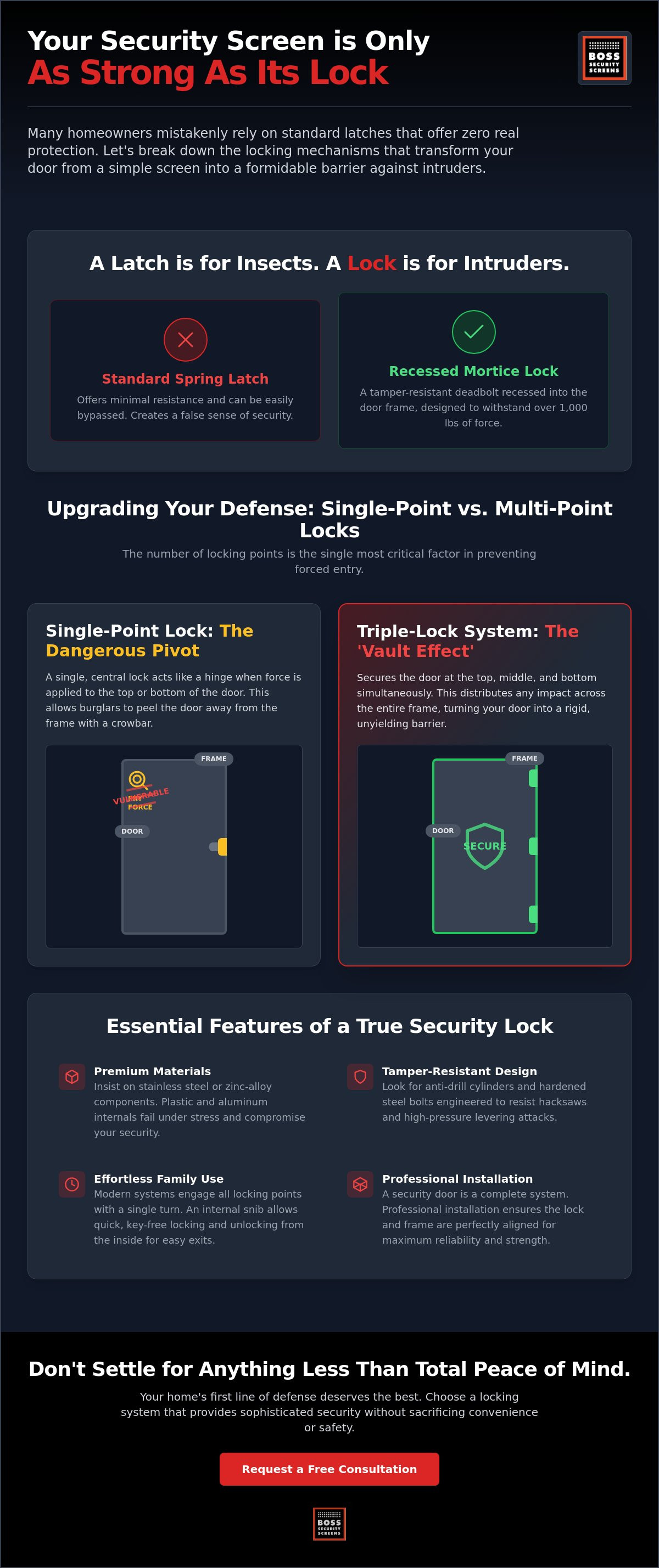
A latch is for insects. A lock is for intruders. Many homeowners assume their screen door is secure because it clicks shut, but most standard screens use flimsy spring latches that offer zero resistance to a shoulder barge. Real security screen door locking mechanisms are engineered to be the primary line of defense for your home, providing a level of protection that standard hardware simply can't match.
Mortice locks are the gold standard for this application. Because these systems are recessed directly into the door's internal cavity, they utilize the structural integrity of the metal frame itself. Surface-mounted options are vulnerable to being sheared off with a crowbar, but a mortice lock is encased in steel, making it nearly impossible to bypass without destroying the door. This design ensures that the lock isn't just an attachment, but a core part of the door's strength.
Physical resistance requires a deadbolt. Unlike spring latches that can be easily manipulated with a credit card or shimmied open, a deadbolt stays put until you turn the key. A security screen lock is a tamper-resistant mechanism designed to withstand 1,000+ pounds of force. Incorporating these door security measures ensures your entryway remains a solid wall against unwanted visitors.
Single-Point vs. Multi-Point Systems
When evaluating security screen door locking mechanisms, the choice between single and multi-point systems is critical. A single-point lock creates a dangerous pivot point. When a burglar applies pressure at the top or bottom corner of the door with a crowbar, the single central lock acts like a hinge, allowing the door to flex and peel away. To prevent this, you also need a heavy-duty strike plate. This component reinforces the door jam, ensuring the bolt doesn't rip through the frame during a kick-in. For total peace of mind, high-quality security doors must be designed as a complete system where the lock and frame work in perfect harmony.
The Triple-Lock Advantage: Why Multi-Point Systems Rule
If a single-point lock is a pivot, a triple-lock system is a fortress. While a standard lock secures only the center of the door, 3-point security screen door locking mechanisms engage the top, middle, and bottom of the frame simultaneously. This creates the 'Vault Effect.' Instead of force being concentrated on one small area, any impact is distributed across the entire vertical length of the frame. This structural synergy turns your screen door into a rigid, unyielding barrier.
The lifespan of these systems depends entirely on the quality of the internal connecting rods. High-end systems use resilient steel linkages to ensure that the top and bottom bolts engage with the same precision as the central deadbolt. If these rods are flimsy, the lock will eventually jam or fail to engage properly. We prioritize material resilience to ensure the hardware matches the strength of the mesh. Often, the mere presence of a heavy-duty multi-point handle serves as a visual deterrent, signaling to intruders that your home is not an easy target.
Resistance to Prying and Levering
Burglars frequently use a 'peeling' technique, where they wedge a crowbar into the top or bottom corner to pull the door away from its frame. Triple locks stop this tactic cold. Because the door is anchored at three distinct points, there are no vulnerable corners to exploit. We utilize hardened steel bolts that are specifically engineered to resist hacksaw attacks and high-pressure levering. If you want to see how these components integrate into a custom frame, you can request a free consultation to explore your options.
Ease of Use for Families
Sophisticated security doesn't have to be complicated. Modern multi-point systems feature a one-turn operation, engaging all three locking points with a single motion. This ensures that every family member can secure the home effortlessly. For added convenience while you're inside, internal snib locks provide quick security without the need for a key, allowing for a fast exit during emergencies while keeping the door deadbolted against outside threats.
Key Features to Look for in a Security Lock
Material quality is the foundation of any reliable defense. You should always insist on stainless steel or zinc-alloy components for your security screen door locking mechanisms. Avoid plastic or aluminum internals; these materials fail quickly under stress or extreme heat. High-grade metals provide the necessary structural integrity to resist forced entry attempts, ensuring your door remains a permanent solution rather than a temporary fix. This no-nonsense approach to quality is what separates a true security product from a standard screen.
Tamper-resistance is another non-negotiable priority for the modern household. Look for hardware featuring anti-drill cylinders and anti-pick pins to neutralize sophisticated intrusion methods. Beyond raw strength, your lock must survive the environment. Whether it's the intense Phoenix heat or the corrosive salt air in San Diego, a premium powder-coated or chrome finish prevents the internal seizing that plagues cheaper alternatives. For daily convenience, most high-quality systems allow for "keying alike," meaning you can use your existing front door key to unlock your security screen effortlessly.
Smart Lock and Technology Integration
Homeowners often ask if they can integrate smart technology with their security screens. In 2026, the answer is a resounding yes. While the slim profile of security door frames once made this difficult, modern smart locks are now designed specifically for these narrow extrusions. These systems utilize the latest UL 10C standards, incorporating strong encryption and anti-tamper components to ensure your digital security is as tough as your physical mesh. You can enjoy keyless entry and remote monitoring without sacrificing the physical hardiness of your entryway.
Fire Safety and Emergency Egress
Security should never compromise your ability to escape. Fire safety codes require that occupants can exit quickly and safely in an emergency with a single motion. We recommend internal thumb-turns over double-cylinder locks for most residential applications. A thumb-turn allows you to unlock the door instantly from the inside without searching for a key during a crisis. If you're unsure which setup meets your local building codes, schedule a free consultation to find the perfect balance of safety and security for your family.
Professional Installation vs. DIY Hardware
Even the most advanced security screen door locking mechanisms are effectively useless if they aren't anchored to a perfectly squared frame. If your door is off by even a few millimeters, the bolts won't seat deeply into the strike plate. This leaves a gap that an intruder can easily exploit with a pry bar. Many DIY enthusiasts make the mistake of using standard mounting screws that sheer off under pressure, or they fail to align the strike plates correctly. This turns a high-end lock into a mere decorative handle. To ensure your home is truly protected, professional security screen installation is the only way to guarantee your locking system is unshakeable.
The Boss Security Screens approach treats the lock as an integral part of the door's structural design. We don't just attach hardware; we build the door around the security requirements. This prevents the common "flex" found in off-the-shelf products where the frame bows away from the lock under force. By choosing a custom-built system, you ensure that every component, from the high-tensile mesh to the triple-point deadbolt, works as a single, impenetrable unit that stops break-ins before they happen.
The Custom-Built Difference
We integrate heavy-duty 3-point locks directly into our security screen doors to provide maximum leverage resistance. Off-the-shelf locks from big-box stores are typically designed for thin, flimsy extrusions. They simply don't fit the robust frames required for high-tensile mesh. Because our doors are custom-measured for your specific entryway, the lock alignment is permanent and precise. This prevents the sagging and sticking that often lead to hardware failure in mass-produced alternatives.
Long-Term Peace of Mind
Security is a long-term investment in your family's safety. If your lock jams or the alignment shifts in three years, a DIY fix often involves drilling new holes that compromise the frame's integrity. We provide comprehensive warranties and service to ensure your entryway remains functional and secure for the long haul. You deserve a solution that works every time you turn the key. Get a free consultation today to see our locking systems in action and secure your home with total confidence.
Securing Your Entryway for the Long Haul
Choosing the right hardware is about more than just picking a handle. You've learned that a true barrier requires recessed mortice locks and the distributed strength of a multi-point system. By insisting on stainless steel internals and professional alignment, you eliminate the vulnerabilities that burglars exploit. High-quality security screen door locking mechanisms aren't just an add-on; they're the structural heart of a safe home.
Since 2019, our family-owned and operated team has focused on providing permanent peace of mind. Every door we offer is custom-built in the USA and specifically designed to stop break-ins before they happen. Don't leave your family's safety to off-the-shelf hardware that might fail when it matters most. Secure your home with a free Boss Security Screens consultation today. You can rest easy knowing your entryway is backed by industry-leading expertise and a bold commitment to total protection.
Frequently Asked Questions
What is the best lock for a security screen door?
A 3-point mortice lock with an ANSI Grade 1 rating is the gold standard for security screen door locking mechanisms. It provides superior structural integrity by anchoring the door at the top, middle, and bottom simultaneously. This setup distributes force across the entire frame, making it nearly impossible for an intruder to peel the door away from the jamb. It's the most reliable way to turn a simple entryway into a fortress.
Are triple locks really worth the extra cost?
Triple locks are absolutely worth the investment because they prevent the "peeling" technique burglars use to leverage door corners. While a single-point lock acts as a pivot for a crowbar, a multi-point system creates a vault-like seal. This extra layer of physical resistance is the difference between a door that flexes and one that stays solid. It provides the permanent peace of mind every homeowner deserves.
Can I use a smart lock on my security screen door?
You can use a smart lock as long as the hardware is designed for narrow security door extrusions. Modern systems in 2026 offer keyless entry with strong encryption that meets the latest UL 10C standards. This integration allows you to enjoy remote monitoring and access control without sacrificing the physical hardiness of your high-tensile steel mesh. It's the perfect blend of modern convenience and old-school strength.
What should I do if my security door lock is jammed?
Start by checking for debris in the strike plate or a shift in the door frame. Avoid forcing the key, as this can snap the internal steel linkages or damage the cylinder. If the lock remains stuck, it usually indicates a misalignment issue that requires professional adjustment. A pro will ensure the frame is squared so your security screen door locking mechanisms can engage smoothly and reliably once again.
Is a double-cylinder lock safe for fire escapes?
Double-cylinder locks can be dangerous during a fire because they require a key to exit from the inside. Fire safety codes generally require a single motion egress, meaning you should be able to open the door instantly without a key. We recommend an internal thumb-turn or a quick-release snib lock. These options keep the home secure from the outside while ensuring your family can escape a crisis in seconds.