
Financing for Home Security Upgrades: How to Compare Your Options
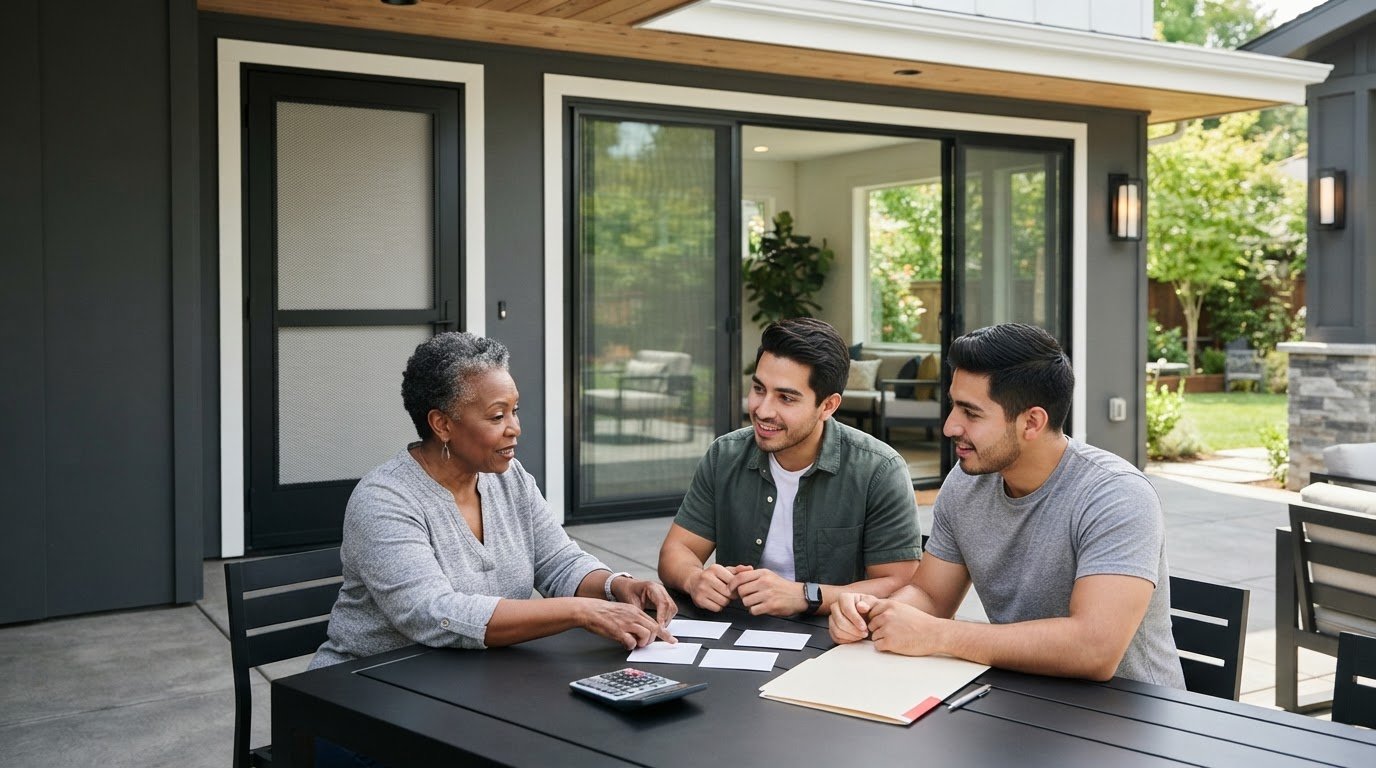
The lowest headline rate may not be the best fit for your home security upgrade. The right financing for home security upgrades depends on more than the advertised offer: repayment flexibility, lender requirements, and a clearly defined project all matter.
It’s understandable to want stronger protection without committing to a payment plan you haven’t fully compared. This guide explains how to weigh common options, including personal loans, home equity loans, HELOCs, credit cards, and financing that some security companies may offer. Availability and terms vary, so don’t assume a particular option is available. Verify the APR, repayment period, fees, and whether the borrowing is secured by your home.
Before comparing offers, clarify what you want to protect and what the project includes. Custom-built security screens are one upgrade to consider. Boss Security Screens is Licensed, Bonded & Insured, holds an A+ BBB Rating, and is 110% Made in USA. Its custom-built systems include a 15-year No Worry Warranty covering parts and labor. A clear project scope makes it easier to compare financing terms without rushing your decision.
Key Takeaways
List the doors, windows, or patio openings you want to secure before comparing financing for home security upgrades.
Compare personal loans, home equity loans, HELOCs, and credit cards. Check eligibility, terms, and whether your home would be collateral.
Look beyond the monthly payment. Review the rate structure, repayment period, fees, and total repayment obligation before committing.
Ask for a custom assessment. Security screens are measured and built for each opening, and stainless-steel mesh can balance protection with natural light, airflow, and visibility.
Evaluate the project fit separately from financing. Boss Security Screens is Licensed, Bonded & Insured, holds an A+ BBB Rating, is 110% Made in USA, and includes a 15-year No Worry Warranty covering parts and labor.
Table of Contents
Financing for home security upgrades: start with the project and your priorities
Common ways to finance home security upgrades and how they differ
How to compare home security upgrade financing without overlooking risk
From financing research to a custom home security consultation
Financing for home security upgrades: start with the project and your priorities
Protecting your home is a practical priority. So is understanding the commitment before deciding how to fund an improvement. Start by identifying the openings you want to secure and the concerns behind each one. A front or side entry, accessible windows, and patio sliders may call for different solutions. If you’re concerned about several openings, you may be considering a broader project.
Planning makes financing for home security upgrades easier to compare. This section provides general information, not personalized financial advice. Financing availability and terms depend on the provider and your circumstances. Boss Security Screens’ materials don’t confirm that the company offers financing, so consider its product and installation information separately from a lender’s decision.
Which home security improvements are you considering?
Walk through your home and note the openings you’d like to protect. For each one, consider how it’s used, what concerns you, and whether your priority is a particular entry point or a more comprehensive upgrade. A project focused on one door or window differs in scope from addressing multiple openings throughout the home.
For background on the broader range of protective measures, see this overview of home security systems. If you’re considering an entryway, explore security screen doors for product information. Boss Security Screens custom-builds its security screens around each opening and uses stainless-steel mesh.
What should you know before comparing financing?
Write down the openings, the type of improvement you’re considering, and any project details that need clarification. If you’re evaluating custom security screens, ask about a custom assessment. Each system is measured and built around its opening. Keep the installer’s project details separate from a lender’s application, eligibility decision, and proposed terms.
Financing is an agreement with a separate provider to repay borrowed funds under that provider’s terms. Before accepting an offer, review the full agreement and ask the provider to explain anything unclear. This article covers general comparison points, not a recommendation about borrowing or which option suits your finances.
As you evaluate a security screen upgrade, you can also review the company’s stated credentials: Licensed, Bonded & Insured, an A+ BBB Rating, 110% Made in USA, and a 15-year No Worry Warranty covering parts and labor. These details describe the security screen business, not financing approval or lender terms.
Common ways to finance home security upgrades and how they differ
Personal loans, home equity loans, HELOCs, and credit cards are common categories to research. They differ in how you borrow, repay, and take on risk. Availability, qualification, terms, fees, and lender requirements vary, so compare actual offers rather than assuming an option will be available. Forbes provides an overview of home improvement loans and related financing routes.
Financing type
Typical structure
Key points to verify
Personal loan
Borrow a set amount and repay it in scheduled installments. Often unsecured.
Rate type, repayment term, fees, payment schedule, and consequences of missed payments.
Home equity loan
Borrow a set amount using home equity; the home generally serves as collateral.
Rate and repayment structure, fees, collateral terms, and what happens if payments are missed.
HELOC
A revolving credit line secured by home equity, with terms that may include a variable rate.
Draw and repayment periods, rate changes, fees, repayment schedule, and collateral exposure.
Credit card
Revolving credit, usually unsecured, with repayment based on the account terms.
APR, promotional period and conditions, fees, minimum payments, and the cost of carrying a balance.
Unsecured borrowing versus borrowing against home equity
With unsecured borrowing, such as many personal loans and credit cards, the debt isn’t directly backed by your home. Home equity loans and HELOCs generally use the home as collateral. That can raise the stakes: missed payments on secured borrowing may put the property at risk, while missed payments on any form of credit can have serious financial consequences. Read the agreement and ask the lender to explain the specific terms. Neither structure is automatically right for every household.
Questions to ask before accepting an offer
Ask the lender to explain the full repayment schedule, including when payments begin, how the rate is set, and whether it can change. Confirm applicable fees, any promotional period and what happens when it ends, and the consequences of late or missed payments. Check whether paying early changes what you owe.
The lowest advertised payment alone isn’t enough to compare offers. Review the full repayment terms, fees, and collateral risk. A lower payment may reflect a longer repayment period or promotional terms, so understand what you’ll owe over the life of the agreement.
Keep financing decisions separate from your security project assessment. Boss Security Screens’ financing availability isn’t confirmed. Its screens are custom-built around each opening, and a free consultation can help clarify project fit and next steps, not lender approval. The company is Licensed, Bonded & Insured, holds an A+ BBB Rating, is 110% Made in USA, and includes a 15-year No Worry Warranty covering parts and labor. Learn about a free consultation.
How to compare home security upgrade financing without overlooking risk
Borrowing can make a project possible on a chosen timeline, but financing isn’t automatically suitable for every household. Before taking on a payment, consider whether your budget could handle it alongside existing obligations and unexpected expenses. If repayment would leave little room for a change in income or other essential costs, pause and reassess the project scope or timing.
Compare offers using the same checklist, not just the monthly payment. Review the total repayment obligation, repayment term, whether the rate is fixed or variable, all fees, and whether your home is collateral. Ask the lender how rate changes or missed payments could affect you under the specific agreement. Forbes offers an overview of home improvement loan options. Use it as general background, then verify current terms directly with providers.
Benefits and trade-offs to weigh for each financing route
A personal loan or credit card may offer a way to borrow without using home equity as collateral, but qualification and repayment terms vary. A home equity loan or HELOC may use your home as security, adding collateral risk if you can’t meet the agreement. Convenience doesn’t remove the repayment commitment, and no route guarantees approval, savings, tax benefits, or a financial return.
Check whether an offer has a fixed or variable rate and ask how its terms could change over time. Don’t assume a rate type, promotional offer, or qualification standard applies without confirmation in writing.
How to spot terms that need clarification
Ask the lender to provide written details on the rate, fees, payment schedule, total repayment amount, and consequences of late or missed payments. If there’s an introductory or promotional period, confirm what changes when it ends and what conditions apply. If a term remains unclear, request an explanation before signing. For complex decisions, consider independent advice from a qualified financial professional.
A payment that looks manageable today doesn’t tell you the full cost or risk of borrowing. Compare the complete agreement and consider whether you could keep up with payments if your household budget changed. Project value is a separate question from loan affordability. Don’t count on a security upgrade producing a particular financial return.
Boss Security Screens’ financing availability isn’t confirmed, so discuss any financing offer with the provider named in its agreement. The company’s security screens are custom-built around each opening. Its credentials include Licensed, Bonded & Insured, an A+ BBB Rating, and 110% Made in USA, along with a 15-year No Worry Warranty covering parts and labor.
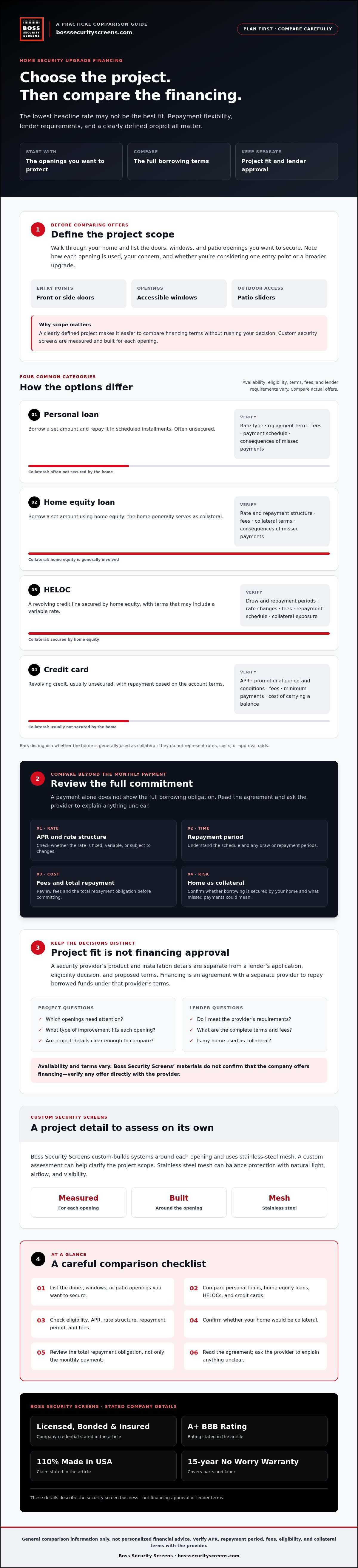
A practical checklist for financing a home security upgrade
A clear project brief helps you keep two decisions separate: what you want to secure and whether a lender’s agreement fits your finances. Use this checklist to move from assessing your home to reviewing financing for home security upgrades. An installer’s project information is not a loan offer or approval.
Steps to take before speaking with a lender
List priority openings. Note the entry doors, windows, and patio sliders you want assessed. Record what you want each improvement to address, such as reinforcing a frequently used entry or securing several openings.
Decide on project scope. Identify whether you’re considering a targeted upgrade or a broader project. If window protection is part of the plan, review security window screens for relevant product information.
Request a custom assessment. Security screens are measured and built around each opening, so clarify which openings and project details an assessment covers. Ask what information you’ll receive to help define the project.
Separate your questions. Ask the installer about project fit and scope. Ask potential lenders about qualification, repayment, rates, fees, and collateral. An installer’s assessment doesn’t determine whether a lender will approve an application or what terms it may offer.
What to verify before agreeing to financing
Read the complete agreement. Check the payment schedule, repayment period, rate structure, applicable fees, and the total amount you’ll repay. Ask for written clarification if any term is unclear.
Confirm what can change. Ask whether the rate or payment could change, what happens after any promotional period, and when repayment begins.
Understand the consequences. Confirm directly with the lender whether your home is collateral and what the agreement says about late or missed payments.
Check that payments fit your budget. Consider whether you could manage them alongside regular expenses and unexpected changes. Don’t accept an offer just because its initial payment looks manageable.
Boss Security Screens’ materials don’t confirm that the company provides financing or makes lending decisions. Its consultation is for discussing custom security screen project fit and next steps, not financing approval. The company is Licensed, Bonded & Insured, holds an A+ BBB Rating, and is 110% Made in USA. Its 15-year No Worry Warranty covers parts and labor. Request a free consultation to discuss your security screen project.
From financing research to a custom home security consultation
Once you’ve compared general financing options, clarify the security project itself. A consultation with Boss Security Screens can help you discuss whether custom-built security screens fit your home and which openings to consider. It’s a project conversation, not a financing application or lender decision. Financing availability through Boss Security Screens isn’t confirmed, so direct lending questions to the company or the lender named in any offer.
What to discuss during a security screen consultation
Bring your list of priority openings, such as entry doors, windows, or patio sliders. Explain your household priorities and ask how a proposed configuration would suit each opening. You can also discuss frame preferences and how to balance protection with natural light, airflow, and visibility. The screens use stainless-steel mesh, and each system is custom-built around its measured opening.
Ask how the 4-point locking system applies to the door configuration you’re considering, and which details depend on your specific opening. For door options, see security doors. A consultation can clarify project fit and next steps, while any borrowing decision remains between you and a lender.
How Boss Security Screens builds confidence in the project
Before moving ahead, make sure the proposed scope reflects the openings you want assessed and the features that matter to your household. Boss Security Screens lists a 15-year No Worry Warranty covering parts and labor. The company is Licensed, Bonded & Insured, holds an A+ BBB Rating, and is 110% Made in USA.
Its stated installation record is 18,000+ installations with zero successful break-ins. These company credentials and product details can inform your project discussion, but they don’t indicate financing approval or establish the terms of a loan.
If you’re ready to discuss whether custom security screens fit your home, request a free consultation. Use the consultation to clarify the project, then contact the relevant lender directly to confirm financing terms and availability.
Take the next step with a clear plan
Choose financing for home security upgrades only after defining the project and reviewing the full repayment terms, including fees, rate changes, and any collateral risk. Approval and financing availability depend on the lender and your circumstances. Boss Security Screens’ financing availability isn’t confirmed, so ask the company or lender directly about financing questions.
If custom-built security screens are on your list, a consultation can help clarify which openings to consider and what next steps make sense. Boss Security Screens reports 18,000+ installations with zero successful break-ins. The company is Licensed, Bonded & Insured, holds an A+ BBB Rating, and is 110% Made in USA. Its 15-year No Worry Warranty covers parts and labor.
Boss Security Screens serves homeowners in Las Vegas, Phoenix, Los Angeles, Riverside, Scottsdale, San Jose, Oakland, San Francisco, Irvine, San Diego, Orlando, Detroit, Chicago, Minneapolis, Albuquerque, Dallas, Houston, and Sacramento. Schedule a free consultation to discuss your security screen project. Call 1-800-203-5644 or (702) 637-0255, email info@bosssecurityscreens.com, or visit bosssecurityscreens.com. Take your time, ask clear questions, and move forward with confidence.
Frequently Asked Questions
Can I finance home security upgrades through a personal loan?
Possibly, if a lender offers a suitable loan and approves your application. Personal loans are commonly unsecured and repaid in scheduled installments, but rates, terms, fees, and qualification requirements vary. Before borrowing, ask for the full repayment schedule and total amount owed, and check what happens if a payment is late. Compare the offer with other options and make sure the payments fit your budget.
What financing options can homeowners compare for security upgrades?
Homeowners can research personal loans, home equity loans, HELOCs, and credit cards. Personal loans and credit cards are generally unsecured, while home equity loans and HELOCs typically use the home as collateral. Each option has different repayment structures, rates, fees, and risks. Compare actual terms from providers, since availability and qualification requirements vary. For financing for home security upgrades, start by defining the project so you can ask lenders relevant questions.
Is a home equity loan or HELOC suitable for a home security project?
It depends on your financial situation, the lender’s terms, and your comfort with using your home as collateral. A home equity loan generally provides a set amount, while a HELOC is a line of credit. Both can put the home at risk if you don’t meet the repayment terms. Ask about rates, fees, repayment requirements, and collateral consequences, and consider independent professional advice before deciding.
How do I compare financing terms for a home security upgrade?
Compare the full repayment obligation, not just the advertised payment. Review the repayment term, rate type and potential changes, fees, payment schedule, and whether your home is collateral. If there’s a promotional period, ask what happens when it ends and whether conditions apply. Request written explanations for unclear terms, then consider whether the payments remain manageable alongside your other financial commitments.
Does Boss Security Screens offer financing for security screens?
Boss Security Screens hasn’t confirmed financing, so ask the company directly and verify any offer with the lender. A consultation discusses custom project fit, not credit approval. The company serves Las Vegas, Phoenix, Los Angeles, Riverside, Scottsdale, San Jose, Oakland, San Francisco, Irvine, San Diego, Orlando, Detroit, Chicago, Minneapolis, Albuquerque, Dallas, Houston, and Sacramento. It is Licensed, Bonded & Insured, holds an A+ BBB Rating, is 110% Made in USA, and includes a 15-year No Worry Warranty covering parts and labor.
Can I finance security screen doors and window screens together?
You can ask a lender whether its financing can cover a project that includes both security screen doors and window screens. The lender decides what the application can include and what terms may apply. First, define which openings you want to address and get project details for the combined scope. Boss Security Screens custom-builds systems around each opening, so a project assessment can help clarify what you’re considering.
What should I ask before accepting financing for a home improvement?
Ask for the full agreement in writing and have the provider explain the repayment schedule, rate and any possible changes, fees, promotional terms, and consequences of late or missed payments. Confirm whether the debt is secured by your home and what that means under the agreement. Check the total repayment obligation, not only the initial payment. If terms remain unclear or the decision is complex, seek independent professional advice.

Article by
James Kerr
James is Founder / CEO of Boss Security Screens.