Security Screen Doors in Dallas: A Practical Home Security Guide
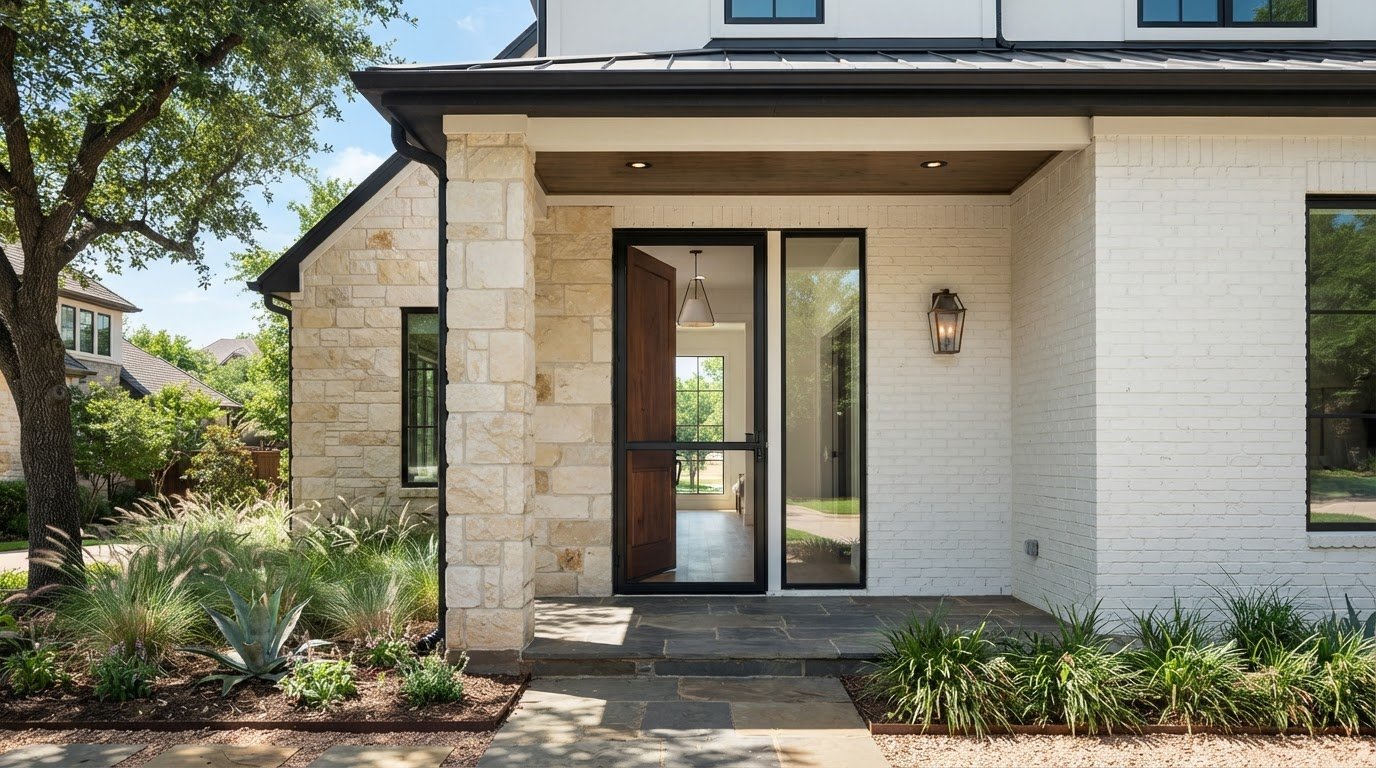
What if a stronger front door could make your home harder to enter without adding an alarm? For Dallas homeowners, security screen doors add a sturdy physical barrier while keeping the main door usable for everyday comings and goings. Start by identifying which entry points need attention, then choose a solution that fits the opening and your routine.
It’s reasonable to want more protection without sacrificing visibility, airflow, or convenience. A security screen door is designed to resist forced entry; it does not detect activity or send alerts. A custom fit matters, too: each system is measured and built around the opening, with configurations suited to the doorway and how you use it.
This guide walks through a practical way to review your home’s entry points, explains what a security screen door does compared with an alarm, and outlines how a custom-installed option can fit into a no-alarm security plan. You’ll have a clearer basis for deciding whether it’s the right next step for your Dallas home.
Key Takeaways
- Inspect the doors and windows that connect to the outside, then prioritize openings where a stronger physical barrier would be useful.
- Custom-built security screen doors Dallas homeowners can choose add a physical layer while preserving everyday use, natural light, visibility, and airflow.
- Security screens resist access attempts, while alarms detect or signal events. Each serves a different purpose, and they can be combined.
- Consider how each entry point is configured and used to determine where a custom-fit security screen door makes sense.
- Boss Security Screens reports 17,000+ installations with zero successful break-ins. Systems feature a 4-point locking system and a 15-year No Worry Warranty covering parts and labor. The company is Licensed, Bonded & Insured, has an A+ BBB Rating, and is 110% Made in USA.
How Dallas Homeowners Can Improve Home Security Without an Alarm
You can strengthen your home without making it feel like a fortress. A no-alarm approach focuses on physical protection at entry points rather than remote monitoring. Begin by checking how doors and windows close, decide which openings to prioritize, and choose measures that fit your household’s routine.
Physical home security means measures that strengthen or protect entry points. It can include consistent habits, well-functioning doors and windows, and physical barriers. These measures do not send alerts or monitor activity, but they can help make access more difficult. For a broader overview of hardware and personal practices, see understanding home security.
Start with a simple Dallas home entry-point walkthrough
Walk around your home and list the openings that connect directly to the outside: exterior doors, patio sliders, French doors, and accessible windows. For each one, note how often it’s used and how easily you can see it from inside or outside. The goal isn’t to predict a threat. It’s to build a clear picture of where added protection could be useful.
- List the main entrance and any other exterior doors.
- Include patio sliders and French doors, especially those used regularly.
- Note accessible windows and openings that are less visible from inside or outside the home.
This inventory turns a general concern into a prioritized plan. A frequently used entrance may need a different solution from an opening used occasionally. Consider each one separately, including how it operates and what would make it easier to secure consistently.
Prioritize practical improvements before buying products
First, check that each door and window closes fully and latches as intended. Note any opening that is difficult to operate or easy to leave unsecured during a busy day. Build a habit of checking it as part of your routine, then consider whether an added physical barrier could strengthen that entry point.
Habits and hardware work together. Consistently closing and latching an entry point matters, while a visible barrier can add another layer at selected openings. A security screen door helps resist access attempts; it is not an alarm or monitoring service. If a physical layer suits your priorities, explore custom security doors measured and built around the opening. Security screen doors Dallas homeowners choose should support normal entry and preserve visibility and airflow.
Use a straightforward sequence: inspect the openings, prioritize those needing attention, address basic operation, then consider a custom screen for the selected entry. Ask yourself: Can everyone in the household use the door comfortably? Does the screen preserve a clear view and airflow? The goal is to strengthen protection while keeping the home welcoming and functional.
How Security Screen Doors Add a Physical Layer to Dallas Home Security
A security screen door is a custom-built physical barrier fitted to a specific doorway, alongside the home’s existing door. It is designed to resist forced entry while allowing the entry to remain part of everyday life. It does not detect activity or send alerts. Its job is to add resistance at the opening, not to make it impossible to enter.
Boss Security Screens measures and builds each system around the opening, using stainless-steel mesh and a 4-point locking system. The mesh preserves natural light, airflow, and visibility while blocking bugs and intruders. For local context, homeowners can explore the Dallas crime statistics dashboard from City of Dallas OpenData. Use local information as context, then assess the specific openings and routines in your own home.
Which Dallas home openings can a security screen door protect?
Entry doors, French doors, and patio sliders suit different layouts, but each can connect the home directly to the outdoors. The door type and configuration determine what the screen system needs to accommodate. Custom measurement ensures the system is built for that specific opening rather than treating every doorway as interchangeable. When considering custom security doors, think about which entrance you use most and where an added physical layer would be useful.
For example, a frequently used front entrance needs to work smoothly with the household’s regular comings and goings. A patio slider or French door has a different configuration to plan around. Custom fitting connects the protective layer to the actual doorway, its operation, and your home’s design.
What should a security screen door preserve in daily use?
Strength matters, but so does living comfortably with the door. Stainless-steel mesh preserves natural light, airflow, and visibility, so a protective layer doesn’t have to make an entry feel closed off. The system is custom-built so the door can operate as intended.
Consider who uses the doorway, whether the view outside matters, and how the door functions throughout the day. Operable screens use ADA-compliant egress latches. Those features help balance a sturdy barrier with access and everyday usability.
If you’ve identified an opening where a custom screen door fits your priorities, request a free estimate from Boss Security Screens. Call 1-800-203-5644 or (702) 637-0255, email info@bosssecurityscreens.com, or visit bosssecurityscreens.com to discuss security screen doors Dallas homeowners can have custom-built around their openings.
Security Screen Doors vs. Alarms: What Each Does for Dallas Homes
A physical barrier and an alarm serve different purposes. A security screen door is built to resist access attempts at an opening. An alarm detects or signals events, depending on the system. Knowing the difference helps you choose measures that address your priorities without expecting one tool to do every job.
| Layer | Primary role | What it doesn’t do |
|---|---|---|
| Physical barrier | Adds resistance at a specific entry point. | Doesn’t provide monitoring or send an alert. |
| Alarm | Detects or signals an event, depending on the system. | Doesn’t physically reinforce the doorway. |
| Combined layers | Pairs resistance at an opening with detection or notification. | Can’t cover every risk or replace sensible household habits. |
A security screen door is not an alarm replacement or monitoring service. It provides physical resistance at an entry point; an alarm provides detection or notification. You can use both to address these separate needs. The right combination depends on what you want each security measure to do.
What a physical security screen door is designed to do
Custom-built around a measured opening, a security screen door forms a barrier at that entry, supported by its locking system. Boss Security Screens’ systems are engineered to resist forced entry and heavy impact. Their purpose is to add resistance at a particular doorway, not to protect against every possible risk or make an opening invulnerable.
When evaluating security screen doors Dallas homeowners can consider, start with the opening where added resistance would matter most and how the door needs to function each day. The custom fit and 4-point locking system work together as the physical layer. They do not detect an attempt or contact anyone; their role is to help resist entry at the doorway.
What an alarm does differently
An alarm system is intended to detect or signal events, depending on its setup. That function is separate from physically strengthening an entry point. An alarm may make an event known, while a screen door creates resistance at the opening itself. Neither function should be confused with the other.
Physical protection can be a useful part of a plan even though it doesn’t address every scenario. Start with the entry you want to reinforce, then decide whether physical resistance, detection, or both match your household’s needs. A security screen door can be one deliberate layer, while an alarm serves a separate purpose. Together, they address different parts of home security.
A Practical Step-by-Step Plan for Strengthening Your Dallas Home
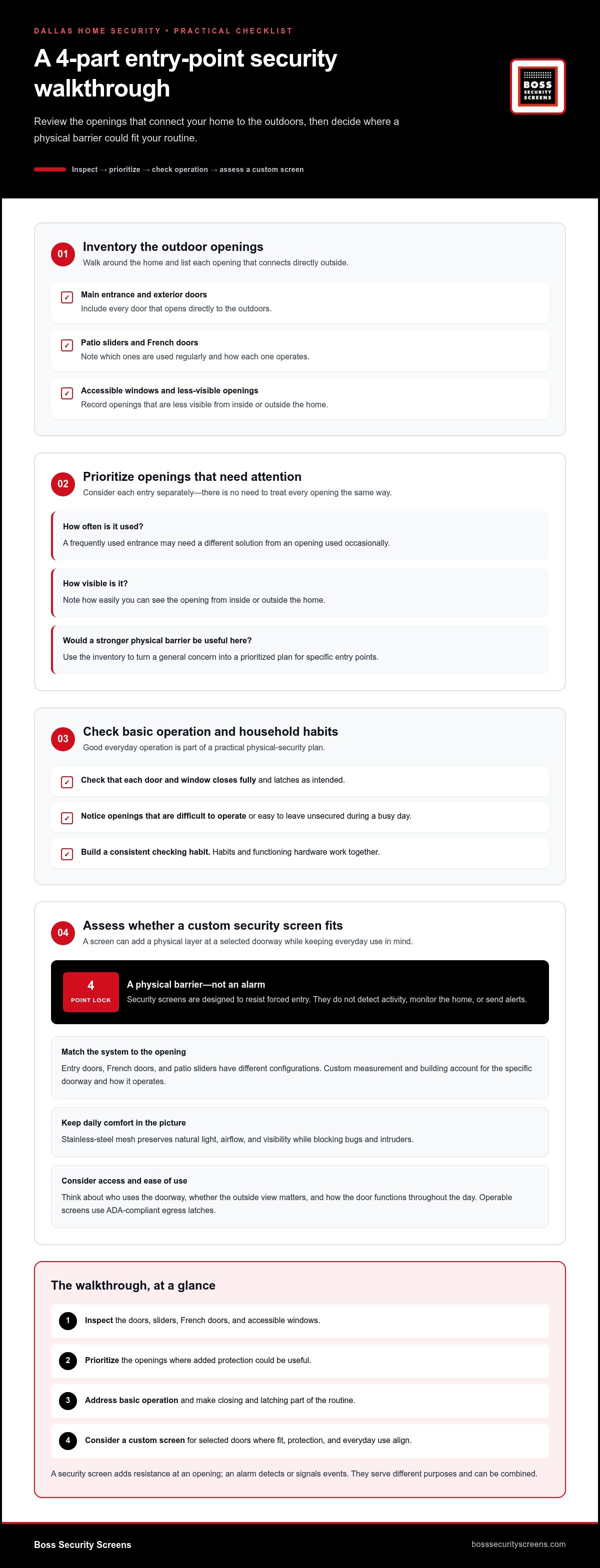
A clear plan keeps security improvements practical. Start with the openings, decide where a stronger physical layer would help, then consider a custom-fit option that works with your home and routine. Inspect, prioritize, address basic operation, then match a custom screen to the opening and household.
Inspect, prioritize, and document the openings
Make a list of the exterior entry doors, French doors, and patio sliders you want to assess. For each one, note how often it’s used and what your household needs from it. A main entrance used throughout the day may have different usability needs from a patio door used occasionally.
- Record which openings need regular, easy access.
- Note where airflow and visibility matter to your household.
- Mark any door or window that doesn’t close or latch as intended.
Keep basic maintenance checks separate from product decisions. If a door isn’t closing or latching properly, note that as an operational issue to address. Then consider whether a security upgrade is also appropriate. This distinction helps ensure a new product isn’t treated as a substitute for making sure an existing opening works as intended.
Match the security screen to the opening and household
Once you’ve identified an opening for added protection, its measurements and configuration matter. A system should be custom-built around that specific opening, not selected on the assumption that every doorway is the same. The door type, how it operates, and your household’s access needs all inform the fit. Boss Security Screens custom-builds systems to each measured opening.
Consider appearance as well as function. Multiple frame colors and configurations help the screen work with your home’s design, while visibility, airflow, and normal door operation remain part of the plan. The goal is a physical layer that suits the opening without making everyday use awkward. Custom security doors can accommodate different entry configurations.
Compare priorities across openings instead of trying to upgrade everything at once. You might decide a frequently used entrance deserves attention first, then assess other doors separately. This way, your choices follow your home’s layout and family routines rather than a one-size-fits-all checklist.
If you’ve identified an opening for a custom screen, request a free estimate for a solution measured for your home. Call 1-800-203-5644 or (702) 637-0255, email info@bosssecurityscreens.com, or visit bosssecurityscreens.com to explore security screen doors Dallas homeowners can tailor to their entry points.
Explore Custom Security Screen Doors in Dallas with Boss Security Screens
Once you’ve identified the openings where a physical barrier could help, consider a system built for those specific spaces. Boss Security Screens custom-builds and professionally installs security screen doors for Dallas homes. Each system is measured and built around the opening, so its configuration suits the doorway and the way your household uses it.
A front entry, French door, and patio slider don’t necessarily share the same dimensions or operation. Rather than treating them as interchangeable, the system is tailored to each opening. Custom security doors can form part of a home’s physical-security plan while keeping daily access and appearance in view.
What Dallas homeowners can expect from a custom-built system
Boss Security Screens’ systems use stainless-steel mesh that blocks bugs and intruders while preserving natural light, airflow, and visibility. They’re built so doors operate as intended, keeping the security feature practical for daily use. Multiple configurations suit different openings, frame colors can complement your home’s design, and there are no exposed hinges.
The protective role is specific: a security screen door adds resistance at the measured opening. It isn’t an alarm or monitoring service, and no physical barrier addresses every possible risk. Boss Security Screens reports 17,000+ installations with zero successful break-ins. The company has an A+ BBB Rating and is Licensed, Bonded & Insured.
The systems are 110% Made in USA and include a 15-year No Worry Warranty covering parts and labor, with corrosion covered. Together with custom measurement and professional installation, these features give homeowners a clear basis for considering a physical upgrade while keeping fit, function, and finish in mind.
Take the next step with a free consultation
Bring your priorities to the conversation: which opening you want to protect, how the door is used, and what matters most for visibility, airflow, and appearance. A free estimate is a practical way to discuss a custom-built solution for your home and understand how it can fit your needs.
Boss Security Screens installs nationally, including in Dallas, Las Vegas, Phoenix, Los Angeles, Riverside, Scottsdale, San Jose, Oakland, San Francisco, Irvine, San Diego, Orlando, Detroit, Chicago, Minneapolis, Albuquerque, Houston, and Sacramento. To discuss security screen doors Dallas homeowners can have tailored to their openings, request a free estimate. Call 1-800-203-5644 or (702) 637-0255, email info@bosssecurityscreens.com, or visit bosssecurityscreens.com.
Turn Your Security Priorities into a Confident Next Step
Make your security plan something you can revisit as your household’s routines or needs change. Keep a short record of the entry points you’ve assessed and the priorities behind your choices. That gives you a useful reference for future decisions about security screen doors Dallas homeowners may consider, without feeling like you need to tackle every improvement at once.
A considered approach makes room for upgrades that suit both your home and the people who live in it. Start with the openings that matter most, then choose solutions that balance security, appearance, and everyday use.
Frequently Asked Questions
Can security screen doors help secure a home without an alarm?
Yes. A screen door can provide a physical upgrade at the doorway you’ve chosen to address. Consider whether your priority is a particular entrance, everyday access, or added peace of mind when the main door is open. A screen door doesn’t notify you about activity, so think of it as targeted physical protection rather than a whole-home alert system.
Do security screen doors keep insects out as well as intruders?
Yes. The stainless-steel mesh blocks bugs and intruders, so the screen can serve both purposes at an entry. Its insect-blocking function applies while the screen is closed; opening it for passage naturally changes that barrier.
Will a stainless-steel mesh security screen make my home dark?
No. The mesh preserves natural light while adding security. The amount of daylight in a room also depends on the doorway’s orientation, nearby shade, and other features of the space.
Can I still open and use my door normally with a security screen?
Yes. Systems are custom-built so doors operate as intended, and operable screens use ADA-compliant egress latches. Consider who uses the entrance and make sure everyone knows how to operate the latch. The screen is configured for the door’s swing or sliding path and the household’s routine.
Will a security screen door allow airflow and a clear view outside?
Yes. Stainless-steel mesh provides airflow and a clear view outside. The experience can also depend on the opening and conditions around it, so include your ventilation and visibility preferences when planning the screen.
Can security screen doors be fitted to French doors or patio sliders?
Yes. Boss Security Screens provides security for French doors and patio sliders. Note whether the door swings or slides, which panels move, and how the entrance is used. The system is custom-built around the specific opening and its configuration.
What warranty does Boss Security Screens provide?
Boss Security Screens provides a 15-year No Worry Warranty covering parts and labor, with corrosion also covered. Keep the warranty information and installation documents with your home records for reference.