Security Solutions for Irvine Corner Lot Homes
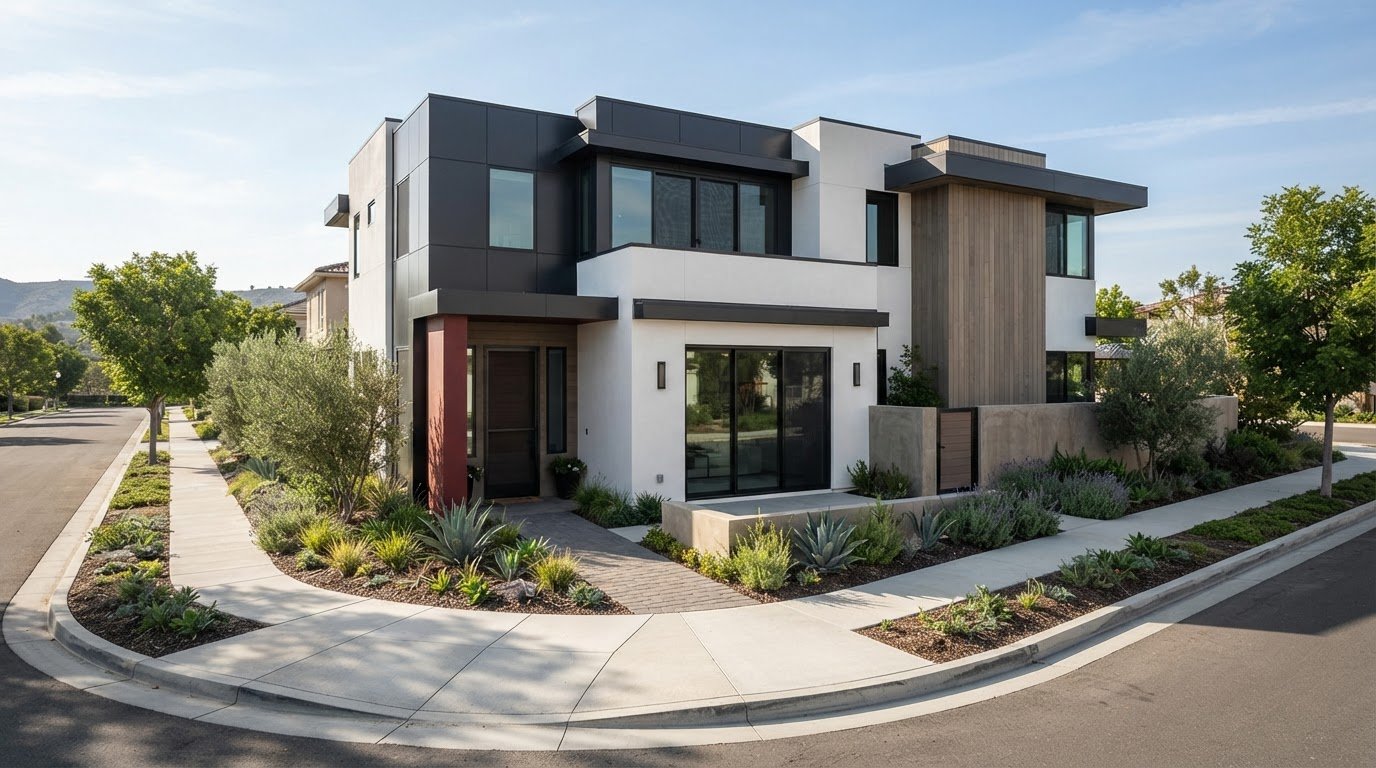
Corner lots have more than one approach, so security should account for exposed sides and secondary entrances, not just the front door. Effective security solutions for corner lot homes in Irvine begin with identifying street-facing windows, doors, and other access points. A useful plan fits the property instead of relying on a one-size-fits-all setup.
It makes sense to want strong protection without guesswork or a solution that clashes with your home. A useful quote should make the proposed work easy to understand, including what it covers and how installation is handled. The provider’s local experience and reputation matter, too.
This guide explains how to map the areas that need attention, what to include when requesting a customized quote, and how to assess a security provider’s experience in the Irvine community. You’ll have a practical way to compare proposals and identify a solution that supports both your home’s security and its appearance.
Key Takeaways
- Map every street-facing door, window, and side-yard entrance before requesting a customized quote, so the proposed work reflects your home’s layout.
- Compare quotes by the areas covered and installation details, not just by the bottom line.
- Assess a provider’s Irvine reputation through its community experience and the professionalism of its staff and service vehicles.
- Keep landscaping trimmed below windows and clear of entrances to improve visibility around exposed sides of the home.
- Security screens, screen doors, and sliding security doors can add a durable barrier at vulnerable windows and entrances.
Customized security quotes
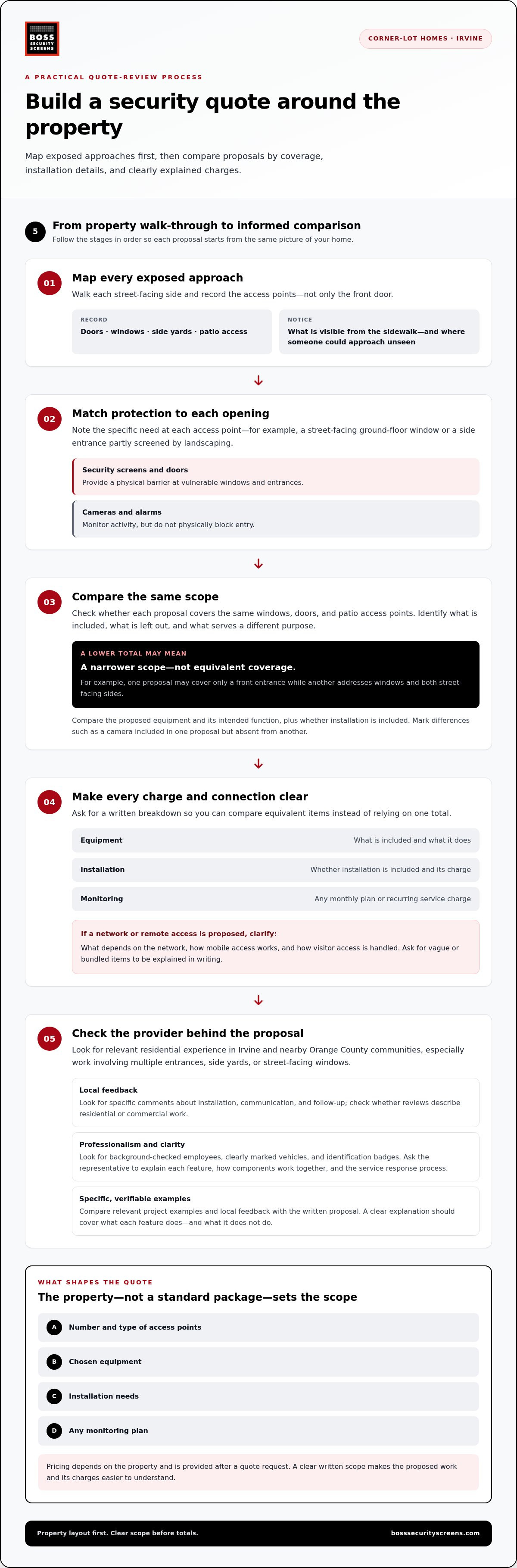
A quote for security solutions for corner lot homes in Irvine should start with the property’s layout, not a standard package. Map each street-facing side, entrance, window, and side yard before requesting proposals. Note which areas are visible from the sidewalk and where a visitor could approach unseen. This gives the provider a practical picture of the home and helps you compare proposals on the same scope.
Identify the protection needed at each access point. For example, note a ground-floor window facing a busy street or a side entrance partly screened by landscaping. Security screens and doors provide a physical barrier at vulnerable openings. They address a different need from cameras or alarms, which monitor activity but do not physically block entry.
Compare proposals by the openings and products included. Check whether each one addresses the same windows, doors, and patio access points, and whether installation is included. Note any openings left out or any proposed equipment that serves a different purpose. A clear scope makes it easier to judge whether the plan fits your home.
- List each area: Record doors, windows, side yards, and other exposed approaches.
- Name the solution: Ask the provider to identify equipment and its intended function.
- Separate charges: Review equipment, installation, and monthly monitoring lines independently.
- Clarify connections: If the proposal uses a network, ask what depends on it and how mobile access works.
Compare quotes for security solutions for corner lot homes in Irvine by scope before comparing totals. One proposal may cover only a front entrance; another may address windows and both street-facing sides. A simple comparison table can show each opening, proposed protection, included equipment, installation, and recurring monitoring. Mark differences, such as a camera included in one proposal but absent from another. This helps reveal when a lower total reflects a narrower scope.
The price depends on the property and is provided after a quote request. Deciding factors include the number and type of access points, chosen equipment, installation needs, and any monitoring plan. In Irvine and other Southern California communities, a clear written scope helps homeowners understand what they’re considering. Ask for a revised proposal if an item is vague or if network access, visitor access, or a recurring service charge isn’t clearly explained. The property’s layout should guide the plan, rather than a county or neighborhood label alone.
Before deciding, ensure security system quotes clearly disclose equipment costs, installation fees, and monthly monitoring plan pricing. If any of those charges are bundled or unclear, ask the provider to identify the amount and what it covers in writing. Keep the clarified breakdown with the proposal so you can compare equivalent items across offers, rather than relying on a single total. A quote is easier to assess when each charge is visible and its role in the proposed protection is understandable.
Experience and reputation in the Irvine community
A provider’s local reputation is more than a polished website. Look for a clear record of serving residential properties in Irvine and nearby Orange County communities. Ask how its experience applies to a corner lot, where multiple street-facing sides can shape the security plan. A provider should be able to explain its recommendations in plain language, not rely on broad claims about protection.
Use a few practical steps to assess the company before choosing a security service:
- Review local feedback: Look for specific comments about installation, communication, and follow-up. Check whether reviews describe residential or commercial work, since the needs can differ.
- Look for relevant examples: Ask about projects involving several entrances, side yards, or street-facing windows. A useful answer connects the property layout to the proposed solution.
- Assess staff professionalism: Irvine homeowners are advised to look for employees who have undergone rigorous background checks. Clearly marked vehicles and identification badges also help you identify arriving staff.
- Request a clear explanation: Have the representative walk through how each device, access control feature, or surveillance component fits the plan.
Experience should show up in the details. For example, a provider discussing a corner home should distinguish between a visible front entrance and a side approach with limited sightlines. If the proposal includes remote access, mobile controls, monitoring, or an integrated network, ask the representative to explain how those elements work together. A straightforward explanation helps you understand the system before installation, including what each feature does and what it does not do.
Pay attention to how the company handles questions. A professional representative should describe the proposed work, clarify unfamiliar terms, and explain the expected response process for service concerns. Don’t mistake a confident sales pitch for relevant experience. Specific examples, consistent communication, and transparent paperwork give you better grounds for judging a provider’s reputation.
Local relevance matters, but claims should remain verifiable. Look for feedback from Irvine or nearby Southern California communities, then compare those comments with the provider’s written proposal. If a review mentions a smooth installation, consider whether it describes work similar to yours. If it mentions surveillance or alarm systems, check whether those services match your needs. The aim is a sensible fit, not the longest service list.
For added confidence, write down questions about staff identification, the installation plan, and any remote or monitoring features. Bring them to a security consultation and use the answers to judge clarity and relevance. A thoughtful discussion should leave you with a better understanding of the proposed protection and how it suits your home.
What security risks are unique to corner lot homes in Irvine?
A corner lot has street exposure on two sides, unlike a home facing just one road. That layout can create additional sightlines toward windows, gates, and side entrances. A window hidden from the front porch, for example, may be visible from the side street. The point isn’t that every corner home faces greater danger, but that its access points and visibility differ.
Two street-facing sides can also mean more approaches to consider. A visitor, delivery driver, or passerby may reach a side gate without crossing the front walkway. Check whether the gate is visible from a window and whether its path leads directly to a rear door. Mapping those routes gives you a clearer picture than assessing only the main entrance.
Corner properties may have more windows facing public areas. A living-room window beside the sidewalk, for instance, may offer less privacy than one facing a fenced backyard. At night, interior lights can make rooms more visible from outside. Consider which rooms are exposed and whether window coverings or security window screens suit your household’s privacy and security needs.
Side yards can create narrow, less visible spaces between the home and property boundary. A tall hedge or storage shed may block a neighbor’s view of that route. Look at the property from both sidewalks and note where someone could stand out of view. Keeping landscaping trimmed can improve sightlines, especially below windows and near entrances.
Corner-lot traffic brings another practical concern: distinguishing expected visitors from people passing by. A front door may face one street while the driveway or gate opens toward another. If cameras are part of your plan, consider whether their views cover the actual approach paths. A camera aimed only at the front porch won’t show activity along a separate side entrance.
Home-security guidance reports a 40% rise in crime and vandalism since the pandemic. That figure doesn’t predict what will happen at an individual Irvine property. It does support reviewing everyday safeguards, such as locking doors and windows before leaving, even for a quick errand. Focus on routines and the home’s layout, not assumptions about a particular block.
- Walk both street edges: Identify windows, doors, gates, and paths visible from each sidewalk.
- Check blind spots: Note where hedges, fences, or structures obstruct views.
- Trace visitor routes: Follow the path from each gate or driveway to the nearest entrance.
- Review coverage: Match any surveillance view to the side or entrance it needs to show.
These checks help Irvine homeowners identify the specific vulnerabilities created by their lot’s shape. A corner property doesn’t need a generic plan. It needs attention to both street-facing sides, each entrance, and the sightlines between them.
How can homeowners secure side yards, gates, and multiple street-facing entrances?
Start with visibility. Keep landscaping trimmed below windows and away from entrances so shrubs don’t conceal a doorway or block a clear view. Walk the side yard from the sidewalk and from inside the home. Check whether a gate, window, or path disappears behind plants, a fence, or stored items. Clear sightlines make activity near exposed areas easier to notice.
Next, account for every entrance. A corner home may have a front door facing one street and a side gate facing another. Check that the gate closes securely and that household members know which entrances they use. If your home has double doors, secure the non-locking door at the top and bottom with bolts. This helps prevent the inactive panel from becoming an overlooked weak point.
Use lighting to reduce dark approaches. Motion-detector lights can illuminate the sides of a home and the backyard. Position them to cover the path toward a gate or side entrance, rather than aiming only at the front porch. Test the lights after dark from each approach. Adjust them if a wall, tree, or roofline leaves part of the route in shadow.
- Clear the perimeter: Trim plants below windows and away from entrances.
- Check every gate: Confirm it closes and doesn’t leave a hidden path to a door.
- Secure double doors: Add bolts at the top and bottom of the non-locking panel.
- Light side routes: Use motion-detector lights for the home’s sides and backyard.
- Review each approach: Test visibility and lighting from both street-facing sides.
Give each entrance a clear purpose. For example, direct deliveries to the main entrance and avoid leaving a side gate open for convenience. If family members use different doors, make sure everyone knows how to close and secure each one. A simple household routine can prevent a secondary entrance from being forgotten.
Pay special attention to the space between a gate and the home. Move items that block the view and keep the path easy to observe from inside. If lighting spills into a neighbor’s windows, reposition it toward the ground and access route. The goal is useful coverage, not glare across the street.
Finish with a repeatable check. Walk the perimeter at dusk, inspect each gate and door, and confirm that motion lights cover the side yard and backyard. Repeat the walk after landscaping changes or outdoor storage moves. For Irvine corner lots, this focused routine helps keep multiple approaches visible, orderly, and less likely to be overlooked.
Home security
A reliable routine closes everyday gaps that hardware alone can’t address. Before leaving, lock every door and window, then set the burglar alarm, even for a short walk or quick errand. On a corner lot, include the side entrance and street-facing windows in that final sweep. A checklist by the main exit can help everyone follow the same steps.
Start with the front door. A peephole with a 190-degree view can help you see who is outside before opening it. A deadbolt should have a minimum 1-inch throw, and its strike plate should use at least two 3-inch screws. These details strengthen the door’s locking points. Check that the deadbolt extends fully into the strike plate when locked.
Nearby glass calls for extra thought. If glass or a mail drop sits within 40 inches of the front door, a double-cylinder deadbolt is recommended. Consider how household members would operate the lock during an emergency before choosing door hardware. For a sliding patio door, use a wooden dowel or secondary lock to help prevent the panel from sliding open. Test the door after securing it, rather than assuming the lock engages properly.
Garage doors need their own routine. Activate the opener’s remote-lock button at night and whenever you leave for a trip. Before traveling, ask a trusted neighbor to watch the home and collect visible deliveries. Give clear instructions about which doors they may use and how to reach you. These preparations can make an unusual change at the property easier to notice.
- Before leaving: Lock all doors and windows, then set the burglar alarm.
- At the front door: Check the peephole view, deadbolt throw, and strike-plate attachment.
- At patio doors: Secure the sliding panel with a dowel or secondary lock.
- Before travel: Activate the garage remote-lock button and arrange a trusted neighbor’s watch.
If you arrive home and find a broken window or an open door, don’t enter. Call 9-1-1 and wait for help in a safe place. Avoid touching the entrance or nearby items, since they may be relevant to the response. Tell the dispatcher what you observed and where you are waiting. A calm, direct report gives responders a clear starting point.
For Irvine homeowners reviewing doors and windows, arrange a security consultation to discuss which physical barriers suit the home’s exposed openings. Pair that conversation with consistent locking, alarm, and travel routines for a more complete household plan.
When considering a home security company, Irvine homeowners can also notice how its employees arrive and identify themselves. Clearly marked vehicles and identification badges are straightforward details to look for while discussing the property’s security needs.
A departure routine applies even to a short walk or quick errand: lock all doors and windows and set the burglar alarm. Vacation planning can include asking a trusted neighbor to watch the home. If you return to find a broken window or an open door, call 9-1-1 rather than entering.
Boss Security Screens: Security Screens
Boss Security Screens helps protect exposed windows and doors with custom-built security screens designed for residential openings. For a corner lot, consider which street-facing windows need added protection and whether a separate entrance needs a security screen door. Security window screens suit vulnerable windows, while sliding security doors add a physical security layer at patio openings.
Start with the openings identified during your property walkthrough. Match each one to a screen or door suited to how it is used, including how household members enter and exit. Boss Security Screens custom-builds security screens around each opening, helping connect your home’s layout with practical protection rather than treating every opening alike.
For a tailored discussion of your home’s doors and windows, contact Boss Security Screens to talk through the areas you want to protect.
Make Your Next Security Step Count
A thoughtful plan for security solutions for corner lot homes in Irvine starts with a decision about what matters most to your household. Consider how you want the home to feel day to day: protected, practical, and still welcoming. The best next step is a focused conversation about your priorities and the openings you want to address. Bring your questions, describe how your household uses the home, and discuss which approach fits your goals.
That conversation can turn general concerns into a clear direction for your property. You can explore custom-built options for your doors and windows and understand how they relate to your needs. Strong protection should support everyday comfort, not complicate it.
Contact Boss Security Screens to discuss your home’s security needs. A considered next step can help you move forward with greater confidence and peace of mind.
Frequently Asked Questions
What are the best security systems for corner lot homes in Irvine?
A tailored plan that strengthens exposed windows and entrances is a practical fit for Irvine corner homes. Boss Security Screens custom-builds Security Screens and Security Screen Doors to match each opening, so homeowners can prioritize the areas they want protected. Its products carry a 15-year No Worry Warranty on parts and labor. Boss Security Screens is licensed, bonded, and insured, holds an A+ BBB Rating, and is 110% Made in USA.