Deterring Burglars With Visible Security and Home Checks
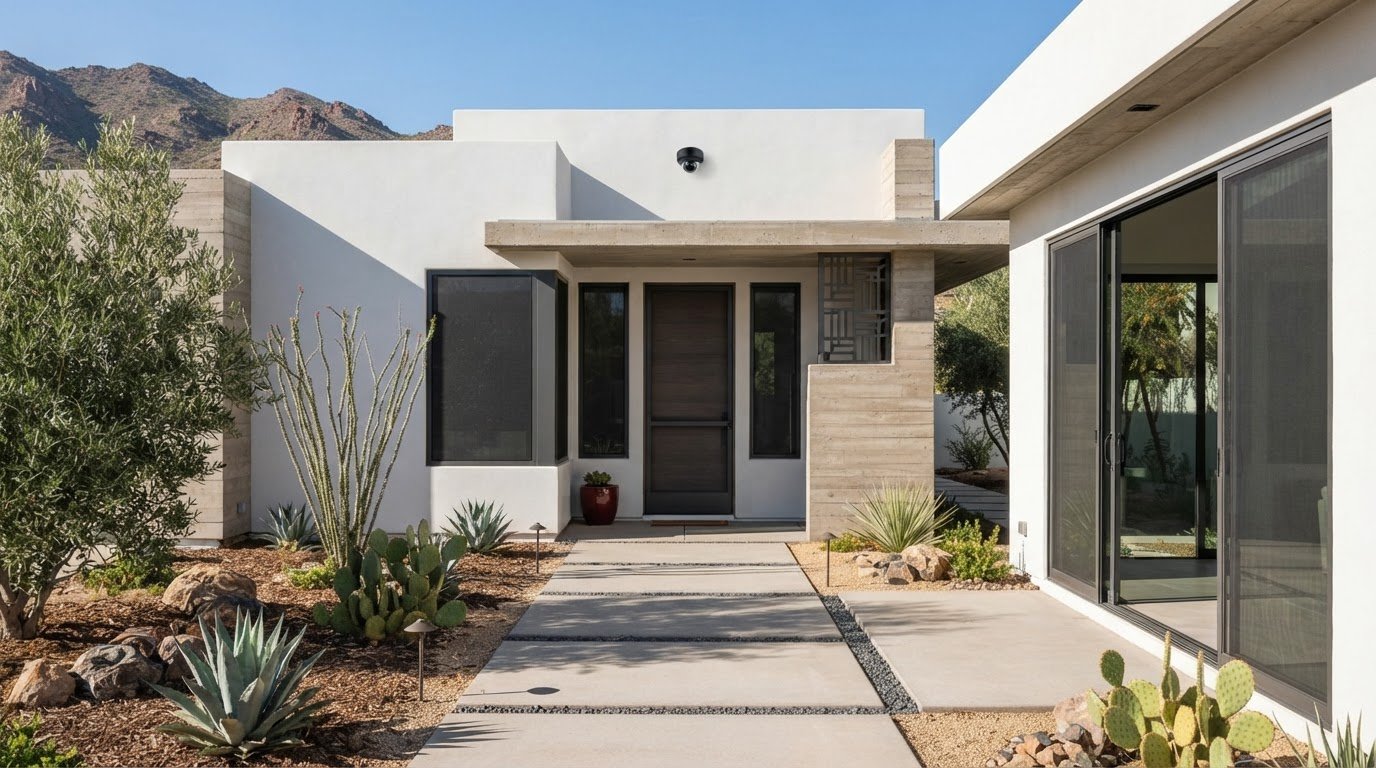
The strongest single deterrent may be a dog, but visible cameras also rank highly. A University of North Carolina study that interviewed 422 convicted burglars found visible cameras were the second-strongest deterrent. That makes deterring burglars with visible security a practical part of making a home look less appealing to target.
It’s natural to focus on cameras, but deterring burglars with visible security means looking beyond what’s obvious at the front door. Intruders may also notice hidden approaches, dark areas, vulnerable doors and windows, or signs that a home is empty. A few deliberate checks can help address those weak points.
This guide explains how visible security can discourage opportunistic intruders, how to spot blind spots and vulnerable entry points, and which common mistakes can undermine your efforts. You’ll also learn what burglars may look for, so you can make practical choices that help your home feel more secure.
Key Takeaways
- Place visible security measures where they’re easy to notice, and use lighting to reduce dark, concealed approaches.
- Walk around your property to spot vulnerable doors and windows, blind spots, and places where intruders could go unseen.
- Don’t rely on camera footage alone; secure entry points, keep valuables out of window view, and avoid leaving spare keys in familiar hiding places.
- Look at your home from a potential intruder’s perspective: weak access points, hidden side paths, and signs of an empty home can affect its appeal.
- Security screens, security screen doors, security window screens, and sliding security doors can add a physical barrier at vulnerable openings.
1. Visible security systems, yard signs, and window stickers
Visible security and physical barriers serve different purposes. Cameras, yard signs, and window decals signal that a property is monitored, while strong locks and reinforced doors resist entry. A layered approach pairs visible warnings with physical protection.
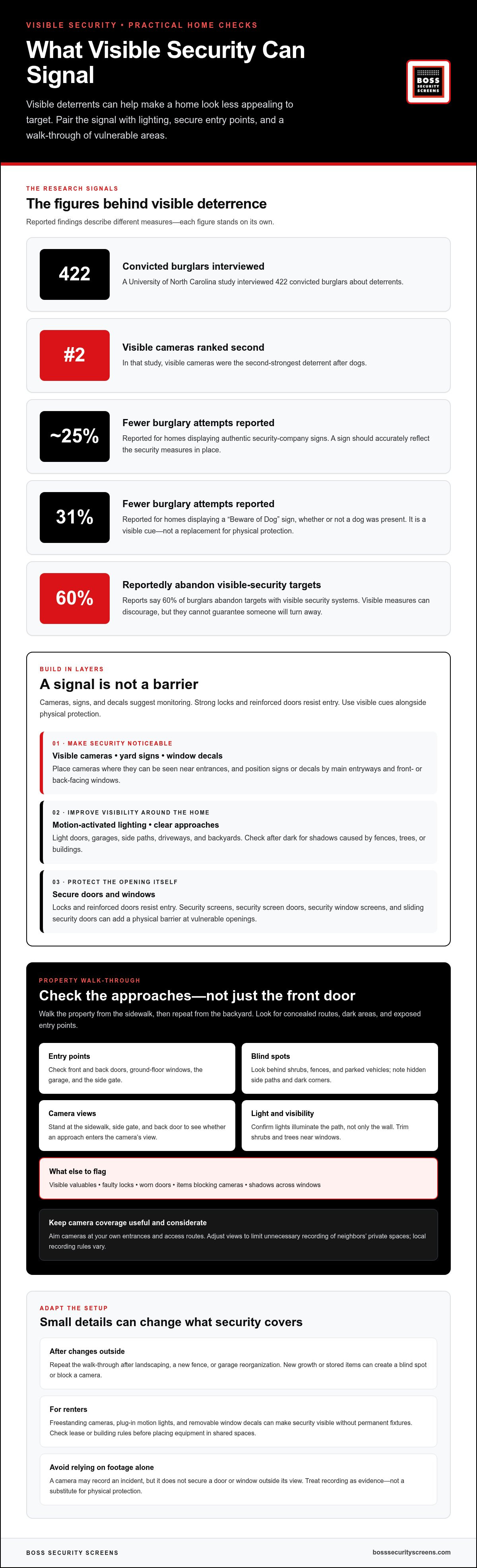
Visible cameras can discourage burglars, especially when they’re easy to spot near an entrance. A University of North Carolina study interviewed 422 convicted burglars and found visible cameras were the second-strongest deterrent after dogs. Some potential offenders may choose another home, but a camera can’t physically stop someone from entering.
Place cameras where visitors can see them, such as beside the front door or facing the driveway. Cover the garage, side access, and other approaches, too. Motion-activated lights can expose movement after dark and make suspicious activity easier for neighbors to notice.
Signs and window stickers can make a security system visible before someone reaches a door. Position a yard sign near a main entryway, and place decals on front- and back-facing windows. Authentic security-company signs are reported to reduce burglary attempts by approximately 25%. A sign should accurately represent the security measures in place.
Warning signs can also mention a dog. One reported finding says homes displaying a “Beware of Dog” sign had 31% fewer burglary attempts, regardless of whether a dog was present. Treat that sign as one visible cue, not a replacement for secure doors, windows, or other protective measures.
Yes, burglars may avoid homes with visible cameras or alarm systems because these cues suggest greater detection risk. Reports say 60% of burglars abandon targets with visible security systems. That doesn’t mean every intruder will turn away, so combine visible warnings with secure entry points.
Visible security measures can raise privacy concerns if cameras capture a neighbor’s window or private space. Aim cameras at your own entrances and access routes, then adjust the view to limit unnecessary recording. Recording rules vary by location, so consider local requirements before enabling audio.
Renters can make security visible without permanent changes. Use freestanding cameras, plug-in motion lights, and removable window decals near the front door or a ground-floor window. Before placing equipment in shared spaces, review your lease or building rules. These steps make security noticeable without drilled holes or permanent fixtures.
2. Auditing blind spots and vulnerable entry points
Walk around your property from the sidewalk, then repeat the check from the backyard. Look for places someone could approach unseen, especially beside a side gate, garage, or ground-floor window. Also note dark corners, visible valuables, faulty locks, and worn doors. These details can show where better visibility or stronger protection may help.
For camera coverage, start with the front and back doors, ground-floor windows, garage, and side gate. Place outdoor cameras near entry points, at eye level where practical, and where they’re visible from the street. A doorbell camera can cover the front entrance, while another camera may help monitor a rear exit or driveway. Aim each view at your own access areas.
Place motion-activated lights near doors, garages, side paths, driveways, and backyards. Check these approaches after dark: a fence, tree, or building may block the beam and leave a route in shadow. The U.S. Environmental Protection Agency advises increasing lighting so citizens or passing law enforcement can more easily notice suspicious activity. It also notes that fences can support cameras for visual perimeter surveillance.
During your walk-through, test what each device actually covers. Stand at the sidewalk, side gate, and back door to see whether someone approaching would enter a camera’s view. Then check the following:
- Look for blind spots behind shrubs, fences, and parked vehicles.
- Check whether motion lights illuminate the path, not just the wall.
- Confirm a doorbell camera captures the entrance and approaching visitors.
- Move items that block a camera or cast shadows over a window.
Motion detection can add another layer. Mobile alerts when someone lingers near an entrance can prompt a timely response to unusual activity. Set detection zones to focus on your own entry routes, reducing irrelevant notifications from passing cars or sidewalk traffic.
Repeat the audit after landscaping changes, a new fence, or a garage reorganization. A shrub that grows across a window or a storage shelf that blocks a camera can create a fresh blind spot. If the walk-through reveals exposed windows or doors, discuss security for vulnerable openings as part of your home’s protection plan.
A home security audit can flag dark corners, blind spots, unprotected entry points, visible valuables, faulty locks, and aging doors. A lock that can be picked in thirty seconds illustrates a vulnerable entry point. Ground-floor windows are commonly exploited in forced-entry incidents. Keep shrubs and trees near windows trimmed low, and consider thorny plants beneath vulnerable windows. Prioritize camera coverage at front and back doors, first-floor windows, garages, and side gates.
3. Common security mistakes
A security camera can record an intruder without stopping entry. Footage may support a police report, insurance claim, or incident review, but surveillance alone doesn’t secure a door or window. Treat recording as evidence, not a substitute for physical protection. For example, a camera facing the driveway won’t protect an unlocked back door outside its view.
Leaving doors or windows unlocked during the day is another avoidable mistake. Even a quick trip to the yard can leave an easy opening, so make locking each entrance part of your routine. Before leaving, check the front door, back door, accessible windows, and garage entry. A consistent check removes guesswork, especially when several people share the home.
Don’t leave a spare key in familiar hiding places. Burglars may check ten common hiding spots in under 60 seconds, including under a doormat or inside a flowerpot. Give a spare to someone you trust instead of placing it near an entrance. A key hidden beside the garage can undermine an otherwise careful home security plan.
Keep expensive belongings out of direct view from windows. A laptop on a desk beside a street-facing window or jewelry near a front window can attract attention. Close curtains when appropriate and move valuables out of sight. This simple change limits what someone can assess from outside.
High privacy fences in front yards can create blind spots. They may shield an intruder from neighbors who could otherwise notice suspicious activity. Keep the yard tidy and trimmed, and don’t let shrubs conceal doors or windows. Clear sightlines from the street and neighboring homes can make unusual movement easier to spot.
Lighting can also fail when it illuminates the wrong area. A bright fixture aimed at a wall may leave the driveway or side entrance dark. At night, walk from the sidewalk to each door and note any shadowed approaches. Adjust the lights so they illuminate the path and entrance, not just the building.
Close these common gaps with a short routine:
- Lock doors and windows, even during daytime errands.
- Move valuables away from windows facing the street.
- Remove spare keys from predictable outdoor hiding places.
- Trim plants that conceal an entrance or block a neighbor’s view.
- Use a monitored alarm system to increase an intruder’s risk of getting caught.
Each measure addresses a different weakness. A camera may capture activity, while a locked door, clear sightlines, and a monitored alarm can make the home harder to approach unnoticed and enter casually.
4. How burglars choose targets
A home may look like an appealing target when access seems easy and detection unlikely. Burglars may notice weak doors, hidden side paths, overgrown landscaping, and routines that suggest nobody is home. A quick look from the street can reveal several of these cues, such as an obscured back entrance or packages left outside.
Some burglars spend an average of 2-3 minutes assessing a property before deciding whether to target it. That brief look may include checking doors, windows, sightlines, and visible security measures. A visible camera or alarm may lead some offenders to choose another home, but it won’t deter everyone.
Time and exposure matter. Most burglars want to complete a break-in in under 10 minutes, so they may favor access that appears quick and concealed. A side gate opening onto an unlit path, for example, can provide cover and reduce visibility from the street. Clear sightlines and visible activity can make that approach less attractive.
Visible security is one clue burglars may notice, but they also look for signs of monitoring. The research reports that 83% of burglars check for alarms before attempting entry. A professionally monitored alarm can signal a greater chance of getting caught, while a video doorbell or outdoor camera makes surveillance easier to see.
Daily routines can affect how a home appears. A dark house at a familiar time, overflowing mail, or deliveries left by the front door may suggest the occupants are away. Ask a trusted neighbor to collect packages and watch for unusual activity while you’re gone. A lived-in appearance can help avoid obvious signs of absence.
Do security needs or burglary risks vary by neighborhood in the United States? Yes. Street layout, sightlines, nearby activity, and how easily neighbors can see entrances differ from block to block. Assess the approaches around your home instead of assuming every area has the same risks.
Neighbors can provide useful awareness, but they don’t replace physical protection. Introduce yourself to nearby residents and agree to share observations about unfamiliar activity. For example, someone next door may notice a person repeatedly testing side gates while you’re at work. A connected community can help make suspicious behavior more visible.
Try a simple check from a potential intruder’s perspective: view your home from the sidewalk, identify concealed approaches, then look for signs of vacancy. Note whether an outdoor camera or monitored alarm is visible and whether someone could approach unnoticed. This helps you prioritize improvements based on your home’s layout and routines.
5. How burglars select homes
Burglars may assess whether a home looks empty, exposed, or difficult to enter. Residential break-ins often occur during the day, from mid-morning through early afternoon, when homes may be empty. A predictable workday routine, unattended deliveries, or dark windows can make an absence easier to infer. Ask a neighbor to collect packages and avoid letting signs of vacancy accumulate.
Entry points shape a home’s appeal. A ground-floor window hidden by landscaping, a side door outside the street’s view, or a garage door left open can offer access with less visibility. Walk the property as someone approaching from the sidewalk might. Check whether doors and windows are visible, covered, and protected, then address the easiest route first.
Burglars may also look for signs that detection is unlikely. Visible security devices can change how a property appears, while alarms and sensors add another layer. Homes with comprehensive security experience 3.5 times fewer break-in attempts than unprotected properties, according to the reported figures. Consider how cameras, door and window sensors, and lighting work together across the home’s entry points.
A doorbell camera can show that the front entrance is monitored. If it lets residents speak to visitors remotely, the interaction may make the property seem occupied. Window sensors can add coverage where ground-floor glass is accessible, while door sensors can help identify activity at other entry points. Choose devices to address actual vulnerabilities, rather than adding equipment without a plan.
Neighborhood visibility matters, too. Neighbors who know one another may be more likely to notice and report suspicious activity. A shared habit of collecting deliveries or checking on a home during a trip can make unusual patterns stand out. In neighborhoods with 25% doorbell camera adoption, break-ins dropped by 19%, according to the reported figures. That finding highlights how visible security can extend beyond one front porch.
Use this practical review to judge your home’s appeal:
- Look at the property from the street and identify hidden approaches.
- Check whether daily routines make empty periods easy to predict.
- Review coverage at doors, accessible windows, and the garage.
- Ask a trusted neighbor to notice packages or unusual activity during absences.
Security Window Screens can add a physical layer at vulnerable windows, complementing sensors and visible monitoring. If accessible windows stand out during your review, request a security consultation to discuss ways to protect those openings.
Boss Security Screens: Security Screens
Boss Security Screens provides custom-built security screens that add a physical barrier at vulnerable doors and windows. Security Screen Doors and Sliding Security Doors can help protect exposed entrances, while Security Window Screens provide an option for accessible windows. These measures complement cameras, lighting, and home checks by addressing openings an intruder might try to access.
Consider security screens when a home audit identifies a vulnerable window or entrance that needs more than a visible warning. The right solution depends on which openings need protection and how your household uses them. Boss Security Screens offers custom-built security screens for doors, windows, and patio sliders.
Make Your Next Security Decision Count
A practical approach to deterring burglars with visible security starts with improvements that suit your home, not equipment for its own sake. Focus on the openings and routines that matter most to your household. A clear plan turns a general concern into a useful next step.
For openings that need a physical layer, Boss Security Screens offers Security Screens, Security Screen Doors, and Security Window Screens. Custom-built to fit each opening, these options can complement existing security measures and help protect exposed doors and windows. The right choice depends on the opening and how your household uses it.
You don’t need to make every change at once. Start with the vulnerability you identified during your home check, then decide whether a visible warning, a stronger physical barrier, or both would address it. A measured decision can help you feel prepared without making security overwhelming.
Contact Boss Security Screens to discuss your home’s security needs, and take a confident step toward a more secure home.
Frequently Asked Questions
What is the #1 deterrent for burglars?
A dog is often described as a strong deterrent, but that doesn’t mean every household needs a pet. Choose protection that fits your home and daily life. If you have a dog, don’t rely on its presence alone: secure entry points and keep the animal safely inside. Households without pets can still use visible cameras and other security measures to make a property less appealing.
How Can You Protect Your Home While on Vacation?
Keep travel plans private until you’re home, especially on public social media. Ask someone you trust to collect mail and deliveries so they don’t pile up outside. Before leaving, give anyone checking on the property clear instructions, including how to reach you. A practical plan for deterring burglars with visible security also means ensuring signs and devices accurately reflect the protection in place.
How Do Burglars Choose Houses?
Burglars don’t target just one type of house. For a fresh perspective, ask a visitor unfamiliar with your home what stands out from the street and where they’d naturally approach. They may notice details household members overlook through familiarity. Use their feedback to identify areas for closer attention, rather than assuming your daily view reveals every potential weakness.
When Do Most Burglaries Take Place?
There’s no hour homeowners should consider automatically safe. Instead, identify gaps in household coverage: who is usually home during your regular schedule, and who secures the property when the last person leaves? Agreeing on responsibility prevents everyone from assuming someone else has done the final check.
When do most burglaries happen?
Burglary can happen at different times, so keep your routine consistent rather than reserving security measures for trips or overnight absences. For example, decide who checks that the garage is closed after someone returns with the car. Clear handoffs like this can prevent an entrance being left unsecured during an ordinary change in routine.
Which visible home security measures deter burglars most effectively?
To deter burglars with visible security, make cameras noticeable near entrances and combine them with clear signs and motion-activated lighting. A video doorbell can make monitoring apparent at the front entrance, while lighting draws attention to movement. Pair these visible cues with secure doors and windows. Choose placements that suit your home’s layout and make the measures easy to notice at relevant access points.