How to Secure a Home Without an Alarm at Doors and Windows
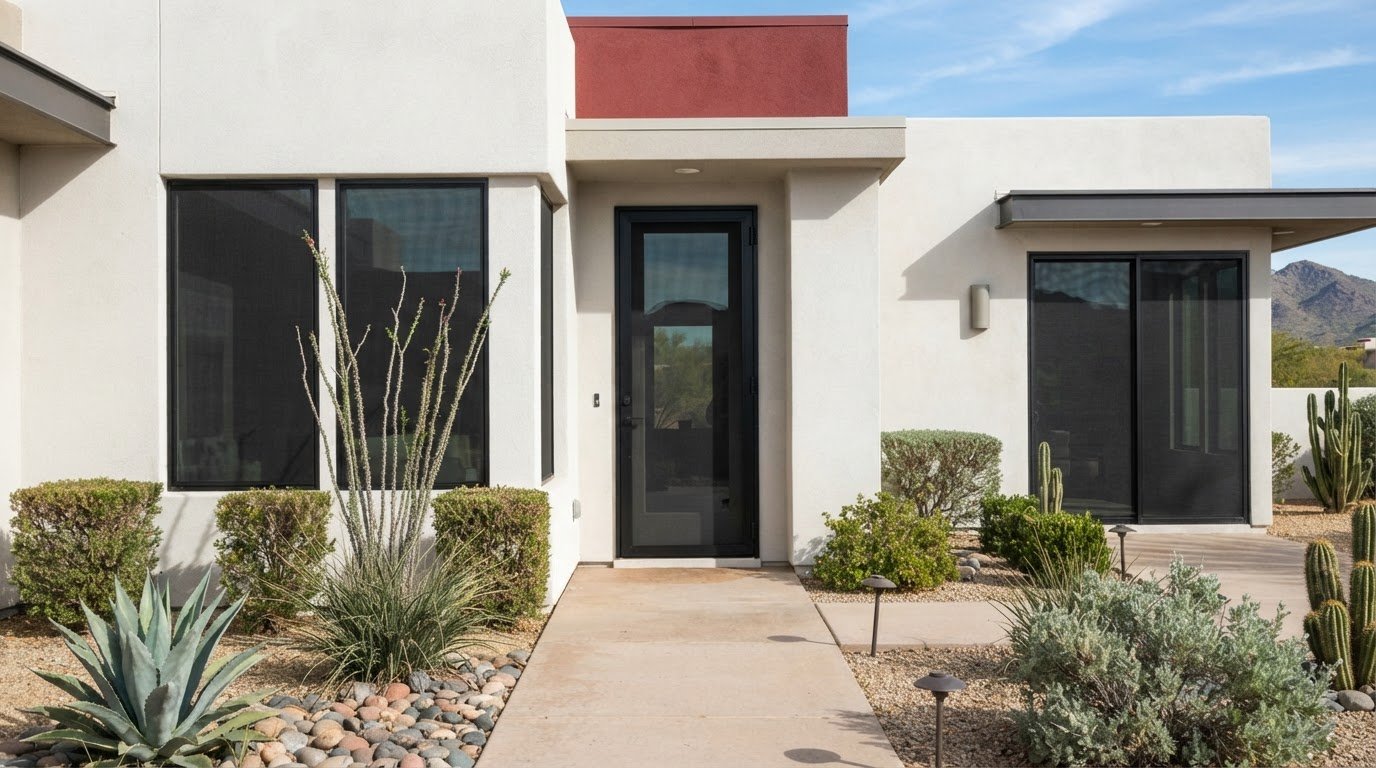
A dependable home-security plan starts with strong physical barriers, not an alarm. To learn how to secure a home without an alarm system, reinforce entry doors with a deadbolt that has a one-inch throw and use screws at least 3 inches long to secure door frames. Lock windows and sliding doors, improve visibility around entrances, and build a simple check-in routine with trusted neighbours.
You can secure a home without an alarm system by strengthening vulnerable doors and windows, improving visibility around entry points, and keeping up consistent locking habits. These measures work together, but physical barriers matter: lights and cameras can reveal activity, while secure doors and windows make entry harder.
This guide covers practical ways to reinforce exterior doors, improve sightlines with landscaping and lighting, secure windows and sliding glass doors, and coordinate simple checks with neighbours. Use the steps to identify your weakest entry points and decide which improvements make sense for your home.
Key Takeaways
- Strengthen exterior doors by focusing on the lock, strike plate, hinges, and the frame they’re attached to.
- Keep entry points visible with thoughtful landscaping and lighting that reduces dark, concealed areas.
- Build a simple neighbour check-in routine for times when you’re away, including taking in mail and packages.
- Secure sliding doors and accessible windows with appropriate locks and barriers, and make a habit of closing them before leaving.
- For added protection at glazed entry points, consider security screens designed for doors and windows.
1. Reinforcing exterior doors, deadbolts, and strike plates
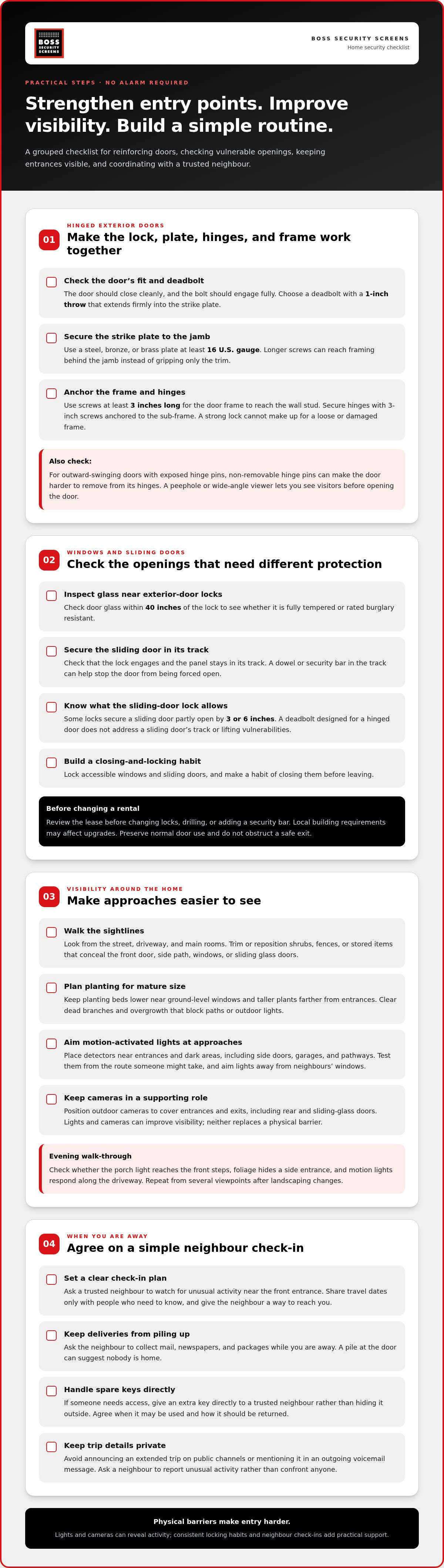
Start with the exterior door, its lock, and the frame. A deadbolt with a one-inch throw extends firmly into the strike plate, but the plate and doorjamb also need to resist pressure. Check that the door closes cleanly and the bolt engages fully. A strong lock cannot compensate for a loose or damaged frame.
Use screws long enough to secure the strike plate firmly to the doorjamb. Use a plate made from steel, bronze, or brass, with a minimum thickness of 16 U.S. gauge. Longer screws can reach framing behind the jamb, rather than gripping only the trim. Secure door hinges with 3-inch screws anchored to the sub-frame. For the door frame, use screws at least 3 inches long to reach the wall stud. The frame, hinges, and strike plate should work together.
A double-key deadbolt requires a key to unlock from both sides. Consider how everyone in the household would use the door before choosing one. Install a peephole or wide-angle viewer to see visitors before opening the door. If an exterior door swings outward and has exposed hinge pins, non-removable hinge pins can make it harder to remove the door from its hinges.
Sliding doors need a different check. Some sliding-door locks can secure the door partly open by 3 or 6 inches. A dowel or security bar in the track can also help stop the door from being forced open. Check that the lock engages and that the panel stays in its track. A deadbolt designed for a hinged door won’t solve a sliding door’s track or lifting vulnerabilities.
Look at any exterior-door glass within 40 inches of the lock. Check whether it’s fully tempered or rated burglary resistant. Glass close to a lock may affect how someone can reach the mechanism, so include it in the entry inspection. Timers that turn on selected lamps after dark add visibility, but they don’t reinforce a weak door. Treat them as a separate deterrent.
For a rented home, review the lease before changing locks, drilling, or adding a security bar. Local building requirements may also affect upgrades. Choose improvements that preserve the door’s normal use and do not obstruct a safe exit.
The cost of securing a home without an alarm system depends on the work involved. Changing a lock is different from reinforcing a frame or upgrading a door. The number of entry points, the condition of existing doors and windows, and the materials required all affect the scope. First identify the openings that need attention, then compare suitable improvements.
2. Security-focused landscaping and visibility
Clear sightlines make activity near doors and windows easier to notice. Walk the property from the street, driveway, and main rooms. Look for shrubs, fences, or stored items that conceal an entrance. Trim or reposition obstructions near the front door, side path, and sliding glass doors. Aim for visibility without stripping the yard bare.
Choose plants with their mature size in mind. Dense shrubs beside a window can conceal someone approaching. Keep planting beds lower near ground-level windows and place taller plants farther from entrances. Remove dead branches and overgrowth that block paths or outdoor lights. These changes help household members and neighbours see activity around the home.
Place motion detectors near entrances and dark areas around the perimeter, and use them to control outdoor lights. Pay particular attention to side doors, garages, and pathways. Aim lights at the approach rather than into a neighbour’s windows. Test each detector from the route someone might take. If the light activates only when someone is already at the door, adjust its position or direction.
Motion-activated lights and outdoor cameras can improve visibility without an alarm. Lights illuminate movement around entrances and dark areas, while cameras can provide visibility and evidence. Position cameras to cover entrances and exits, including the rear door and sliding glass doors. Neither replaces a physical barrier.
Fences can define property boundaries, but a solid barrier may also block views from the house or street. Check sightlines before adding screening or changing a gate. Keep gates closed, paths clear, and lights focused on likely approaches. A visible, maintained yard can make it harder to approach unseen, but landscaping does not replace secure doors and windows.
Use an evening walk-through to spot gaps. Check whether the porch light reaches the front steps, whether foliage hides a side entrance, and whether motion-activated lights respond along the driveway. Repeat the walk from several viewpoints after landscaping changes. Adjust lights or trim plants if an entrance becomes concealed. Keep the layout practical for residents, visitors, and deliveries.
If you’re planning a wider security update, you can discuss security options for your home alongside these visibility improvements.
3. Neighbour relationships and neighbourhood watch
A trusted neighbour may notice changes while you are away. Before a trip, agree on a simple check-in, such as watching for unusual activity near the front entrance. Share travel dates only with people who need to know, and give your neighbour a way to reach you. A clear plan makes it easier to report a concern promptly.
Ask a neighbour to collect mail, newspapers, and packages while you are away. A pile at the door can suggest that nobody is home. If someone needs access to the house, give an extra key directly to a trusted neighbour rather than hiding it outside. Agree when the key may be used and how it should be returned.
Keep travel plans private on public channels. Avoid announcing an extended trip on social media or mentioning it in an outgoing voicemail message. Ask a neighbour to report unusual activity rather than confront anyone. If your street has a neighbourhood watch group, learn how members share observations and who handles urgent concerns.
Security cameras can support neighbour awareness, but they provide visibility and evidence, not a substitute for physical security. Position cameras to record entrances and exits, and agree with a trusted neighbour on what to do if footage shows concerning activity. Do not assume a camera will automatically notify someone or prompt a response. Understand how its system is set up.
Fake cameras and alarm signs can create a false sense of protection. A dummy camera does not record usable footage, and a sign cannot alert anyone to activity. Treat visible devices as supplements, not the main plan. A neighbour check-in, secured entry points, and a reliable way to contact you provide practical protection that a prop cannot.
Before leaving, use this short routine:
- Lock exterior doors and windows, including less-used side or basement entrances.
- Ask your neighbour to collect deliveries and watch for unusual activity.
- Keep trip details off public social media and outgoing voicemail.
- Leave an extra key only with someone you trust, not beneath a mat or planter.
- Share your contact details and agree on how your neighbour should reach you.
Keep the arrangement manageable. A neighbour should not need to patrol your property or investigate a suspected break-in. Their role is to notice, communicate, and contact emergency services when appropriate. A brief conversation before travel can clarify expectations and make the check-in useful for both households.
4. Securing windows and sliding glass doors
Unlocked openings can undermine an otherwise secure home. Almost half of completed residential burglaries involve thieves entering through unlocked doors or windows. Before leaving, close and lock every window, including basement, bathroom, and less-used room windows. Check ground-level windows and those accessible from exterior fire escapes. A room-by-room check helps prevent an overlooked latch from becoming the easiest way in.
Test each window lock instead of assuming it works. Close the sash fully, engage the lock, and gently check whether the window opens. If the latch slips or fails to meet its catch, treat the window as unsecured. Keep furniture away from windows so it does not make access easier from inside. A deadbolt on the front door does nothing to secure a nearby unlocked window.
A sliding glass door needs more than its built-in lock. Confirm that the panel closes fully and locks into the frame without a gap. Inspect the track for dirt or damage that could prevent smooth closure. A screw through the sliding-door frame and fixed frame can help prevent the panel from being lifted off its track. Drill through both frames, then insert a sheet-metal screw.
If a sliding door does not close or lock properly, do not rely on a motion sensor as a substitute for a physical barrier. Sensors and lights can draw attention to movement, but they do not stop a panel from opening. Check the door as part of your window-locking routine. If you leave it partly open for ventilation, use a lock designed for that position.
Create a simple closing routine for each exit. Start at the back of the home, secure patio and basement openings, then work toward the front door. Before leaving or going to bed, confirm that every accessible window is shut and locked. Include windows near porches, low roofs, or exterior stairs, which may provide access without crossing the yard.
In a family, assign the final check to the last person leaving. A written list by the exit can remind everyone to check the kitchen window, basement window, and patio slider. Update the list when furniture moves or a room’s use changes. Make the routine specific to the home, easy to repeat, and focused on every opening someone could reach from outside.
5. Window film, locks, bars, and glass-break sensors
Window film can hold shattered glass together and slow an attempted entry, but it does not replace a working window lock. Close each sash fully, engage the lock, and test that it holds. Pay particular attention to small basement windows, which can be hard to see from outside. Safety glass or metal bars can reinforce these openings. Choose an option that still allows the window to be used safely and practically.
For double-hung windows, vent stops can limit how far the bottom sash opens. A stop that allows approximately 6 inches of opening can provide ventilation while restricting the gap. Check that the stop is fitted securely and works with the window’s lock. For a basement window, consider grills or grates as another barrier. Keep bushes trimmed around the opening so they don’t conceal the window or block a clear view.
Glass-break sensors add another layer for vulnerable windows. They respond in seconds, giving residents time to act or call for help. Place them where a broken pane would be detected, and understand which windows each sensor covers. Cameras and video doorbells serve a different purpose: visibility and evidence. Aim cameras to record home entrances and exits, rather than treating them as a substitute for physical protection.
After moving into a house or apartment, rekey the locks. This resets which keys operate them, giving you control over access. Review who needs a key and keep track of copies. Smart locks are another option to consider, but assess how each model handles locking, access, and entry if its electronic features aren’t available. A dependable routine still matters: confirm doors are locked before leaving.
Fences and gates can define access routes, but a gate adds a barrier only when it closes and latches properly. Walk the perimeter and test every gate latch. Keep spare keys out of obvious outdoor hiding places. Check that fencing does not conceal an approach to basement windows or side entrances. Secure closures and clear sightlines should work together.
Security window screens can provide a physical barrier at vulnerable windows alongside locks, film, and sensors. Consider them when a window needs added protection while remaining usable in everyday life. Choose a solution suited to the opening, its location, and how household members use it.
If you’re weighing options for exposed windows, discuss security options for your windows as part of your home’s protection plan.
Boss Security Screens: Security Screens
Boss Security Screens provides custom-built security screens for vulnerable doors and windows. Its Security Screens, Security Screen Doors, Security Window Screens, and Sliding Security Doors can add a physical barrier where locks alone may not be enough.
Consider security screens when reinforcing a patio slider, protecting accessible windows, or upgrading an exterior doorway. The right option depends on which openings need added protection and how your household uses them. Screens complement the habits in this guide, including locking doors and windows and keeping entrances visible.
For a more secure home without an alarm system, explore security screens as part of a broader plan. Contact Boss Security Screens or visit bosssecurityscreens.com to learn more.
Make Your Next Security Step Count
A stronger home-security plan does not have to happen all at once. Start with the entry point that matters most to your household, then decide whether a practical habit or a lasting physical upgrade is the right next step. That is a useful way to secure a home without an alarm system: build protection around how your family uses its doors and windows.
For openings that need a stronger barrier, Boss Security Screens offers Security Screens, Security Screen Doors, and Security Window Screens. These custom-built options can complement existing locks and everyday security routines, adding physical protection without relying on an alarm alone.
Think about which doors or windows would benefit most from added protection, and explore an option that fits your home. Contact Boss Security Screens to discuss your security needs. A clear, thoughtful plan can help you move forward with greater confidence.
Frequently Asked Questions
What are the best ways to secure a home without an alarm system?
Layer physical barriers, consistent routines, and clear sightlines. List every way into the home, including garage access and basement windows, and note which openings are used most often. Prioritize weak or frequently used entry points. Add a final locking check to your leaving routine, and make sure everyone knows who is responsible so it is not missed.
How can you reinforce doors and door frames against break-ins?
First, inspect how the closed door meets its frame. Look for a loose jamb, a moving strike plate, or hinges that shift when the door opens. Check that the deadbolt extends fully into its opening without forcing the door. If the frame is cracked or the door does not close squarely, address the underlying problem before adding hardware. A misaligned lock may not engage reliably.
What types of window locks and security film help prevent home break-ins?
Choose a lock designed for the window style, such as a sash lock for a double-hung window. Close the window after fitting the lock and test that it holds. Security film can help hold broken glass together and slow an attempted entry, but it does not lock the sash. Use the lock and film as complementary measures, while keeping the window’s normal operation in mind.
What are the best low-cost DIY home security upgrades?
Start with practical changes: lock every accessible opening, keep spare keys with a trusted person, and set lamp timers for selected rooms after dark. Check sliding-door tracks for anything that obstructs closure. Keep a short checklist near the main exit, tailored to your doors and windows. These steps support consistent security habits without requiring an alarm system.
How can landscaping and fencing reduce burglary risks?
Arrange the yard so entrances remain visible from the home and nearby properties. Avoid dense bushes that conceal a side entrance or ground-level window. Before adding a fence or screening, check whether it creates hidden corners or blocks views of gates. Keep access paths clear and ensure each gate closes securely. A visible, maintained perimeter helps neighbours notice unusual activity.
How much does it cost to secure a home without an alarm system?
The cost depends on the work involved. Changing a lock differs from reinforcing a frame or replacing a door. The number of entry points, the materials required, and the condition of existing doors all affect the scope. Identify the needed improvements before deciding what to prioritize.