Best Way to Secure Windows at Night in Phoenix: A 2026 Guide
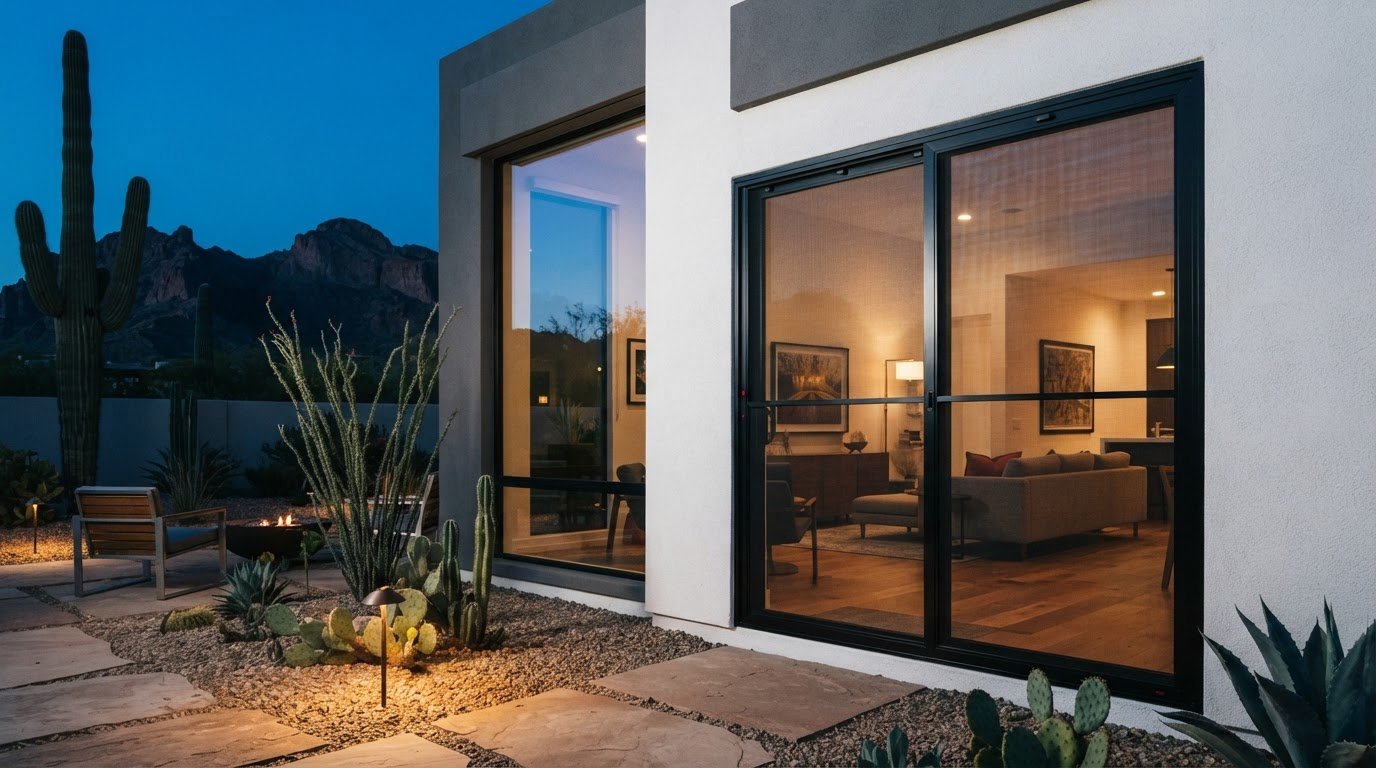
The best way to secure windows at night Phoenix homeowners can feel good about doesn’t have to mean choosing between protection and fresh air. Locks and alarms play useful roles, but they don’t create a physical barrier across the window opening. A practical plan combines a repeatable bedtime check with protection suited to the windows you use and the way you live.
It’s reasonable to wonder whether stronger security means blocked views, less airflow, or windows you can’t use normally. Custom-built security window screens are designed to resist forced entry and heavy impact while preserving natural light, visibility, and airflow. Each screen has a 4-point locking system, and operable window screens use ADA-compliant egress latches.
This guide compares locks, alarms, security film, and physical screens, then lays out practical steps for securing windows at night. Boss Security Screens measures and builds each screen around its opening and provides professional installation. The 15-year No Worry Warranty covers parts and labor. The company is Licensed, Bonded & Insured, holds an A+ BBB Rating, and is 110% Made in USA.
Key Takeaways
- Identify accessible windows and check how each one is secured before bed.
- Compare locks, alarms, film, and screens by their specific roles, including whether they physically cover the opening.
- Prioritize windows where visibility, airflow, or normal operation matters when choosing the best way to secure windows at night Phoenix homeowners can use.
- Custom-built security window screens are measured to each opening and professionally installed.
- Pair practical nighttime habits with a physical security layer where it suits your home and routine.
Why Phoenix Window Security Matters After Dark
As household activity winds down, accessible windows can be easy to overlook. A window may be left open or not fully latched when everyone turns in. A simple, repeatable nighttime routine helps catch those oversights, but habits alone don’t reinforce the opening itself.
Layered nighttime window security combines consistent closing and latching habits with measures that detect activity or physically resist access. These layers can make an opening harder to enter, but no single measure can promise a risk-free home. General window security measures serve different purposes, so it helps to know what each one does.
Which nighttime habits make windows easier to overlook?
Before bed, check that each accessible window is closed and latched. Don’t rely on memory or assume a window is secure just because it looks shut. Include less-visible openings, such as windows in a laundry area, bathroom, or room you rarely use in the evening. A quick, consistent circuit makes it easier to catch an open window before you settle in.
Notice which windows are easy to miss because they’re behind curtains, away from common areas, or outside your usual evening route. The goal isn’t to treat every window as an emergency. Focus on openings that can be reached from outside and windows your household uses regularly. Closing and latching prevent avoidable oversights, but they don’t add a physical barrier against forced entry.
What does a reassuring nighttime setup need to do?
A practical setup should suit both the opening and the way your household uses it. For each window, consider whether the measure:
- Resists physical access: A closed, latched window secures the sash. A purpose-built physical barrier adds a separate layer across the opening.
- Helps you notice activity: An alarm can alert you to an event, but an alert isn’t the same as a barrier that resists entry.
- Supports everyday use: Consider whether the window needs to open for ventilation or be operated as part of your routine.
- Preserves visibility: Think about how much natural light and outward visibility matter in the room.
The best way to secure windows at night Phoenix homeowners choose depends on which openings are accessible and how each room is used. A window that stays closed may call for a different combination of measures from one you open for airflow. Aim for a dependable routine and protection suited to the opening, rather than a fear-based checklist. The next sections compare common options by their roles and whether they physically cover the window.
How Locks, Alarms, Film, and Security Screens Protect Phoenix Windows
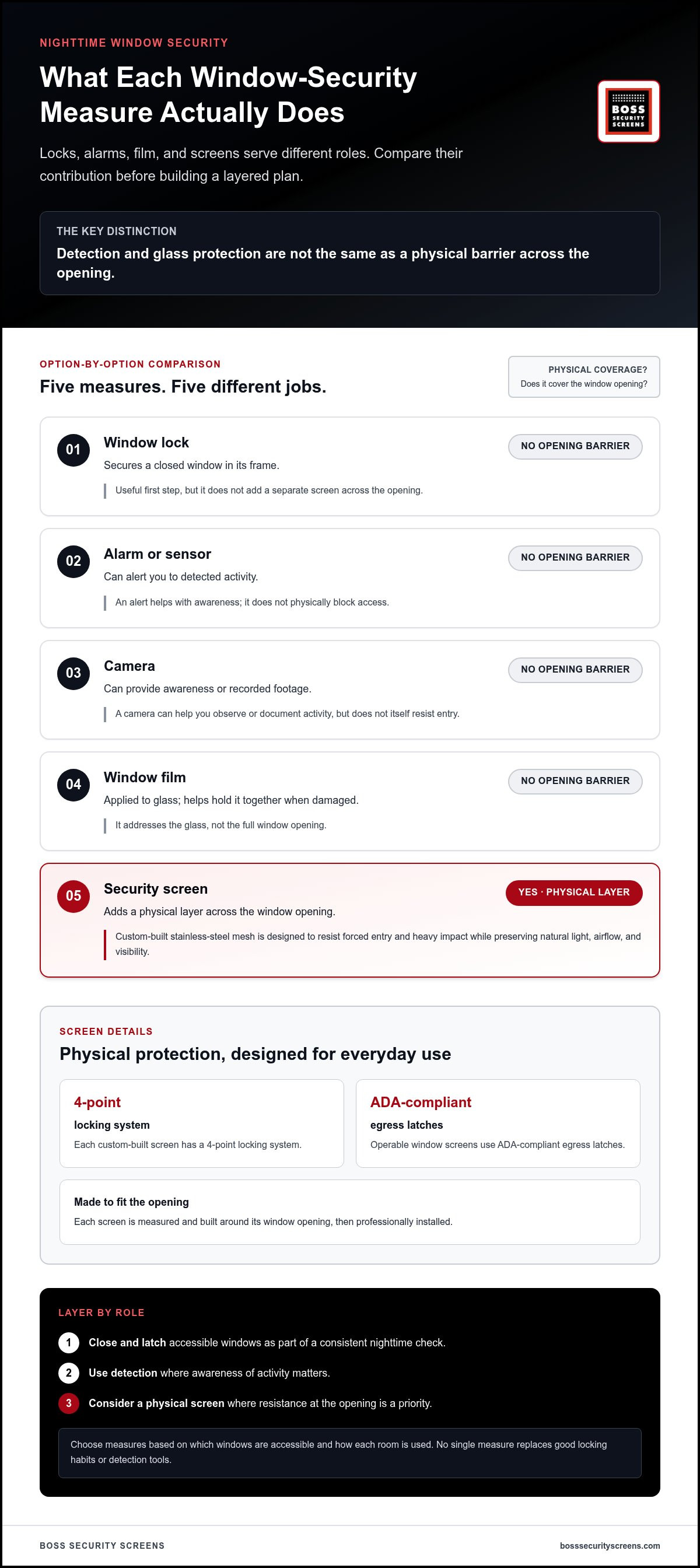
These options address different parts of the security problem. A lock secures a closed window. An alarm or camera can help detect or document activity. Film is applied to the glass, while a security screen creates a physical layer across the opening. Knowing the difference helps you choose measures that complement one another instead of expecting one option to do everything.
What can window locks, alarms, and cameras do at night?
A functioning lock helps keep a closed window secured in its frame. It’s a sensible first step, but it isn’t a separate screen across the opening. Sensors and cameras have another role: they can alert you to activity or record footage, but they don’t physically resist entry. Think of them as awareness tools, not barriers. Each measure contributes something different to a layered plan.
Quick comparison
| Measure | What it does | What it cannot do | Physically covers the opening? |
|---|---|---|---|
| Window lock | Secures a closed window. | Doesn’t add a separate barrier over the opening. | No |
| Alarm or sensor | Can alert you to detected activity. | Doesn’t physically block access. | No |
| Camera | Can provide awareness or recorded footage. | Doesn’t itself resist entry. | No |
| Window film | Addresses the glass by helping hold it together when damaged. | Doesn’t create a barrier across the whole opening. | No |
| Security screen | Adds a physical layer across the window opening. | Doesn’t replace good locking habits or detection tools. | Yes |
How is a security screen different from window film or bars?
Film is applied to glass; a screen sits across the opening. That distinction matters when you’re comparing protection options. A custom-built security screen uses stainless-steel mesh designed to resist forced entry and heavy impact while preserving natural light, airflow, and visibility. It adds physical resistance without asking you to give up the everyday benefits of an operable window.
Bars also create a physical barrier, but their fixed, visible structure gives a window a different appearance and feel. A security screen offers a mesh alternative that maintains a clear view and airflow. The right fit depends on the opening, your household’s routine, and your priorities for appearance and ventilation. Explore security screens for Las Vegas and Phoenix homes to see how this physical layer can fit into a window-security plan.
For the best way to secure windows at night Phoenix homeowners can combine measures by role: lock the window, use detection where awareness matters, and consider a physical screen where resistance at the opening is a priority. Learn more through a free consultation about security window screens.
How to Choose a Nighttime Window-Security Setup in Phoenix
A useful plan starts with your actual windows and routines, not a generic equipment list. Walk through your home room by room and note which windows are reachable, which you use regularly, and how you secure them at night. Then separate steps you can take tonight from physical improvements that need planning.
Which windows should you assess first?
Start with accessible windows and your current locking habits. Make a room-by-room list, including openings that are easy to miss or not visible from the main living areas. Consider which windows you open for airflow, where you spend time in the evening, and whether curtains or furniture affect your view of an opening. These are observations about your home and routine, not assumptions about neighborhood risk.
- List reachable windows. Walk through each room and record windows that can be reached from outside, along with openings your household uses often. Include less-visible windows, not just those in bedrooms and living areas.
- Note the current locking routine. For each window, record whether it’s usually closed and latched before bed, left open for ventilation, or operated at another time of day. This makes routine gaps easier to spot.
- Mark everyday-use priorities. Identify windows where outward visibility, natural light, airflow, or regular operation matters most. A window you open in the evening may need a different solution from one that stays closed.
- Choose immediate habits. For windows not intended to remain open, add a consistent close-and-lock check to your bedtime routine. Clear outdoor lighting can improve visibility around the home, but it isn’t a physical barrier or a promise of prevention.
- Consider longer-term protection. Where you want a physical layer across an opening, compare options based on the window’s use and your comfort priorities. Custom-built security window screens are measured to each opening, so the fit is tailored rather than one-size-fits-all.
How should a nighttime routine complement physical protection?
Keep the routine simple enough to repeat: check windows that should be closed, confirm they’re latched, and make a separate note of any opening intentionally left in use. A quick room-by-room pass is more reliable than a vague reminder to “check the house.” Clear lighting can help you see exterior areas, while locks secure closed windows. Neither replaces a physical barrier where you want one.
Prioritize each window by how reachable it is, how often you use it, and how much visibility or airflow you want to preserve. This gives you a practical basis for deciding where habits fit your routine and where a longer-term physical improvement may help. The best way to secure windows at night Phoenix homeowners choose addresses those specific needs without treating normal window use as an afterthought.
What Phoenix Homeowners Should Expect from a Security Window Screen
A security window screen should add a physical layer without making the room feel closed off. Boss Security Screens’ systems use stainless-steel mesh designed to resist forced entry and heavy impact while preserving natural light, airflow, and visibility. That balance matters for windows you want to keep usable as part of your everyday routine.
How do custom screens balance security and everyday use?
Each system is measured and custom-built around its specific opening, then professionally installed. This tailored fit accounts for the window rather than treating every opening as identical. Every screen has a 4-point locking system. Operable window screens use ADA-compliant egress latches, and the product has no exposed hinges.
The mesh forms a physical security layer across the opening, not a solid covering over the glass. You can maintain a view outside, let in airflow, and keep natural light in the room while adding resistance at the window. This can suit a room where visibility and ventilation matter, while supporting the nighttime security plan you’ve built around that opening.
When choosing the best way to secure windows at night Phoenix homeowners can consider both physical protection and how each room is used. Custom security window screens are an option for adding a fitted physical layer to accessible windows.
What should Phoenix homeowners know about company credentials and coverage?
Boss Security Screens is Licensed, Bonded & Insured, holds an A+ BBB Rating, and is 110% Made in USA. The 15-year No Worry Warranty covers parts and labor. The company reports 17,000+ installations with zero successful break-ins. These details help homeowners understand the support behind the screens, alongside the practical features that matter at home.
Custom measurement is central to the system: each screen is built around its opening and professionally installed. The screen is fitted to the window’s dimensions and intended operation, rather than asking you to adapt your routine to a generic covering.
If you’re considering a physical screen for your home, request a consultation about custom window security. It’s a practical step toward matching a custom-built screen to the openings where added protection and everyday usability both matter.
Secure Phoenix Windows at Night with a Free Consultation
A dependable nighttime plan starts with simple habits: close and latch windows that aren’t meant to stay open, then add a purpose-built physical layer where it suits your home. For openings where you want added resistance without giving up natural light, airflow, or visibility, custom security window screens bring protection and everyday usability together.
Boss Security Screens measures each opening and builds each screen around its specific dimensions, then professionally installs it. The best way to secure windows at night Phoenix homeowners choose should reflect how each room is used, including whether a window needs to remain operable as part of the household routine.
What happens when you request a free consultation?
Use the conversation to describe the windows you want to protect and how you use them. Point out an opening that’s easy to overlook, a window you use for ventilation, or a room where preserving the outside view matters. That context helps shape a solution around your priorities and the actual openings in your home.
Each security window screen is measured and custom-built around its opening, then professionally installed. There’s no need to choose a one-size-fits-all screen or guess at the fit. You can discuss the relevant windows and everyday operation, then consider where a physical security layer makes sense alongside your nighttime habits.
How can you take the next step with confidence?
Boss Security Screens is Licensed, Bonded & Insured, holds an A+ BBB Rating, and is 110% Made in USA. Each screen is backed by the 15-year No Worry Warranty covering parts and labor. The company has completed 17,000+ installations with zero successful break-ins. These credentials and warranty details offer useful context as you consider a custom-built screen for your home.
Boss Security Screens serves homeowners in Las Vegas, Phoenix, Los Angeles, Riverside, Scottsdale, San Jose, Oakland, San Francisco, Irvine, San Diego, Orlando, Detroit, Chicago, Minneapolis, Albuquerque, Dallas, Houston, and Sacramento. Share which openings matter most and how you want them to function, then have each screen measured and built around the opening for professional installation.
Request a free estimate and consultation to discuss custom security window screens for your Phoenix home. Call 1-800-203-5644 or (702) 637-0255, email info@bosssecurityscreens.com, or visit bosssecurityscreens.com.
Make Your Next Security Step Count
The right setup should work with the way you live, not ask you to change how you use every room. If you’re choosing the best way to secure windows at night Phoenix homeowners can tailor, start by identifying the opening where added physical protection would make the biggest difference to your daily comfort. Then consider a solution designed around that window.
A conversation can help turn that priority into a practical next step. Discuss the windows you want to protect, how you use them, and the balance of security and visibility you’re looking for. You can request a free consultation, call 1-800-203-5644 or (702) 637-0255, email info@bosssecurityscreens.com, or visit bosssecurityscreens.com.
With a clear plan for your windows, nighttime security can feel more considered while your home stays comfortable. Take the next step with confidence.
Frequently Asked Questions
Can I leave a window open at night with a security screen?
A custom security screen adds a physical barrier while preserving airflow and visibility, but it doesn’t make an open window risk-free. Whether you can operate the window and how it serves as an exit depend on the installed configuration. Operable screens use ADA-compliant egress latches. Consider your household’s ventilation needs, sleeping arrangements, and emergency plans before deciding to leave a window open overnight.
Should I still lock a window that has a security screen?
Yes. Whenever the window is closed, use its lock and include it in your usual nighttime check. The lock secures the window in its frame, while the screen adds a separate physical layer across the opening. These measures work together, but they aren’t interchangeable, and neither makes a home impossible to enter. The best way to secure windows at night Phoenix homeowners can tailor includes consistent habits and suitable physical protection.
Does a security screen replace a home alarm?
No. An alarm can provide an alert, and a camera can record activity; a security screen is a physical barrier across the window opening. They serve different purposes and can be complementary layers. Detection tools can help you become aware of activity, while a screen adds resistance at the opening. Neither option guarantees that an intrusion will or won’t occur.
Can security window screens be installed without replacing the window?
Yes. Boss Security Screens’ systems are mounted on the exterior and require no structural modifications to the home. Each screen is measured and custom-built around its specific opening, so the existing window doesn’t have to be treated as a standard size or configuration. The screen is professionally installed with the opening’s dimensions and intended operation considered as part of the fit.
What does Boss Security Screens’ No Break-In Guarantee cover?
If a screen is breached, the lifetime No Break-In Guarantee covers the theft deductible up to $3,000, and Boss will replace the screen free of charge. This applies to a specified situation, not as a promise that a break-in cannot happen. It’s separate from the 15-year No Worry Warranty, which covers parts and labor. Review the guarantee terms to understand how the coverage applies.
Are Boss security window screens custom-built for unusual openings?
Each system is measured and custom-built around the opening, rather than selected as a one-size-fits-all screen. Configurations and frame colors are available to help the screen integrate with the home’s appearance and the way the window is used. Custom measurement is central to planning a screen for an unusual window.