High-Tensile Steel Security Mesh: Strength, Materials, and Security Screens
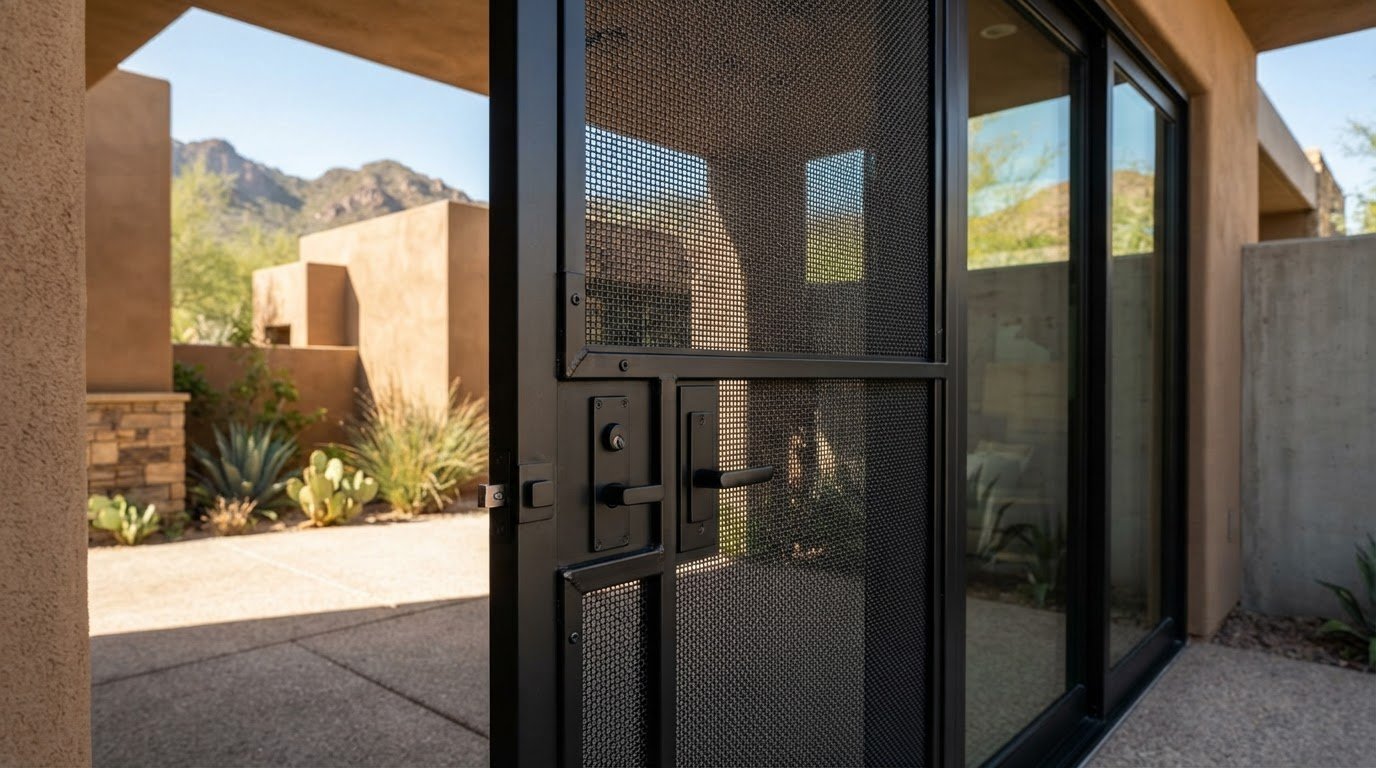
Could high-tensile mesh still leave a weak point at your window or door? Yes. The material is only one part of a security screen. The term high tensile steel security mesh may sound reassuring, but a mesh specification alone doesn’t show how a finished screen will resist forced entry.
It’s worth looking beyond the wire. Barrier mesh used in building assemblies and mesh sold by the roll aren’t the same as a finished security screen fitted to a home opening. This guide explains what tensile strength describes, how to compare material claims with testing and product features, and why the complete screen matters more than a single specification.
Boss Security Screens custom-builds stainless-steel security screens around each opening, using 12 × 12 mesh per square inch and a 4-point locking system. The screens are independently tested by National Certified Testing Laboratory and certified to ANSI/SMA 6001-02 standards. Their stainless-steel mesh blocks bugs and intruders while preserving natural light, airflow, and visibility. Each screen is backed by a 15-year No Worry Warranty on parts and labor. Boss Security Screens is Licensed, Bonded & Insured, has an A+ BBB Rating, and is 110% Made in USA.
Key Takeaways
- Tensile strength describes resistance to pulling forces, not every aspect of security performance. Read mesh claims in context.
- Distinguish woven security-screen mesh from expanded-metal barrier mesh before comparing products. They serve different applications.
- When assessing high tensile steel security mesh, separate the mesh description from test evidence and features of the complete screen.
- Consider the opening, how it’s used, and how the screen operates. The frame, fit, and locking system are part of the finished assembly.
- Custom measurement matches a security screen to the opening it is designed to protect. A sheet of mesh alone is not a fitted solution.
What High-Tensile Steel Security Mesh Means for an Opening
Tensile strength describes how well a material resists being pulled apart. It doesn’t tell you by itself how a finished screen will perform against cutting, impact, prying, or pressure on the frame and locks. A claim about high tensile steel security mesh is a material claim, not a complete measure of protection for a door or window.
Think of a security screen as a connected system. The mesh is one component. Its construction, the frame that holds it, how the screen fits the opening, and the locking points all contribute to the finished product. A strong material claim doesn’t tell the whole story if it says nothing about the assembled screen.
High-tensile mesh versus expanded-metal barrier mesh
Mesh can refer to products designed for different jobs. Expanded-metal barrier mesh, for example, can be used within wall, ceiling, and floor assemblies. That construction material is incorporated into a building assembly, rather than presented as a visible screen fitted to a home’s door or window.
Woven or screen mesh, by contrast, forms the screening surface of a finished opening. These categories shouldn’t be assumed to share the same material, installation method, or performance specifications. A barrier-mesh listing may describe a product for its construction application, but it doesn’t establish how a residential security screen performs as a complete unit.
What tensile strength can, and cannot, tell you
Tensile strength is a material’s resistance to being pulled apart. It does not describe every way a finished security screen may be challenged. A figure or phrase can help explain one property of a material, but it isn’t a stand-alone rating of a screen’s resistance to forced entry.
Steel covers different material types and applications. For general background, High-strength low-alloy steel (HSLA) is one steel category. That reference doesn’t establish that a particular security mesh is HSLA or demonstrate how a finished screen performs. A material name or strength description needs to match the product being discussed.
For a useful comparison, separate three questions:
- What is the product? Is it woven screen mesh, expanded-metal barrier mesh, or another material?
- What does the claim cover? Does it describe the raw material alone or provide evidence about a completed screen?
- What completes the opening? Consider the mesh alongside the screen’s construction, frame, fit, and locking system.
“High-tensile” doesn’t establish that two products were tested in the same way or offer equivalent protection. Look for evidence tied to the finished screen, not just a strength description for its mesh. That gives you a clearer basis for judging what the product is designed to protect.
How Stainless-Steel Security Mesh Becomes Part of a Strong Screen
Stainless-steel mesh is most useful as part of a finished screen designed for the opening it protects, not as a loose sheet expected to secure a door or window by itself. Boss Security Screens measures each opening and custom-builds a system to fit, combining the mesh with a fitted screen and its locking system. Each component has a role in the complete product.
Mesh strength is only one part of a security screen’s performance. The fit, frame, and locking system matter too. A claim about high tensile steel security mesh describes one aspect of a material, not the performance of the entire screen.
Mesh dimensions, material, and strength claims
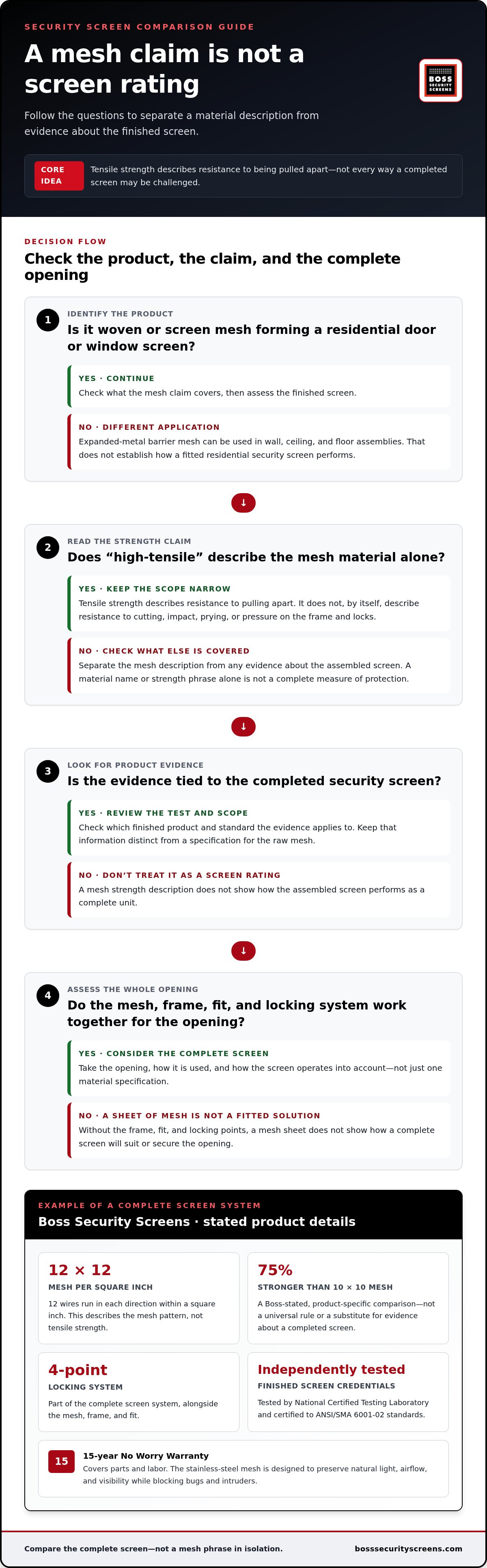
Boss uses stainless-steel mesh described as 12 × 12 per square inch. In plain language, that means 12 wires run in each direction within a square inch of mesh. It describes the pattern, not the steel’s tensile strength. Mesh count can help identify construction, but it isn’t a direct measure of resistance to pulling, impact, or forced entry.
Boss states that its 12 × 12 mesh is 75% stronger than 10 × 10 mesh. This is a product-specific comparison, not a universal rule about every mesh with either count. Material and construction matter, and a mesh-count comparison doesn’t replace evidence about a completed screen. Keep the stated mesh specification separate from information about the finished product.
The stainless-steel mesh is integrated into a screen made for a particular opening. It isn’t a generic sheet for homeowners to adapt. That distinction connects the mesh specification to its role in an opening-specific security screen, rather than treating it as a stand-alone claim.
Why the frame, fit, and lock matter too
A screen has to suit the opening it protects. Boss systems are custom-built around each measured opening, bringing the mesh into a screen designed for a particular door or window. A generic sheet of mesh doesn’t show how a complete screen will fit or how its components work together.
The mesh forms the screening surface, the frame holds it, the fit relates the finished unit to the opening, and the locking system secures the screen. Assessing these elements together gives a more useful picture than relying on a mesh specification alone.
Boss screens are engineered to resist forced entry and heavy impact while preserving natural light, airflow, and visibility. Because each screen is made for a specific opening, its design can account for the space and its everyday use. To discuss a custom screen for your opening, request a custom security screen consultation.
How to Compare High-Tensile Security Mesh Claims
Start by identifying what a claim describes. A strength figure for raw wire, a specification for construction barrier mesh, and information about a fitted security screen refer to different things. Treating them as like-for-like can make products appear comparable even when their materials, applications, and evidence differ.
Use this framework to keep the details clear:
Material: What material is named? A claim about one type of steel shouldn’t automatically be applied to a different steel or mesh product.
Mesh description: Does the information give a mesh pattern, wire detail, gauge, or tensile-strength claim? These describe different properties and shouldn’t be substituted for one another.
Intended application: Is the mesh intended for a building assembly, a barrier, or a screen fitted to a door or window? Products designed for different roles aren’t directly comparable.
Test evidence: Is independent testing or certification identified, and which product does the statement refer to? Keep the evidence connected to its stated scope.
Complete-screen features: For a fitted screen, consider the finished product, including its frame, fit, and locking system, rather than judging by the mesh claim alone.
For example, a listed mesh dimension or gauge may describe the material or product, but it doesn’t by itself show how a fitted screen performs. Likewise, “high tensile” doesn’t tell you whether the claim concerns raw mesh or an assembled product. These distinctions make comparisons fairer and help you avoid conclusions that a specification doesn’t support.
Questions that make mesh specifications easier to compare
Before weighing one claim against another, establish the basics. Does the description refer to raw mesh, a barrier assembly, or a complete fitted screen? What material and exact specification are named? Is there test evidence, and which product or assembly does it cover? If those details differ, the figures may not be comparable.
This is especially useful when search results place construction products beside residential security screens. Similar wording doesn’t make them the same product. Keep the application and evidence alongside the specification so you’re comparing products designed for the same purpose.
What Boss’s supplied testing information says
Boss Security Screens states that its screens are independently tested by National Certified Testing Laboratory and certified to ANSI/SMA 6001-02 standards. Those are the testing and certification details to consider when assessing the product. Keep them tied to the stated screen rather than attaching other standards, test methods, or performance figures to them.
Boss Security Screens identifies independent testing by National Certified Testing Laboratory and certification to ANSI/SMA 6001-02 standards. This gives you specific testing information to consider alongside material claims, product specifications, and features of the finished screen.
What to Consider Before Choosing Steel Security Mesh for Your Home
Start with the opening, not a mesh label. A window, hinged door, French door, and patio slider each serve a different purpose, so the security screen needs to suit both the space and how you use it. A generic sheet of mesh isn’t a fitted solution. Boss Security Screens measures and custom-builds each system around its opening.
Start with the opening and how you use it
First, identify which opening you want to secure and how it operates in everyday use. A door screen needs to work with the way you enter and leave. An operable window screen should also account for access to the opening. Boss’s operable window screens use ADA-compliant egress latches. For window-specific details, explore the security window screen options.
Then consider how often the opening is used, whether it connects to an outdoor living area, and what you want the screen to help protect. These details help define the screen’s purpose and keep the decision focused on the opening, rather than on a material specification in isolation.
Balance protection with everyday comfort
A security screen should support everyday comfort as well as protection. Boss’s stainless-steel mesh blocks bugs and intruders while preserving natural light, airflow, and a clear view outside. That balance matters for a window you want to open for fresh air or a door that connects your home to a patio. The screen adds a physical barrier while maintaining the openness you value.
Use this decision sequence to organize what matters:
- Identify the opening. Decide whether you’re considering a window, entry door, French doors, or patio sliding glass door.
- Think about its use. Consider how people move through it, whether it opens, and how the screen should fit into everyday routines.
- Consider comfort. Think about maintaining natural light, airflow, and visibility.
- Look at the complete screen. Assess a made-to-measure system for that opening. Don’t assume loose mesh or a general strength claim provides the same result.
- Review the supporting information. Keep material details, test evidence, and finished-screen features distinct so each claim is clear.
For a door, the screen’s fit and how it works with the entrance are central to the decision. A screen built around the measured opening is different from mesh selected without considering the door itself. The same principle applies to windows. Opening type and operation should guide the design, with egress needs considered for operable windows.
To apply these considerations to your home, request a security screen consultation about a custom-built screen for your opening.
Boss Security Screens: Custom Stainless-Steel Mesh for Real Openings
A mesh specification matters most when it’s part of a screen designed for the opening it protects. Boss Security Screens professionally installs custom-built stainless-steel security screens measured and made around each door or window. The mesh is one component of a complete screen, alongside features that support fit, operation, and security.
The complete-screen details behind the mesh
Every opening is different. A window, front entry, French door, or patio slider has its own dimensions and everyday use. Boss builds each screen around its measured opening rather than treating a generic sheet of mesh as a ready-made fit. This custom-built approach brings the screen and its stainless-steel mesh together as a finished product.
Each screen has a 4-point locking system and no exposed hinges. These practical details belong in the assessment alongside the mesh. Powder-coated finishes provide a finished look, while the stainless-steel mesh preserves natural light, airflow, and visibility. The result is a protective barrier designed to fit into daily life without making the home feel closed off.
Boss reports 17,000+ installations with zero successful break-ins. That record offers context when comparing material claims with a complete, installed security screen. It doesn’t replace considering the specific opening, screen design, and product information, but it says more than a mesh label alone.
For an entry point, the screen door’s design and operation are key parts of the decision. Boss’s security screen doors are built around measured openings. For operable windows, fit and egress matter too. Boss’s security window screens use ADA-compliant egress latches.
Credentials, warranty, and a clear next step
Boss Security Screens is Licensed, Bonded & Insured, has an A+ BBB Rating, and is 110% Made in USA. Each screen is backed by the 15-year No Worry Warranty on parts and labor. These details help homeowners assess the finished screen, its coverage, and the company behind it, alongside the mesh specification.
If you’re considering a screen for a particular opening, start with its measurements and how you use the space. Request a free consultation to discuss a custom stainless-steel security screen for your home.
Take the Next Step Toward a More Secure Opening
Choosing high tensile steel security mesh is only one part of planning a security screen. Consider the specific opening, how you use it, and what you want the finished screen to do. A measured, opening-specific solution brings those needs together instead of treating a mesh specification as the whole answer.
Move from comparing terminology to considering a practical option for your home. Identify the door or window you want to secure and what matters in its everyday use. Boss Security Screens can help you consider a custom-built screen for that opening.
Boss Security Screens serves homeowners in Las Vegas, Phoenix, Los Angeles, Riverside, Scottsdale, San Jose, Oakland, San Francisco, Irvine, San Diego, Orlando, Detroit, Chicago, Minneapolis, Albuquerque, Dallas, Houston, and Sacramento. Request a free estimate and consultation, call 1-800-203-5644 or (702) 637-0255, email info@bosssecurityscreens.com, or visit bosssecurityscreens.com.
Frequently Asked Questions
Is high-tensile steel mesh the same as expanded-metal barrier mesh?
No. They’re different mesh categories used in different kinds of products. Expanded-metal barrier mesh is used in building assemblies, while woven stainless-steel mesh can form the screening surface of a door or window security screen. A description of one shouldn’t be used to infer the material, construction, or performance of the other. Compare each mesh in the context of its intended application and finished system.
Can stainless-steel security mesh also keep insects out?
Yes. Boss’s stainless-steel security mesh is designed to block bugs and intruders, so a separate insect screen isn’t needed. A window screen can provide a barrier while allowing natural light and airflow into the room and preserving a clear view outside. This combination supports everyday living as well as physical security.
What does 12 × 12 mesh per square inch mean?
It describes the mesh count: 12 wires run in one direction and 12 cross them within each square inch. The count helps identify the mesh pattern, but it doesn’t tell you the wire’s tensile strength or prove how the complete screen performs. Two mesh products with the same count could still differ in material or construction. Read the count as one specification, not a full security assessment.
Does a mesh specification alone prove that a security screen resists forced entry?
No. A mesh description tells you about the screening material, not necessarily how the complete screen performs. The frame, fit, locking system, and test evidence for the finished product also matter. When reviewing a claim, note whether it applies to loose mesh or an assembled screen. Evidence is most useful when it identifies the product or assembly tested, rather than relying on a strength phrase alone.
Can custom stainless-steel security screens be made for different openings?
Yes. Boss Security Screens measures and builds screens around individual openings, including windows, entry doors, French doors, and patio sliders. The screen is designed for the opening rather than supplied as a generic sheet of mesh. Operable window screens use ADA-compliant egress latches to support exit access from inside. The opening’s size and operation help shape a screen that suits daily use.
What warranty comes with Boss Security Screens?
Boss Security Screens includes a 15-year No Worry Warranty on parts and labor. This warranty provides a defined period of coverage for those components and labor. It’s one part of the product decision, alongside the screen’s fit, mesh, and locking features.